The Anti-Abortion Movement Is Coming for Fertility Treatments

The availability of in-vitro fertilization in Alabama may now be in question after the state’s Supreme Court ruled that embryos kept in clinic freezers are considered persons under the law, and protected by the state’s Wrongful Death of a Minor Act. It’s a shocking and jarring decision that radically extends the bounds of legal personhood, tosses any claims to originalism aside, and seems primed to make a variety of fertility treatments either extremely costly for patients, or extremely legally risky for clinicians.

IVF is, unfortunately, not safe from the anti-abortion movement. Many of the movement’s leaders have indicated that they would like to outlaw it, and while right now they have bigger fish to fry, abortion opponents have never stopped at simply (“simply”) banning abortion. They want full control over reproduction, and over women specifically. And Alabama just put us all one step closer to their ultimate goal.

‘Astonishing Little Feet’: Maegan Houang Reimagines the Story of the First Known Chinese Woman in the U.S.

Nearly two centuries ago, Afong Moy became the first documented Chinese woman to arrive in the U.S. Brought by American merchants for the purposes of advertising their Chinese import business, she was exhibited across the U.S., for white audiences to marvel at her language, clothes and “little feet.”

Afong Moy is the subject of a new short film from director Maegan Houang. Houang sat down with Ms. to talk about why her story matters, and the role of historical fiction in revealing the dark truths of humanity. 

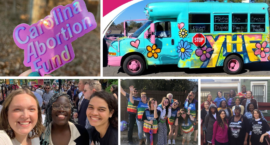
Abortion Funders in the Southeast Are ‘Helping People Decide What They Want to Do With Their Lives’

Abortion funds are local nonprofits that pay for someone’s abortion, plus extra costs, like transportation or lodging. Their role in the abortion access movement has increased since the fall of Roe. Ms. will feature interviews weeks with fund representatives across the U.S. Each installment will focus on a distinct region—beginning in the Southeast, where every single state in the region has implemented abortion restrictions.

“No human being should ever feel like, ‘Well, I’ve got to figure out what I want to do with this pregnancy by midnight tonight, or else.'” “I enter the work in rage. I am doing abortion access work in sheer rage and spite.”

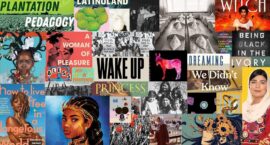
Painted Windows, Distorted Mirrors: How Banning Books ‘Sterilizes’ Curriculums

To meet the demand of a modern world, we need to be expanding our students’ perspectives and engaging them in rich dialogue, critical thinking and global perspectives. Our children need opportunities to share potent books in community with peers and to learn to discuss challenging topics. If we parents are empowered, we ought to use our power to enable our children, not to narrow their perspectives.

In Ron DeSantis’ Florida we hear echoes of George Orwell’s 1984: ‘Do you know that Florida’s school libraries get smaller every year? Don’t you see that the whole aim is to narrow the range of thought?’

The Anti-Gay, Anti-Trans and Anti-Abortion Groups Behind Those ‘He Gets Us’ Super Bowl Commercials

Before the news cycle moves on, we must discuss the right-wing He Gets Us campaign’s two religious ads during the Super Bowl, which highlighted that “Jesus loved and cared for anyone and everyone” and which the Washington Post voted “the most controversial” of the game.

This claim of love and acceptance is directly undercut by the campaign’s connections to far-right anti-LGBTQ and anti-abortion groups.

What Will Be the Cost of the First Over-the-Counter Birth Control Pill?

Opill, the first over-the-counter birth control pill, is set to hit drugstores, grocery stores and online shelves in the first quarter of 2024. But the real challenge lies ahead: Will it be affordable and truly accessible to all?

Opill is a progestin-only oral contraceptive pill, boasting a success rate as high as 98 percent in preventing pregnancies.  The U.S. Food and Drug Administration hailed the approval of Opill as a breakthrough that could “reduce barriers to access” for those seeking contraception. 

However, the promise of accessibility hinges on the crucial factor of affordability.

As British Parliament Inquiries Into Gender Apartheid, Afghan Women Know All Too Well That It’s Already Here

A group of British parliamentarians are set to initiate an inquiry into the situation of women and girls in both Afghanistan and Iran. This marks an unprecedented development, as no nation has launched an investigation of this size regarding gender apartheid. 

What this fails to do, however, is acknowledge the actualized claim that gender apartheid is already established within Afghanistan and Iran. 

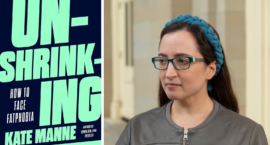
Fighting Fatphobia and Embracing ‘Unshrinking’: The Ms. Q&A With Kate Manne

We live in a society obsessed with fatness. Or, perhaps more accurately, obsessed with fighting it.  Fatness has been rendered a disease, and we are inundated with “cures,” which particularly haunt women’s bodies—and their wallets.

Questioning the devotion to anti-fatness usually prompts a “well, being fat is unhealthy!” But according to Kate Manne, feminist philosopher and author of the recently released Unshrinking: How to Face Fatphobia, the connection between weight and health is not so clear cut. What is clear, Manne brilliantly reveals, is that fatphobia, not fatness, is the problem.

One Year After Mahsa Amini, Iran’s Women Are Defying Mandatory Hijab Laws

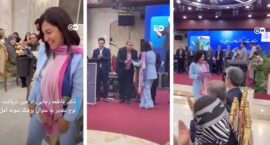
After accepting an award for “distinguished doctor” while not wearing a veil, Iranian Dr. Fatemeh Rajaei-Rad was punished by having her medical license revoked, the president of the hospital where she worked was ousted, and authorities shut down her private practice and expelled her from the board of advisors at a medical university she had been a member of.

Despite crackdowns on mandatory veiling in the wake of Mahsa Amini’s killing, Iranian women continue to resist.