

‘I’m Not Going to Tolerate Being Treated as a Second-Class Citizen’: Carol Moseley Braun Isn’t Giving Up on the Fight for Constitutional Equality

“The expectation of equality is the most important cultural thing that we can achieve, and we have to keep holding up that light.”

Carol Moseley Braun became the first Black woman elected to the Senate after her involvement in the movement to ratify the Equal Rights Amendment. In the fifth and final episode of Looking Back, Moving Forward, more than 40 years later, she asked a simple question: “Why haven’t we gotten this right yet?” 

Listen to the latest episode of Looking Back, Moving Forward, “The Feminist Fight For The Equal Rights Amendment Is Far From Over—and More Urgent Than Ever (with Pat Spearman, Ellie Smeal, Carol Moseley Braun, Kathy Spillar, and Ting Ting Cheng)” on Spotify, Apple Podcasts or wherever you get your podcasts.

Finding the Power in Single Black Motherhood

We can say, “We knew this would happen,” and tell Black single mothers, “I told you so,” all day long, but then what? There’s something hollow in the phrase—especially when it follows public documentation of abuse.

If we are people who truly believe that Halle Bailey, Keke Palmer and Skai Jackson deserved better, then we should be extending that same belief to the women we actually know.

(This essay is part of a collection presented by Ms. and the Groundswell Fund highlighting the work of Groundswell partners advancing inclusive democracy.)

“When and Where Do We Get to This Place Called ‘Fair?’” What Political Scientist and Survivor Vanessa Tyson Wants the Feminist Future to Look Like

The professor, advocate and veteran of multiple political campaigns reflected in the latest episode of Looking Back, Moving Forward on her journeys to both survivor advocacy and politics—and the ways in which our political structures reinforce the injustices survivors face writ large across the country.

Listen to the latest episode of Looking Back, Moving Forward, “How Feminists are Breaking the Cycle of Gender-Based Violence and Harassment (with Ellen Sweet, Jane Caputi, Vanessa Tyson, Victoria Nourse, and Debra Katz)” on Spotify, Apple Podcasts or wherever you get your podcasts.

What Happens When Doulas Write the Law? New Mexico’s Medicaid Win Shows How to Fight Back 

As abortion bans sweep the U.S., clinics shutter and gender-affirming care is criminalized, New Mexico accomplished something radical: It passed a law to pay doulas—because doulas save lives.

In 2025, the state unanimously enacted HB 214, the Doula Credentialing and Access Act, creating the nation’s most comprehensive Medicaid coverage for full-spectrum doula care, including for abortion, miscarriage, pregnancy, birth, postpartum and loss.

This victory was decades in the making, a fight led by Black, Indigenous, Latinx, LGBTQ+, immigrant, disabled and community-based doulas. These care workers have long provided essential, unpaid labor in a healthcare system that overlooked them. Now, for the first time, their labor is recognized as essential health infrastructure.

Still, as this vision takes root under HB 214, federal funding threats loom, including cuts to Medicaid, SNAP and reproductive health access—all part of a national strategy to defund care and increase control. Believe in this future? Help protect it. Urge your state to follow New Mexico’s lead. Support local doula collectives. Push for policies that center care over control. The path forward is here—let’s walk it together.

(This essay is part of a collection presented by Ms. and the Groundswell Fund highlighting the work of Groundswell partners advancing inclusive democracy.)

Black Activists Say Trump Administration’s ICE Raids Revive Jim Crow Tactics

“The ICE crisis is a Black issue, too,” said Myeisha Essex of Black Women for Wellness (BWW) at a recent press conference in Los Angeles. Essex was joined by leaders from other Black- and Latino-led grassroots organizations, including the Black Alliance for Just Immigration (BAJI) and the California Black Power Network (CBPN). Together, they warned that Trump’s crackdown threatens the safety and civil rights of immigrants and citizens alike, underscoring the need for solidarity across communities of color—and with allies—amid deepening political and racial divides.

The uncertainty and fear of this political moment intensified last month when the Supreme Court upheld the federal government’s ability to deport immigrants to third-party countries—even when individuals have not had a fair chance to contest removal or raise credible fears of torture or harm. Advocates argue the ruling undercuts due process and erodes bedrock democratic principles, leaving both immigrants and U.S. citizens questioning what rights remain secure.

“We are the ones—Black people, regardless of citizenship—who must define what resilience and resistance look like in this moment,” said Nana Gyamfi, executive director of BAJI. “The first human beings who migrated, allowing people to exist all over this planet, were Black people.”

‘We Have to Break the Spell We Have Been Under About What This Country Is’: Why Aimee Allison Still Believes in a Multiracial Feminist Democracy

Aimee Allison founded She the People to empower more of us to envision an America redefined and inspired by women of color. As its president, she launches and spearheads efforts to demonstrate the political power of women as color and advance racial, economic, and gender justice.

As part of the first episode of the new Ms. Studios podcast Looking Back, Moving Forward, Allison talked to Ms. about her vision for a feminist future, rewriting the American story, and what it will take for us to build a better democracy. 

“We stand for something extremely powerful, and we have a legacy of women who came before us that are going to actually show us the way forward.”

Why Authoritarians Always Come for Gender Studies First

We all know that Trump and the Republican Party are coming for higher education. But, what many don’t know is that in this century, authoritarians come for gender studies first.

I would be nearly hopeless about the future of gender studies in the U.S. if not for a valuable lesson I learned teaching gender studies in Russia: Critical thinking is difficult to destroy. It will fester in the cracks and fissures left behind by the regime. And, when the regime collapses—as all authoritarian regimes eventually do—gender studies will return with the skills and courage to teach about how the world really is, not how many on the far right wish it would be.

Kaila Adia Story on Why Queer Liberation Must Center Black Feminism

The Black Feminist in Public series continues with a conversation with Kaila Adia Story, professor of women’s, gender and sexuality studies at the University of Louisville, co-host of the award-winning podcast Strange Fruit and is the author of the recently published The Rainbow Ain’t Never Been Enuf: On the Myth of LGBTQ+ Solidarity.

“Black feminist thinkers and scholars are the blueprint for not only Black feminist liberation but queer liberation, trans liberation,” said Kaila Adia Story.

Artist Autumn Breon’s Requiem for Reproductive Freedom: Honoring Adriana Smith Through Performance

Autumn Breon is using performance and mixed media art to both celebrate Black women’s achievements and honor their struggles. Her latest performance, Dignity Denied, shines a light on the case of Adriana Smith.

“I wanted to show what lack of autonomy, what surveillance looks like, and durational performance felt like the best way to highlight her situation.”

“You might have a six-week abortion ban. You might have whatever other oppressive policies in place. We have always found ways to aid and abet each other, and we always will.”

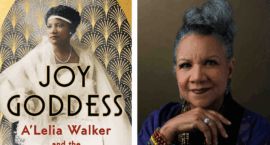
A’Lelia Bundles Claims Family History and Black Cultural Legacies With New Book ‘Joy Goddess’

“Langston Hughes called [A’Lelia Walker] the ‘Joy Goddess’ of Harlem’s 1920s,” said A’Lelia Bundles, great-great-granddaughter of Madam C.J. Walker and author of Joy Goddess: A’Lelia Walker and the Harlem Renaissance, out June 11.

“Now, her life was not always happy. But I think his idea was that she used her wealth, her influence and her homes to create a joyful space and a welcoming space for a wide range of people.”