


Dreams Deferred: The Oppression of Women Judges Under Taliban Rule

On a cold Sunday morning in January 2021, Qadria Yasini, a judge on the Supreme Court of Afghanistan in Kabul, set out for work with her colleague, Zakia Herawi. As they rode in the back seat of a government-provided car, they were gunned down in broad daylight by three assassins, who then fled on foot and by motorcycle. When Yasini’s possessions were returned to her family, a Mother’s Day greeting from her two teenage sons was found in her handbag, riddled by bullets.

This heartbreaking story opens British journalist Karen Bartlett’s deeply reported, troubling new book: Escape From Kabul: The Afghan Women Judges Who Fled the Taliban and Those They Left Behind.

But Bartlett’s narrative also provides an inspiring tale of resilience.
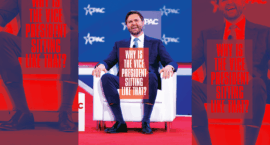
Why Is the Vice President Sitting Like That?

That awkward posture isn’t accidental. When Vance spreads his legs and plops down for an interview, he is directly addressing young men. He wants to prove that he’s just one of the guys, while also issuing a dire warning. “The boys,” he asserts, are under attack.

Advancements in women’s rights have always been followed by countermovements, each one lamenting, “But what about the boys?”

In reality, the cure for loneliness can’t be found in calling your friends the f-word or finding a “trad wife” who will stay in her place. It requires genuine relationships. It’s about having your feelings valued but with the equal expectation of emotional reciprocity. Behold and be held. That’s the deal.

Guys: You all, like all people, deserve to be loved. The problem is, the messengers who claim to be your friends are lying. Those guys don’t love you. They love their power over you.

Ms. on Men: Rethinking Masculinity in the Wake of the 2025 Election

When the editors of Ms. asked me to guest-edit “Ms. on Men,” a feature section in the latest print issue highlighting key issues related to men and masculinity, I knew this was more than a symbolic gesture—it was a necessary intervention.

In the wake of the 2025 election, with a growing number of young men embracing right-wing populism, we need a pro-feminist vision of masculinity rooted in justice, not grievance. This section brings together voices committed to that vision, offering both critique and possibility.

The first piece from the feature—going live on MsMagazine.com early Friday, July 25—will answer the question we’ve all been pondering: Why is the vice president sitting like that?

A System Designed to Keep Immigrant Parents From Their Children

In Trump’s America, children languish in custody, separated from their parents because of their immigration status.

“If you care about trafficking, about what will protect children, you have to ask: Are children feeling supported?” asked Jonathan Beier, the associate director of research and evaluation for the unaccompanied children’s program at the Acacia Center for Justice—where the Trump administration abruptly canceled a multimillion-dollar legal services contract, jeopardizing the cases of approximately 26,000 children represented by attorneys from more than 100 legal organizations around the country.

Now Streaming: New Film ‘Lilly’ Tells Transformative Story of Equal-Pay Hero Lilly Ledbetter

It’s tempting these dark days to dismiss the idea that any one person can make a difference. And yet, every day ordinary people fight injustice. And some days, those people persist long enough, resist long enough, that their fights rise to national prominence.

One such fight is chronicled in the new film Lilly, released in theaters this May and now available for rent. The brainchild of director Rachel Feldman, Lilly tells the story of Lilly Ledbetter, “an ordinary woman who became extraordinary,” in the words of Patricia Clarkson, who portrays her in the film.

‘No More Shame!’ The Transformative Lesson of Gisèle Pelicot, the French Survivor of Mass Rape

A phone call one autumn morning from local police requesting that Dominique Pelicot, then 67, husband to Gisèle, also 67, report to the local station interrupted their daily routine. A surprised Gisèle listened as her husband told her not to worry: “It won’t be pleasant, but by noon we will be home,” he said. But the next time she saw him was at his trial.

Like many countries, France has a protective privacy act guaranteeing anonymity for crime victims. Gisèle’s lawyers warned what would happen in a public trial—the intense media attention that would surely follow every development in the case, the probable attacks on her testimony in court and possible threats to her life. Undaunted, Gisèle chose to waive her right to anonymity.

“When you’re raped, there is shame, and it’s not for us to have shame,” she told the court. “It’s for them.”

Her insistence that her trial be public surprised both her lawyers and the presiding judge—and transformed Gisèle into a feminist hero and icon.

Fast Facts About Bea Feitler, the Pioneering Graphic Designer You’ve Never Heard Of

For our Summer 2025 issue, Ms. is going retro. The cover for the latest print issue is an homage to the October 1975 issue, which offered a “Special Issue on Men.” Both covers, 50 years apart, show a man in jeans and a T-shirt (the 1975 model was, no joke, Robert Redford) with a rolled-up issue of Ms. in his back pocket, honing in on the idea that women’s rights is a men’s issue too.

It’s the perfect time to remember Bea Feitler, the early Ms. art director who designed the 1975 men’s issue cover. Despite being a prominent designer (she art-directed Harper’s Bazaar and other magazines throughout the 1960s and ’70s), Feitler is largely unknown today.

In honor of her incredible legacy, which inspires Ms. staffers to this day, here are some of our favorite facts about Feitler and her remarkable life and work.

What’s Up With Men?

What the hell is up with men these days? It’s clearer than ever that (mostly white) men are hurting—but why is this happening, and what can be done to change things?

We go in search of the answers to these questions on the latest episode of On the Issues, where host Michele Goodwin is joined by Jackson Katz, Gary Barker and Cody Thompson to talk about the issues facing men—and how we can address them, in order to get our democracy back on track.

If you want to go even deeper, Katz also guest-edited a special “Report on Men” for our Summer issue (which you can get right now as a standalone for just $5)—including pieces that delve into the rise of the “bro-casts,” the clinicians combating the “male loneliness epidemic,” JD Vance and the performance of masculinity, and so much more.

If you’ve been enjoying the recently-released documentary Dear Ms. on HBO, and want to go deeper into the history and legacy of Ms., you’re in luck! Our latest podcast Looking Back, Moving Forward explores through the lens of Ms. not only how we got to where we are now, but how our shared histories illuminate the path toward an intersectional feminist future

The Seven Warning Signs of Testosterone Poisoning (October 1975)

From the October 1975 issue of Ms.:

“Until now it has been thought that the level of testosterone in men is normal simply because they have it. But if you consider how abnormal their behavior is, then you are led to the hypothesis that almost all men are suffering from testosterone poisoning. …

“The pathological violence of most men hardly needs to be mentioned. They are responsible for more wars than any other leading sex.

“Testosterone poisoning is particularly cruel because its sufferers usually don’t know they have it. In fact, when they are most under its sway they believe that they are at their healthiest and most attractive. They even give each other medals for exhibiting the most advanced symptoms of the illness.

“But there is hope.”

(The Summer 2025 issue of Ms. is a modern reimagining of the October 1975 issue. Join the Ms. community today and you’ll get issues delivered straight to your mailbox.)