Keeping Score: Threats Against Abortion Clinics Doubled in 2025; Sounding the Alarm on ‘Horrible Conditions’ of Delaney Immigration Center; Pride Celebrations Around the U.S.

In every issue of Ms., we track research on our progress in the fight for equality, catalogue can’t-miss quotes from feminist voices and keep tabs on the feminist movement’s many milestones. We’re Keeping Score online, too—in this biweekly roundup.

This week:
—”Trump only seems to have the capability to fire female secretaries,” observes AOC.
—Two-thirds of abortion clinics reported violence or harassment in 2025.
—The TAKE IT DOWN Act (Tools to Address Known Exploitation by Immobilizing Technological Deepfakes on Websites and Networks Act) took effect last month. It requires social media sites to take down non-consensual sexual imagery within 48 hours.
—Members of Congress visited the Delaney Hall Immigration Detention Center after detainees started a hunger strike to protest inhumane conditions.
—The Trump administration announced an investigation into E. Jean Carroll, who Trump sexually abused and defamed.
—Harvey Weinstein’s New York rape trial resulted in another mistrial.
—A North Carolina bill would allow deadly force against patients seeking abortion care.
—Healthcare premiums have skyrocketed, forcing 21 percent of HealthCare.gov enrollees to lose coverage.
—Women freelancers charge an average of 19 percent less per hour than men.
—Americans are struggling to access disability benefits after cuts to the Social Security Administration.
—Social media platforms are enabling anti-LGBTQ hate and censorship.
—Rep. Ayanna Pressley (D-Mass.) and Sen. Dick Durbin (D-Ill.) reintroduced the Federal Death Penalty Prohibition Act to ban the death penalty at the federal level. Last month, the DOJ announced they would bring back firing squads and potentially electrocution and lethal gas for executions.
—A comprehensive calendar shows all the Pride parades this month, across the country and globe.

… and more.

Latin American Feminists Train U.S.-Based Doulas on New Mifepristone Protocol for Second-Trimester Abortions

As Republicans create ever higher barriers to abortion that push abortion seekers later into pregnancy, U.S.-based activists are learning from Latin American feminists who have developed protocols to make second-trimester medication abortion easier and safe: using a double-dose mifepristone protocol for pregnancies 17 weeks of gestation and longer.

For second-trimester abortions, taking two mifepristone means needing less misoprostol, which eases painful contractions and shortens the time to uterine expulsion.

Whereas mifepristone’s side effects are mild—mainly headaches and some nausea that can be treated with medications—misoprostol causes diarrhea, chills and vomiting, which are much harder to experience. Using two mifepristone also significantly reduces the period of painful contractions—from 15 to 18 hours, to often less than six hours, which is critical for women who have to work or care for children or relatives.

Supported women have expressed great satisfaction with the process.

People seek abortion care later in pregnancy for the same reasons they do early in pregnancy, said Erika Christensen, cofounder of Patient Forward, which works to eliminate barriers to abortion care later in pregnancy and provides resources on how find later abortion care—but many are not able to access care as soon as they would like. “This could be because they learned a piece of new information later in their pregnancy, like a health threat to themselves or to the fetus, a new extenuating life circumstance, or it could be the new information could be that they’re pregnant.”

91% of Voters Support a National Paid Leave Program. How Do We Make It Happen?

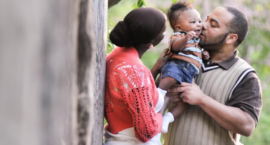
The United States is one of only seven countries lacking a federal mandate for paid maternal or family leave. Within the country, only 13 states and D.C. have paid family and medical leave programs, acting as a lifeline for families.

Often considered by lawmakers to be a program too expensive to start, it’s the cost of inaction that lawmakers should be concerned with, according to Dawn Huckelbridge, executive producer of a new short film Lifelines and founding director of Paid Leave for All. 

“A lot of people miss their baby’s first smile. … They’re not there to hold their parent’s hand because they can’t get the time off work. … However it is funded in the long run, it is putting money back into the economy. It is saving jobs.”

Three Ways Trump’s Weird Fixation on DEI Is Hurting Women

The Trump administration’s obsession with diversity, equity and inclusion has moved far beyond rhetoric. It is now reshaping how women’s stories get told, whose health crises are allowed to be named, and what kinds of research are permitted to survive.

Across history, healthcare and science, women are watching decades of hard-fought progress become collateral damage in a culture war designed to erase people in real time.

That damage is already visible.

Republicans derailed long-awaited progress on the American Women’s History Museum by inserting provisions policing which women count as women and handing Trump appointees sweeping control over the museum itself.

Meanwhile, the newly reintroduced Momnibus legislation—created in response to the maternal mortality crisis devastating Black women and families—has been forced to strip much of the word “Black” from its language in order to survive politically under an administration openly hostile to DEI initiatives.

And the consequences are not abstract: NIH grants focused on women’s health have reportedly dropped by 30 percent, while words like “women” and “gender” themselves are becoming liabilities in funding proposals.

Women’s health was already chronically underfunded and misunderstood long before Trump returned to office. But the administration’s escalating war on DEI is accelerating that neglect—and making clear just how much is at stake when political ideology begins dictating whose lives deserve to be studied, protected and remembered.

Tennessee Tries to Silence Women Nearly Killed by Its Abortion Ban: ‘We Will Have Our Day in Court,’ Pledges Lead Plaintiff

Tennessee was supposed to face nine women in court on April 27 in a closely watched trial over the state’s abortion ban—women who say they were denied emergency care, forced to flee the state for abortions, or pushed to the brink of death after suffering catastrophic pregnancy complications. After waiting nearly three years to testify publicly about what happened to them, the plaintiffs were prepared to finally take the stand.

Then, less than two business days before the trial was set to begin, Tennessee Attorney General Jonathan Skrmetti (yes, the same Skrmetti whose name is now attached to the Supreme Court’s landmark anti-trans healthcare ruling) filed an appeal invoking a newly enacted state law which prevents Tennesseans from suing over any state law that harms them. The move stripped the court of jurisdiction over the case, abruptly halting the proceedings and potentially delaying the trial for months or years.

“We should be in court today standing up to Tennessee’s abortion ban,” the Center for Reproductive Rights said in a statement after the cancellation. “These women deserve their day in court. But Tennessee politicians refuse to listen.”

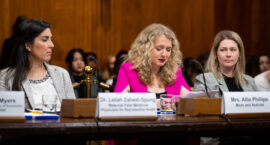
Among the plaintiffs is Allie Phillips, who says she was forced to travel to New York for an abortion after learning her fetus had a fatal diagnosis and that continuing the pregnancy put her own life at risk. By the time she arrived for care, she learned the fetus had already died in utero, placing her at heightened risk of infection and blood clots.

Phillips shares her story and reaction to the canceled trial, in her own words.

“I would have testified about how I would have risked my future fertility and my life if I had stayed pregnant in Tennessee. … I already had a 6-year-old daughter, Adalie, to raise. She needed me to live and be her mom. …

“We’re appealing. We don’t know how it will take but even if it’s five years, we will have our day in court. I’m not going anywhere.”

They Blame Feminism for Falling Birth Rates—but Data Says It’s Saving Families

Last month, the newest fertility data dropped—and the U.S. fertility rate has fallen again, hitting another record low.

Almost immediately, conservative influencers, media figures and elected officials pointed fingers at feminism, blaming women’s independence, career ambitions and access to contraception for the decline in births.

It’s a convenient narrative to push along their anti-birth control agenda. But it’s also wrong.

If you actually listen to women—and look at the data—the story becomes much clearer. The number one reason women are delaying or forgoing having children isn’t ideology, it’s affordability. Childcare costs, housing prices and healthcare access have made starting a family financially daunting for millions of Americans. Mix in student loan debt and political turmoil, and having a baby in 2026 is a scary venture. 

And yet, instead of addressing these barriers, policymakers—and organizations leading the way like the Heritage Foundation—are moving in the opposite direction. They are cutting or rolling back the very programs that make family life possible.

Trump’s Budget Plunders Birth Control and Reproductive Health Programs—With Open Derision for Americans Who Need Them

Title X is the federal program that funds family planning and reproductive health services nationwide—and under President Donald Trump’s proposed budget for 2027, it would be effectively eliminated, reshaping access to care for women across the country.

What is perhaps most jarring, on close reading, is not only what the budget proposes, but how it speaks. The language throughout the administration’s budget and HHS documents departs from traditional bureaucratic norms, adopting a tone that is at times openly mocking and vilifying. Programs serving women, LGBTQ people and marginalized communities are described in terms that signal not just opposition, but disdain. It is a stark reminder that federal budgets do more than allocate resources—they reflect who this government is for, and who it is not.

(This essay is part of an ongoing Ms. series examining the real-world impact of President Donald Trump’s proposed fiscal year 2027 budget. Across sectors—from healthcare and childcare to immigration enforcement and food assistance—the series explores what the administration’s funding priorities reveal about who government serves, and who it leaves behind.)

What ‘The Pitt’ Got Right and Wrong About a Major Pregnancy Risk

The Emmy award-winning medical drama The Pitt closed its second season with a storyline about a patient with preeclampsia, a hypertensive disorder of pregnancy most identified through high blood pressure and protein in urine.

As the patient’s condition worsens, including a horrible seizure leaving her nonverbal and her baby at risk, she is diagnosed with eclampsia and hemolysis, elevated liver enzymes and low platelets (HELLP) syndrome. The patient is ultimately (unbelievably) spared as her baby is surgically removed, and both are cleared to head to obstetrics and the neonatal unit, respectively. 

As a two-time preeclampsia survivor and CEO of the Preeclampsia Foundation, I want to wholeheartedly thank The Pitt producers for featuring preeclampsia, HELLP syndrome and eclampsia in their season finale. Hypertensive disorders of pregnancy, which include all three disorders plus gestational hypertension, are not rare: They affect 15 percent of all pregnancies. We need greater awareness of hypertensive disorders of pregnancy, the signs and symptoms, and the importance of fast, reliable intervention by medical professionals to save the lives of mothers and their babies. 

That said, I have thoughts—as does the broader community of preeclampsia survivors.

Rep. Maxine Dexter and the Girls of San Benito: Investigating the Office of Refugee Resettlement’s Treatment of Pregnant Unaccompanied Minors

U.S. Rep. Maxine Dexter—a physician and member of Congress from Oregon—visited a remote immigration detention center in San Benito, Texas. Her goal: to talk to the girls living there. She wanted to assess for herself a place deemed ill-equipped to handle the potential medical complications faced by pregnant minors and young mothers by immigrant rights and healthcare advocates. 

In an interview with Ms., Rep. Dexter raises urgent concerns about secrecy, missing girls, and inadequate medical care for pregnant unaccompanied minors in federal custody.

“The staff clearly were not helping us speak with them. And that gives me extraordinary concerns that there’s something they’re hiding …”

In the end, Dexter and her group visited a ghost town. They did not see a single child on their tour of the shelter, which currently houses two pregnant girls, two young mothers and their babies and three other girls.

“Just a few months ago they had many more girls. I asked where, where have they gone? Have they been returned to other countries? Are they in foster care? Are they transferred? And they said they couldn’t share that information with us. So, you know, it’s clear they’re trying to limit the number of girls in these facilities now. But where the hell are they?”

From Pennsylvania to Illinois to California: A Wave of Good News for Women

It is a relief to point to bona fide good news coming from the states, often some of the best laboratories for democracy.

In Pennsylvania, an appeals court struck down a decades-old law banning the use of state Medicaid funding to cover abortion. Truly remarkable is the majority’s decree that reproductive autonomy is enshrined in the equal protection provision of the Pennsylvania Constitution, guaranteed under its Equal Rights Amendment. ERAs can be game-changing for bolstering legal protection against a wide array of discrimination—including on the basis of pregnancy, age, disability, and immigration status—as well as for addressing adjacent issues such as pay equity and transparency and gender-based violence.

Upcoming judicial elections in Georgia are fast becoming a reproductive rights referendum, as happened last year in Wisconsin. Activists are raising funds in force. 

Idaho voters will likely get to weigh in directly on abortion rights in the November midterms.

… and more.