Nine women were finally set to testify about how Tennessee’s abortion ban endangered their lives—until state Republicans abruptly halted the trial days before it began.
A version of this piece also appeared on Fuller’s Substack Your Body, Your Choice.
Tennessee was supposed to face nine women in court on April 27 in a closely watched trial over the state’s abortion ban—women who say they were denied emergency care, forced to flee the state for abortions, or pushed to the brink of death after suffering catastrophic pregnancy complications. After waiting nearly three years to testify publicly about what happened to them, the plaintiffs were prepared to finally take the stand.
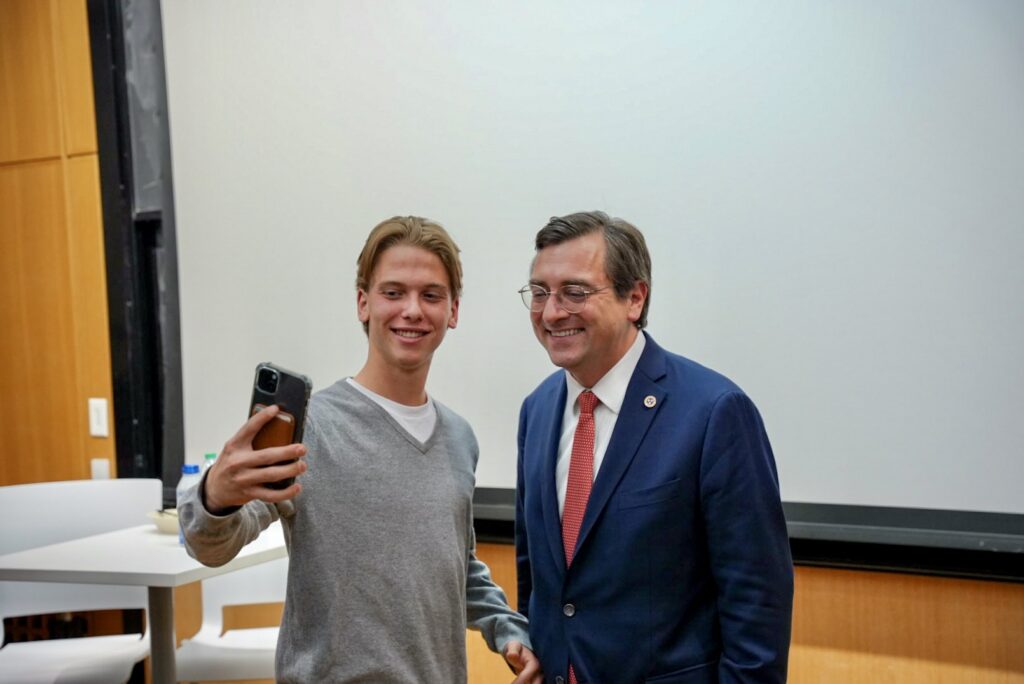
Then, less than two business days before the trial was set to begin, Tennessee Attorney General Jonathan Skrmetti (yes, the same Skrmetti whose name is now attached to the Supreme Court’s landmark anti-trans healthcare ruling) filed an appeal invoking a newly enacted state law which prevents Tennesseans from suing over any state law that harms them. The move stripped the court of jurisdiction over the case, abruptly halting the proceedings and potentially delaying the trial for months or years.
The lawsuit, brought by the Center for Reproductive Rights, challenges the real-world consequences of Tennessee’s near-total abortion ban. Plaintiffs include women who developed life-threatening infections after being denied care, women carrying pregnancies with fatal fetal diagnoses, and women who say doctors could not legally intervene until their conditions became medically dire.
“We should be in court today standing up to Tennessee’s abortion ban,” the Center for Reproductive Rights said in a statement after the cancellation. “These women deserve their day in court. But Tennessee politicians refuse to listen.”
“These women could have died without abortions. The state of Tennessee wants to avoid accountability,” said Nicolas Kabat, an attorney for the Center for Reproductive Rights. “Women shouldn’t be forced to the brink of death before they get care. That’s not the way medicine is supposed to work.”
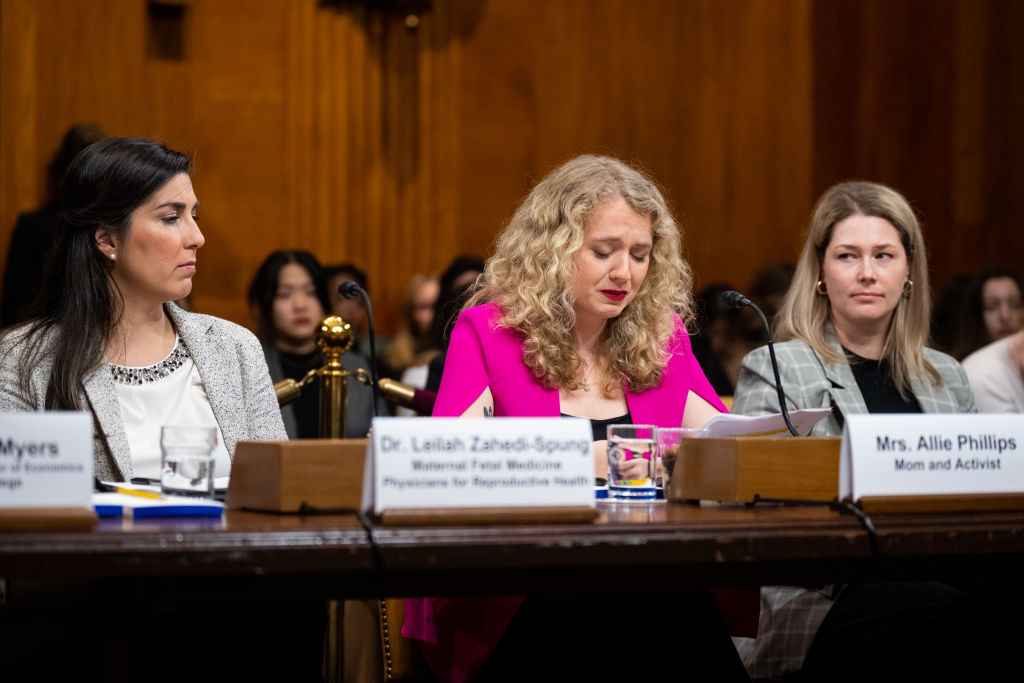
Among the plaintiffs is Allie Phillips, who says she was forced to travel to New York for an abortion after learning her fetus had a fatal diagnosis and that continuing the pregnancy put her own life at risk. By the time she arrived for care, she learned the fetus had already died in utero, placing her at heightened risk of infection and blood clots.
Below, Phillips shares her story and reaction to the canceled trial, in her own words (lightly edited for clarity).
After a Fatal Fetal Diagnosis, Allie Phillips Was Forced to Leave Tennessee for an Abortion: “I Couldn’t Wait for This Pregnancy to Kill Me”
After I had to flee to New York City for an abortion that saved my life, I was dealing with a lot of depression and anger. I had just lost my much-wanted baby daughter that my husband, Bryan and I had named Miley Rose.
We got the shattering news during my 20-week sonogram that Miley only had half a heart and that her brain, kidneys and bladder had not developed properly. She had a condition called semilobar holoprosencephaly and that she was “incompatible with life.”
In other words, she would not be able to survive outside my womb and could actually die any day inside me. If she died, I would be at high risk of a deadly sepsis infection developing inside me.
It would be impossible under Tennessee’s total abortion ban for me to have received an abortion in Tennessee until that infection spread throughout my body and threatened my life.
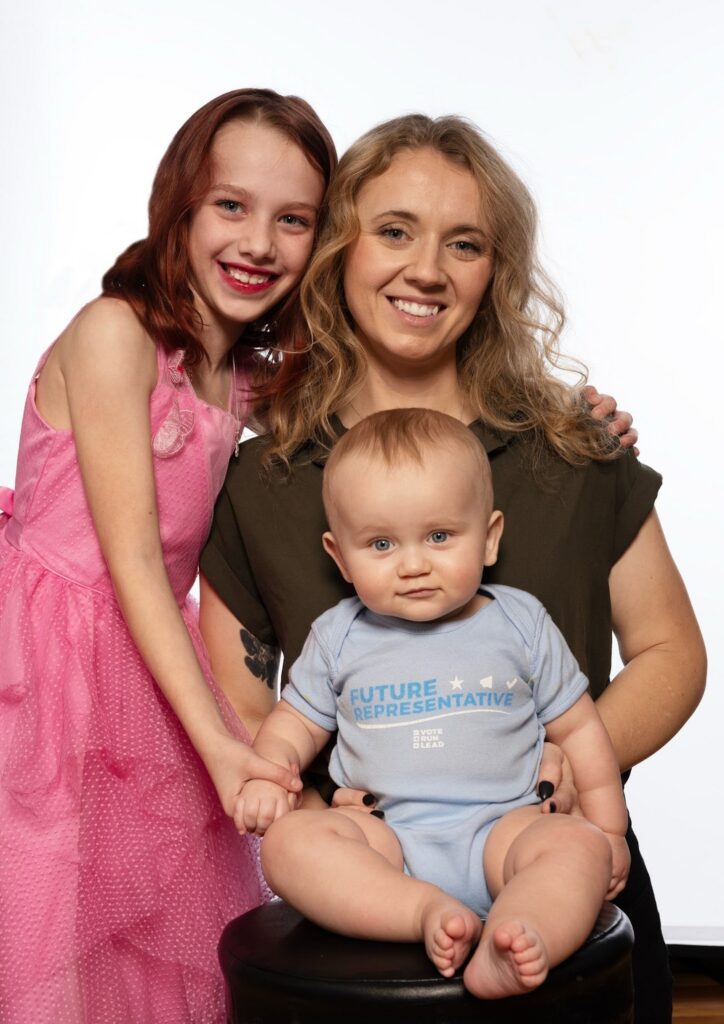
I just couldn’t wait for that to happen. I already had a 6-year-old daughter, Adalie, to raise. She needed me to live and be her mom.
Byran and I had to scramble to raise the money to fly to NYC, including from caring people who heard me share my story on TikTok.
I would have testified about how I would have risked my future fertility and my life if I had stayed pregnant in Tennessee. … I already had a 6-year-old daughter, Adalie, to raise. She needed me to live and be her mom.
Allie Phillips
When I got home, I had anger about a lot of different things. Anger feeling like my body had failed me. Anger that I had to leave my state to get an abortion that saved my life. I had gotten the devastating news at the NYC clinic that Miley Rose had already died inside me by the time I got there.
My abortion had to be started immediately since an infection could begin at any moment.
I was angry at Donald Trump for his Supreme Court picks. I was angry at the Supreme Court for its Dobbs decision which overturned Roe v. Wade. I was angry at the Tennessee General Assembly for its trigger abortion ban, which took effect after Roe was overturned.
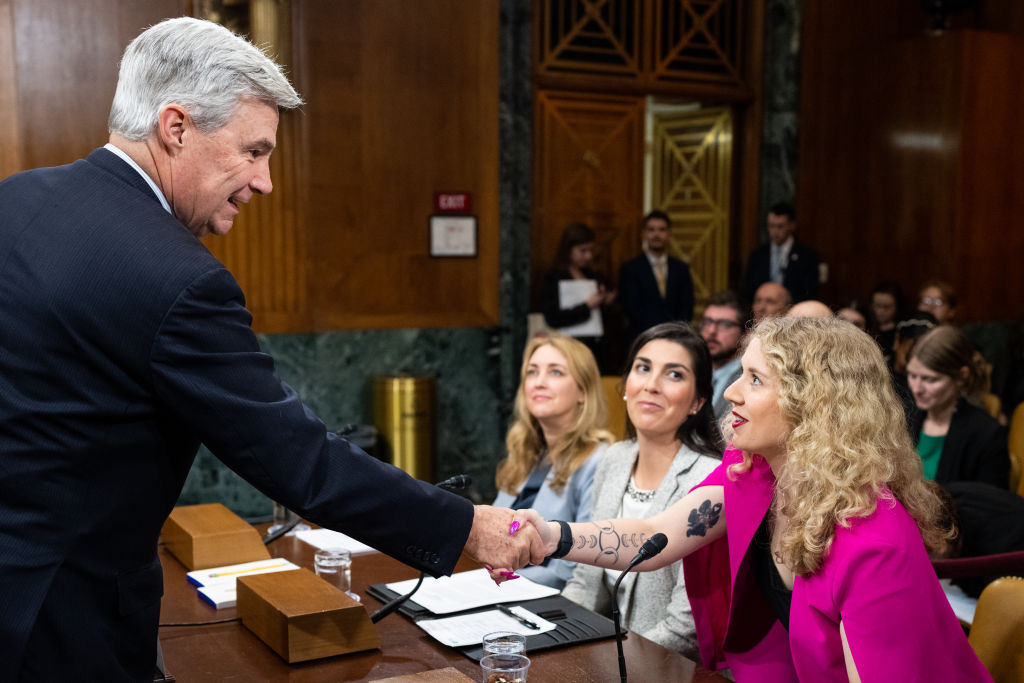
I was pissed that lawmakers—mostly men—had the ability to legislate on women’s access to healthcare. People who never have to experience a pregnancy and would never have to decide whether I could risk letting this pregnancy kill me or survive, based on a simple luck of the draw.
It was anger that these lawmakers could sit up there at the Capitol and vote yes or no on whether women get to live or not.
It was anger that the world continued to move forward while I just felt that I had lost everything.
I wondered how in the world I could make a difference. I felt powerless.
But then about a month after the abortion, I got a message on Instagram from the Center For Reproductive Rights. Would I join a lawsuit against the state of Tennessee for enacting its extreme abortion ban that had no exceptions for rape, incest or even the health of the mother?
Here’s what the ban said:
“Abortion is illegal from fertilization except to prevent the death of the pregnant woman or to prevent serious risk of substantial and irreversible impairment of a major bodily function of the pregnant woman.”
The lawsuit would fight to add clearly stated medical exceptions to the law, including for pregnant women like me, who carried babies with fatal fetal anomalies (which meant babies that could not live after birth).
After speaking to a lawyer at the Center, it was like a lightbulb moment for me. I said yes to joining the lawsuit, quicker than I’ve ever said yes to anything. How can you say no to changing people’s lives? To having an opportunity to stop these tragic events from happening to other women? I would not be doing myself or Miley justice, if I didn’t say yes. It was about protecting the people of my state, my neighbors, my friends and potentially myself if I ever decided to get pregnant again.
The lawsuit was filed in September 2023 and was finally going to a jury trial on Monday, April 27, 2026. We had waited three long years for the people of Tennessee to hear my testimony and the testimony of seven other women also harmed by the abortion ban.
Then I got the news on Thursday—just one and a half business days before the trial was finally supposed to begin—that it had been canceled.
I was in disbelief when I got the email. So frustrated and so confused. I reread the same sentence five times. Like wait, what do you mean that the trial was canceled?
“Tennessee Republicans Are Trying to Silence Us”
Tennessee’s attorney general and the Republican-controlled General Assembly are trying to silence me and the other women in our lawsuit. They are trying to take away the power that we have, which is our stories.
I would have testified about how I would have risked my future fertility and my life if I had stayed pregnant in Tennessee.
That’s because the state’s abortion ban wouldn’t have allowed a doctor to terminate my pregnancy until I was at risk of one of my major bodily functions suffering irreversible damage.
Jonathan Skrmetti and state lawmakers didn’t want us to get our stories of how the abortion ban threatened our lives out there.
We’re appealing. We don’t know how it will take but even if it’s five years, we will have our day in court. I’m not going anywhere.
Families are the backbone of what keeps this state and this country running, and they are being left behind.
I feel that it is my purpose to get up into that statehouse and pass Miley’s Law, which will provide an exception to Tennessee’s abortion ban for pregnant women who are carrying babies with fatal fetal anomalies, like I was.
Ultimately my big goal is to get rid of the abortion ban altogether. Restricting healthcare access to anyone is unacceptable. But here in Tennessee if I could get Miley’s Law passed, a crumb is a big win.
By putting my name and my face out there and eventually going to trial and giving my testimony, that’s giving people hope.
Look to these trusted groups if you or a loved one needs to know more about reliable abortion care:
- A one-stop-shop for abortion seekers: I Need An A
- Other websites to explore all your options for abortion care: Plan C Pills, Abortion Finder
- Safe websites to buy abortion medication: Aid Access, Massachusetts Medication Abortion Access Project, Hey Jane
- If you need help affording abortion care, tell your telemedicine provider or contact an abortion fund near you.
- To protect your digital privacy when planning your abortion, click here.
- For free legal help as a patient or doctor, call If/When/How’s Repro Helpline—844-868-2812—or contact Pregnancy Justice.
- For medical advice, contact the Miscarriage & Abortion Hotline: 833-246-2632.
- If you need to know the abortion law in your state, look to the Center for Reproductive Rights. or Guttmacher Institute.