Abortion How-To: The Ms. Q&A on Menstrual Extraction With Carol Downer

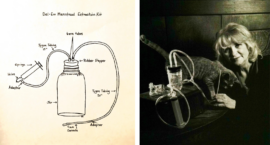
Before Roe v. Wade, one of the ways women bypassed the medical system to get necessary abortions was a technique feminists called “menstrual extraction,” using a syringe, flexible plastic tubing and a mason jar to extract the contents of the uterus.

Ms. spoke with activist Carol Downer about her experiences teaching people to perform menstrual extractions and how the procedure could help post-Roe.

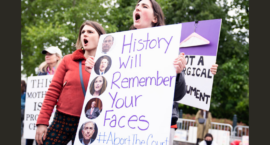
“How in the world can that Supreme Court sit up there and deny this thing to us? How can they get away with that? You can guarantee that Amy Coney Barrett has not seen her own cervix.”

What Was Justice Alito Thinking?

When Justice Samuel Alito did the final proofreading of his majority opinion in Dobbs v. Jackson Women’s Health Organization, he must have felt a great sense of moral rectitude and satisfaction at the fulfillment of a half-century-long mission.

But he should also have been a bit nervous about the thinness of some of his assertions and the vulnerability of some of his legal analysis. That last reading might have gone something like this.

Abortion on Our Own Terms: ‘Supreme Court Justices Can’t Put Abortion Pills Back in the Bottle’

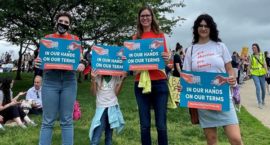
In response to the Supreme Court’s imminent overturning of Roe v. Wade, a coalition of over 70 reproductive health, rights and justice organizations have created a new campaign, Abortion On Our Own Terms, to educate the public about the safety and effectiveness of self-managed abortion using medications.

“We are defiant that no matter what these bigoted justices do to abortion access under the law, we know that people will continue to take abortion into their own hands.”

Now More Than Ever, It’s Time for Universal Menstrual Education for Gender Equality

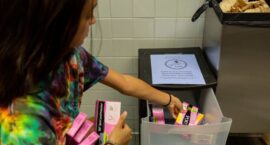
Ninety-two percent of high school students reported needing a new pad or tampon during school. Yet, period poverty, a lack of access to menstrual products due to economic circumstances, impacts students’ ability to safely address menstruation.

“Some girls find out about their periods when they actually get them. It’s just never talked about in schooling.”

Our Refugee Crisis Response Must Prioritize Menstrual Health

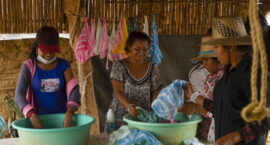
Nearly all the Ukrainians fleeing their war-torn country are women and children, a regional tragedy that mirrors a global truth: Refugee crises are women’s crises. And as women’s crises, they demand responses informed by gender-specific needs — including crucial attention to menstrual health and hygiene management.

Will My Period Tracking App Betray Me? Menstrual Surveillance in a Post-Roe World

Menstrual data and period tracking has already become a lucrative industry for apps. Selling private and personal reproductive health data to companies has created income many fertility apps.

The availability of this data already poses a unique threat to the lives of all people with uteruses, but in a world without Roe the risk of this data becoming a weapon for the anti-abortion movement. They have been known to use such data to influence decision making and reproductive choices. In order to keep this vital data out of their hands action needs to be taken to provide protection and safe alternatives for menstruators.

Women’s Rights and Democracy Are Inextricably Linked

Last fall, America was featured for the first time on a list of backsliding democracies. With inadequate progress in women’s participation in government, reproductive rights, and maternal mortality, this title may reflect recent attacks on gender equality. Amer­ica’s long­stand­ing and abysmal record on myriad gender equity mark­ers has been the true harbinger for our down­graded democracy status.

The Period Project: Menstrual Equity in Schools

In the last of our three-part series on menstrual equity, highlighting our Period Project research study and forthcoming Period Project Report Cards, we report on schooling and access to menstrual products.

Within the last five years, over a dozen states passed laws to require that menstrual products be made available free of charge in at least some schools—up from zero. State laws requiring access to menstrual products free of charge represent a crucial component of ending period poverty and achieving menstrual equity.  

The Period Project: The Fight for Menstrual Equity in Prisons

Although only 5 percent of the world’s female population lived in the United States, it accounts for nearly 30 percent of the world’s incarcerated women. Inadequate and inaccessible menstrual products remain a pervasive issue in the U.S. carceral system. Our research shows few states have taken action to address the issue and enforcement lags behind laws that mandate access to menstrual supplies.

(This is the second article in a three-part series on the Period Project, which examines the scope and consequences of period poverty and assesses state progress toward achieving menstrual equity through legislation.)