Birth Control Fear-Mongering Prevents Women From Achieving Informed Bodily Autonomy

The Republican attorneys general of Missouri, Kansas and Idaho—recently joined by Florida and Texas—are suing the federal government to restrict access to mifepristone, which is used in combination with misoprostol to terminate an early pregnancy, arguing that the abortion medication has lowered “birth rates for teenaged mothers” and is contributing to a population loss in their states, leading to a loss of political representation and federal funds.

You read that right: They want more teen pregnancies. It would be laughable if it weren’t so dangerous. 

So where does that leave us? We must continue to fight all of these insidious tentacles as we work to ensure that women and gender non-conforming people of all races, ages, backgrounds and abilities can continue to tear down the systemic barriers that try to keep us from thriving and taking our rightful place in every arena.

Finding the Power in Single Black Motherhood

We can say, “We knew this would happen,” and tell Black single mothers, “I told you so,” all day long, but then what? There’s something hollow in the phrase—especially when it follows public documentation of abuse.

If we are people who truly believe that Halle Bailey, Keke Palmer and Skai Jackson deserved better, then we should be extending that same belief to the women we actually know.

(This essay is part of a collection presented by Ms. and the Groundswell Fund highlighting the work of Groundswell partners advancing inclusive democracy.)

Terrified to Try: The Mental Anguish of Motherhood in South Carolina

In a state where abortion bans endanger lives and strip away autonomy, one South Carolina mother shares how fear, grief and rage have made her question whether she can risk motherhood again:

“I had to leave the state, my support system and my young son just to access the healthcare I needed.”

(This essay is part of a collection presented by Ms. and the Groundswell Fund highlighting the work of Groundswell partners advancing inclusive democracy.)

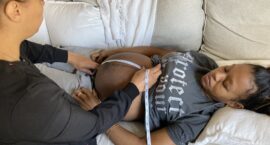
What Happens When Doulas Write the Law? New Mexico’s Medicaid Win Shows How to Fight Back 

As abortion bans sweep the U.S., clinics shutter and gender-affirming care is criminalized, New Mexico accomplished something radical: It passed a law to pay doulas—because doulas save lives.

In 2025, the state unanimously enacted HB 214, the Doula Credentialing and Access Act, creating the nation’s most comprehensive Medicaid coverage for full-spectrum doula care, including for abortion, miscarriage, pregnancy, birth, postpartum and loss.

This victory was decades in the making, a fight led by Black, Indigenous, Latinx, LGBTQ+, immigrant, disabled and community-based doulas. These care workers have long provided essential, unpaid labor in a healthcare system that overlooked them. Now, for the first time, their labor is recognized as essential health infrastructure.

Still, as this vision takes root under HB 214, federal funding threats loom, including cuts to Medicaid, SNAP and reproductive health access—all part of a national strategy to defund care and increase control. Believe in this future? Help protect it. Urge your state to follow New Mexico’s lead. Support local doula collectives. Push for policies that center care over control. The path forward is here—let’s walk it together.

(This essay is part of a collection presented by Ms. and the Groundswell Fund highlighting the work of Groundswell partners advancing inclusive democracy.)

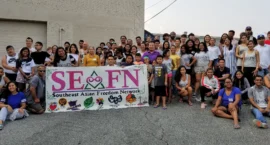
Fifty Years After War, Southeast Asian Communities Face a New Kind of Violence. Gender and Queer Justice Must Be at the Heart of This Moment.

Drawing on histories of war, displacement and resistance, Southeast Asian organizers expose how patriarchy fuels violence, erasure and division—and why intersectional justice must lead the way forward.

“Patriarchal power is regrouping, seeking to reassert its grip. If we do not recognize and resist this realignment, we risk losing hard-won resources, protections and, most importantly, people. 

“As a community, Southeast Asians’ trauma is compounded by war and displacement. Nearly 16,000 Southeast Asian refugees face deportation; many live in poverty and fear, underserved by traditional systems and are often overlooked in broader Asian American narratives. As the United States expands its deportation machine, refugees from the U.S.-backed wars in Laos, Cambodia and Vietnam are being re-criminalized and forcibly removed. These deportations fracture families, destabilize communities, and retraumatize those already targeted by the carceral state. Gender-based violence and anti-queer violence only intensify those challenges.”

(This essay is part of a collection presented by Ms. and the Groundswell Fund highlighting the work of Groundswell partners advancing inclusive democracy.)

How Dare We Not: On the Feminist Future of Care 

On July 30, Medicare and Medicaid turn 60. The anniversary probably won’t receive much celebration, not even a decent sheet cake at Costco. But for those of us who’ve ever been sick, broke or chronically both—and let’s be real, that’s most of us—these two programs are more than government policies. They are lifelines. Feminist infrastructure. Miracles wrapped in red tape. 

Medicaid and Medicare are the government’s half-hearted whisper of “okay, fine, you can live,” buried under broken fax machines and six hours of hold music—and still, they are miraculous. 

So let’s get to work with petitions, protests, poetry and better policy. When we fight for these programs, we’re not begging for scraps. We’re demanding infrastructure for care. We’re saying, Our dignity is not a rounding error. We are not too complicated or too expensive or too much. We are exactly the point. 

Happy birthday Medicaid and Medicare, the baddest Leos in American policy—dramatic, protective, always carrying us all on their backs while being called “too much.” We see you. We need you. And we’ll fight for you. How dare we not?

(This essay is part of a collection presented by Ms. and the Groundswell Fund highlighting the work of Groundswell partners advancing inclusive democracy.)

When the Federal Government Fails, Local Organizers Step In—With Laws, Not Just Protests

We are living through the hollowing out of federal protection. And while the usual narrative goes something like, “Vote, wait, trust the system,” in many places, the people closest to the chaos have stepped up to envision and advance new laws.

In California this year, four bills moving through the legislature were not the result of think tank white papers or party strategists. They came from organizers, queer folks, women of color, survivors—people who have lived the very broken systems they are now trying to change.

A process that centers lived experience as a form of policy expertise is a cutting-edge theory of governance. And it’s replicable: Invest in community-led policy training. Bring people into the lawmaking process not as tokens but as co-authors. Demystify legislative drafting. Reimagine who gets to define what safety, dignity and justice look like.

(This essay is part of a collection presented by Ms. and the Groundswell Fund highlighting the work of Groundswell partners advancing inclusive democracy.)

The Big Beautiful Bill? A Big Bad Blow to Maternity Care

The “Big Beautiful Bill” is really a Big Bad Blow to millions suffering an already inadequate and inequitable maternity care system.

While policymakers debate in distant chambers, local organizations and midwife-led community-based initiatives are bracing to weather the coming storm.

(This essay is part of a collection presented by Ms. and the Groundswell Fund highlighting the work of Groundswell partners advancing inclusive democracy.)

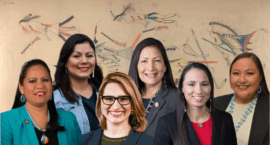
From the Battle of Little Bighorn, to the Ballot Box: Native Resistance Then and Now

On June 25-26, 1876, a pivotal moment in Native history unfolded along the banks of the Little Bighorn River in present-day Montana: Lakota, Cheyenne and Arapaho warriors stood against Lieutenant Colonel George Armstrong Custer and the Seventh Cavalry of the U.S. Army to defend their way of life.

Today—nearly 150 years later—their same spirit of resistance and determination lives on … in legislative chambers, courtrooms and school board meetings. And while the battlegrounds may have changed, the stakes remain.

(This essay is part of a collection presented by Ms. and the Groundswell Fund.)

As Reproductive Rights Collapse, Funders Are Disappearing. Why?

Grassroots organizations are on the frontlines of defending human rights at this moment. Yet, it’s alarming that major funders are leaving the field right when groups working to defend bodily autonomy and democracy need them most. 

In the 2024 presidential election, we saw the consequences of what happens when donors abandon grassroots organizations—where a billion dollars were raised for the Harris campaign at the expense of movement organizations in key battleground states. In a presidential election lost to low voter turnout, the decision to underfund grassroots groups—those best equipped to knock on doors and mobilize voters—proved dangerously short-sighted.

(This essay is part of a collection presented by Ms. and the Groundswell Fund.)