
Update, June 22, 2026: Since this article was published, Senate Bill 31, the Life of the Mother Act, became law, requiring the Texas Medical Board to create educational guidance for physicians navigating the state’s abortion ban.
In March 2026, the board released a training program outlining circumstances under which doctors may legally provide abortion care to protect a patient’s life or major bodily functions. While the guidance admittedly offers long-sought clarity—including nine example scenarios of when a doctor is allowed to intervene with abortion care, like a patient’s water breaking before term and complications from an incomplete abortion—many physicians and legal experts argue that significant uncertainty remains. After all, women’s health is more nuanced than 49 slides can capture, and doctors still face severe criminal and civil penalties for violating the ban.
See our follow-up reporting: “After Years of Silence, Texas Medical Board Issues Training for Doctors on How to Legally Provide Abortions,” including the new medical training, which ProPublica obtained under a public records request:
These Women Couldn’t Get Life-Saving Care. Now They’re Changing the Law.
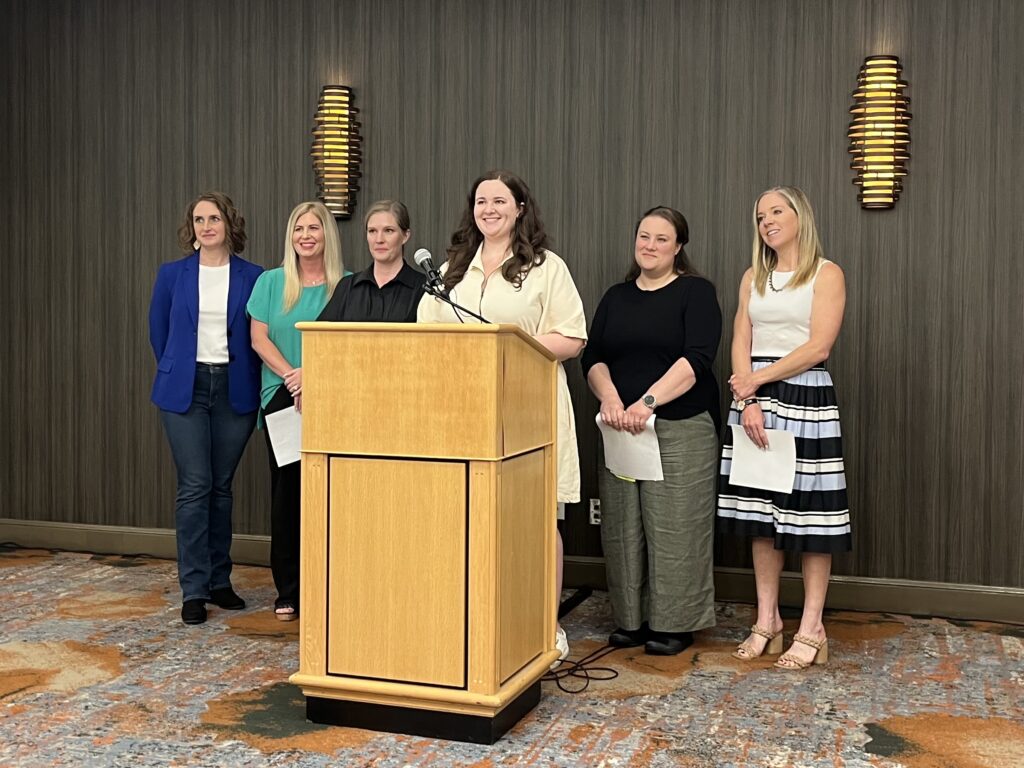
Denied care, they demanded change—proof that even in Texas, pressure and persistence can move policy.
A group of Texas women denied life-saving healthcare during their wanted pregnancies are feeling “cautiously optimistic” and “hopeful” after meeting with state legislators and urging changes to an abortion-related bill currently working its way through the legislature.
After a morning (and frankly, years) of lobbying and pushing lawmakers and the public to consider the real-life impact of Texas’ extreme bans, the women said state Sen. Bryan Hughes (R) pledged this week to propose a new draft of Senate Bill 31 (SB 31), or the “Life of the Mother Act,” clarifying that it does not revive a 1925 fetal personhood law and ensures pregnant women cannot be prosecuted—major concerns at the heart of the bill.
“This is a small step towards where we need to be as a state,” said Kaitlyn Kash, a patient storyteller and former plaintiff in Zurawski v. Texas, a case brought by 22 women and their doctors that sought to clarify the scope of Texas’ “medical emergency” exception under its state abortion bans. “The only thing that could have made my loss more painful was knowing that I could be personally prosecuted or my husband could be personally prosecuted. And so I am extremely grateful to the lawmakers for listening to our concerns about the 1925 language and for proposing these amendments.”
Hughes and other lawmakers also agreed to amendments that aim to allow doctors to act quickly in medical emergencies, according to the women.
The edits to the bill will not address abortions sought for fatal fetal anomalies. They also do not help Texans seeking abortions for reasons other than medical necessity—think: affordability, personal choice, gender expression, and so on.
But as U.S. Sen Sarah McBride (D-Del.) spelled out her theory of change on a recent episode of Pod Save America: “Which Civil Rights Act brought all equality all at once? Was it the Civil Rights Act of 1957? The Civil Rights Act of 1959? The Civil Rights Act of 1964? The Civil Rights Act of 1965, which was the Voting Rights Act? The Civil Rights Act of 1968? Which Civil Rights Act brought everything? They, piece by piece, moved toward legal equality, but they didn’t get it all in one fell swoop. And that is sad and tragic and unfair, and time is the one resource we can’t afford to waste. But it is the theory of change in our system that has most consistently worked.”
These women have been telling their devastating stories of life and loss for years. So why are they starting to spur legislative action from Republican lawmakers now?
“You have to keep repeating it—so as painful as it is for me to relive those days and to relive my story, I will continue to do it for my daughter,” said Kash, who while pregnant, lost consciousness and needed a blood transfusion after her doctors hesitated giving her a D&C because of Texas’ abortion ban. “The media has been so great about amplifying our stories and making sure that Texans hear from Texans … That has really helped a lot.”
She continued, “To be quite honest, people don’t want to see women dying, and so unfortunately, it took stories like Amanda and the women you know that ProPublica has talked about that passed away—that obviously had an impact, and those families should know that.”
Twelve U.S. states ban abortion completely, including Texas. Another seven ban abortion at or before 18 weeks’ gestation. Bans on abortion and other reproductive care have tied doctors’ hands, forcing women to carry doomed pregnancies to term, lose their fertility and even die: At least 10 women have died as a direct result of abortion bans.
Lobbying legislators to make these much-needed changes (despite their limitations) will save lives … full stop.
But in a classic case of “two steps forward, one step back,” Hughes—the same Texas legislator that in 2021 authored SB 8, the six-week abortion ban with a novel bounty hunter provision (and, at the time, the strictest abortion ban to ever take effect in the U.S.), as well as SB 1, a sweeping voter suppression signed into law by Gov. Greg Abbott in 2021 (albeit with some recent key exceptions)—and other Republican lawmakers have introduced several other bills recently that would punish abortion-seeking Texans:
- SB 32, authored by Sen. Donna Campbell (R), would prohibit local governments from using public funds for abortion-related services, including logistical support such as transportation, childcare, food or lodging for women seeking abortions out of state.
- SB 33 builds on the previous bill by expanding the prohibition on the use of taxpayer resources to support not only abortion providers but also “abortion assistance entities,” like abortion funds.
- SB 2880, and its House companion HB 5510, takes aim at online pill providers and the tech companies that host abortion-related websites. “HB 5510 really takes Texas in a deep, dark direction,” said Kash. “Now people will not even be able to have online conversations about their options. It’s going to send abortion access and things way underground, and we’re going to go back to back-alley abortions and coat hangers.”
- A newly introduced bill would criminalize individuals who transport minors for abortion care, including travel out of state.
What’s Next?
The Texas legislative session continues until June 2 at least, barring special sessions. The patient storytellers at Tuesday’s press conference in Austin (organized by the nonprofit Free and Just) urged reproductive rights supporters to focus energy on the following:
- Continue monitoring the language and progress of SB 31, and its House counterpart, HR 44. Texas residents should provide input and feedback on the final version of the amended bill. (You can use the “Who Represents Me?” tool on the Texas Legislature Online website to find your state representative and senator, or submit comments via the Texas House Public Comment website.)
- Stay vigilant and advocate against other bills like HB 5510 that could continue to harm women’s reproductive rights.
- Vote for lawmakers who support safe pregnancies and abortion access.
As both a journalist on the reproductive rights beat and someone who lives in Texas and hopes to have a baby one day, I’ve been watching this space carefully. And like the Texas women who share their stories, I’m also cautiously optimistic. Make no mistake—Bryan Hughes will not save us. But this is what it looks like when we save ourselves.