In This Edition:
Birthdays for notable women: Diane Silver, FairVote; Nancy Bagley, Arca Foundation; Laura Clay, president of Kentucky Women’s Suffragette Association (1849); Alice Walker, first African American woman to win a Pulitzer Prize for Fiction; Laura Dern; Mindy Finn, CEO of Citizen Data; Adella Hunt Logan, African American writer & suffragist (1863); Louisa Adams, former First Lady (1775); Nicole Terrell; Sabrina Matos, lieutenant governor of Rhode Island, first Afro Latina LG and first Dominican American to hold statewide office in the U.S.; Janet Smith Dickerson, vice president of student affairs at The Claremont Colleges; Lorig Charkoudian, Maryland state legislator; Brooke Lierman, Maryland comptroller; Donna Shalala, former U.S. representative; Amanda Litman, co-founder and president of Run for Something; Anna Howard Shaw; Clare Persson, co-founder of The Cocoon: Transformational Wellness.
Milestones: First employment bureau for women was founded (1870); Emma Goldman arrested for lecturing on birth control (1916); Rev. Barbara Harris became first woman bishop in the AEC (1989); the Utah Territorial Legislature passes a bill allowing women to vote (1869); the NAACP is founded (1909); first women to enlist for non-clerical duties in Marine Corps Women’s Reserve at Camp Lejune (1943); Esther Hobart Morris, suffragist, begins tenure as first female U.S. Justice of the Peace (1871); The League of Women Voters is founded in the U.S. by Carrie Chapman Catt and Maude Wood Park becomes its first president (1920); President Rutherford B. Hayes signs bill allowing female attorneys to argue cases before U.S. Supreme Court (1879); the Suffrage Monument is dedicated at the U.S. Capitol (1921); Former Rep. Carolyn Maloney (D-N.Y.) introduces the Susan B. Anthony Birthday Act (2011).

After the House Vote, Questions About the SAVE Act Are Only Growing

This was one of those weeks where the work we do at RepresentWomen stopped feeling theoretical and started unfolding in real time.
For years, we’ve studied how the rules of our democracy shape who participates and who ultimately serves. We’ve written about systems design, voter access, incentives and representation. But this week, those conversations moved from research and reports into the national spotlight.
On Tuesday evening, we hosted a national public webinar on the rebranded SAVE America Act with members of the Democratic Women’s Caucus—chair Rep. Teresa Leger Fernández, Reps. Delia Ramirez (D-Ill.) and Valerie Foushee (D-N.C.)—alongside election experts from FairVote and the Brennan Center for Justice. Hundreds of people joined from across the country.
What struck me most wasn’t just the size of the audience—it was the seriousness of the questions. Not partisan questions, but practical ones: What happens if I changed my name years ago and my documents don’t match? How much time will this take? What if I don’t have easy access to the paperwork they’re requiring?
These are the kinds of questions that rarely make headlines, but they are exactly the kinds of questions that determine who gets through the door of participation, and they were addressed thoroughly during our conversation Tuesday night.
The congressional representatives discussed the reality that nearly 90 percent of married women change their last name, which means that the undue burden will fall on women, should this bill be passed.
I appreciated that the Congress members echoed what we have researched at RepresentWomen, explaining how caregiving responsibilities, rural access and the cost and time required to gather documents, creating outsized barriers for women. Overall, the main points raised were that the policies that appear neutral on paper can land very differently in lived experience, and that matters deeply.
Unfortunately, on Feb. 11, the House passed the SAVE Act. But a House vote is not the end of a conversation like this. It is an extension of it.
The bill now moves to the Senate, and its path forward remains uncertain. What feels clear to me is that the questions raised this week are not going away. If anything, they are becoming more urgent. Because at its core, this debate comes back to something we’ve said for years: Participation is the foundation of representation.
Before we ever debate who runs or who wins, we have to ask who can fully participate, and under what conditions. When access becomes more time-consuming, more expensive or more administratively complex, the effects are rarely dramatic in the moment. They are incremental. But over time, those increments reshape the electorate. And when the electorate shifts, representation eventually shifts too.
That is why, as Alana Persson wrote in her Ms. magazine article this week, the SAVE Act debate feels bigger than a single bill. It sits within a broader set of conversations unfolding right now—about voter registration rules, ballot design and whether communities can choose voting systems like ranked choice voting that expand voter voice. These are not isolated policy questions. They are design choices. And design determines outcomes.
I am grateful that RepresentWomen was able to help convene a national conversation at this moment. When policy debates accelerate, the instinct is often to shout. What I witnessed on Tuesday was something different: members of Congress, researchers and community members slowing down to ask how this would function in practice. That kind of space matters, especially when the stakes are high.
It is also why we created the Democracy Solutions Summit, and why this year’s theme, Women’s Power by Design, feels especially timely. From March 10-12, we will gather women leaders, including additional members of the Democratic Women’s Caucus and international voices like Laura Liswood, to step back from the headlines and examine the structural choices that shape participation and representation over time.
Because weeks like this are a reminder that democracy is not static. It is shaped through rules and procedures that determine who can participate fully. The good news is that those rules are not inevitable. They are choices. And when women are at the center of shaping those choices, the future of our democracy looks different.
I hope you’ll continue pursuing the solutions with us by joining the conversation next month.
From Capitol Hill to City Councils: RepresentWomen Engages on Ranked-Choice Voting and Federal Election Proposals
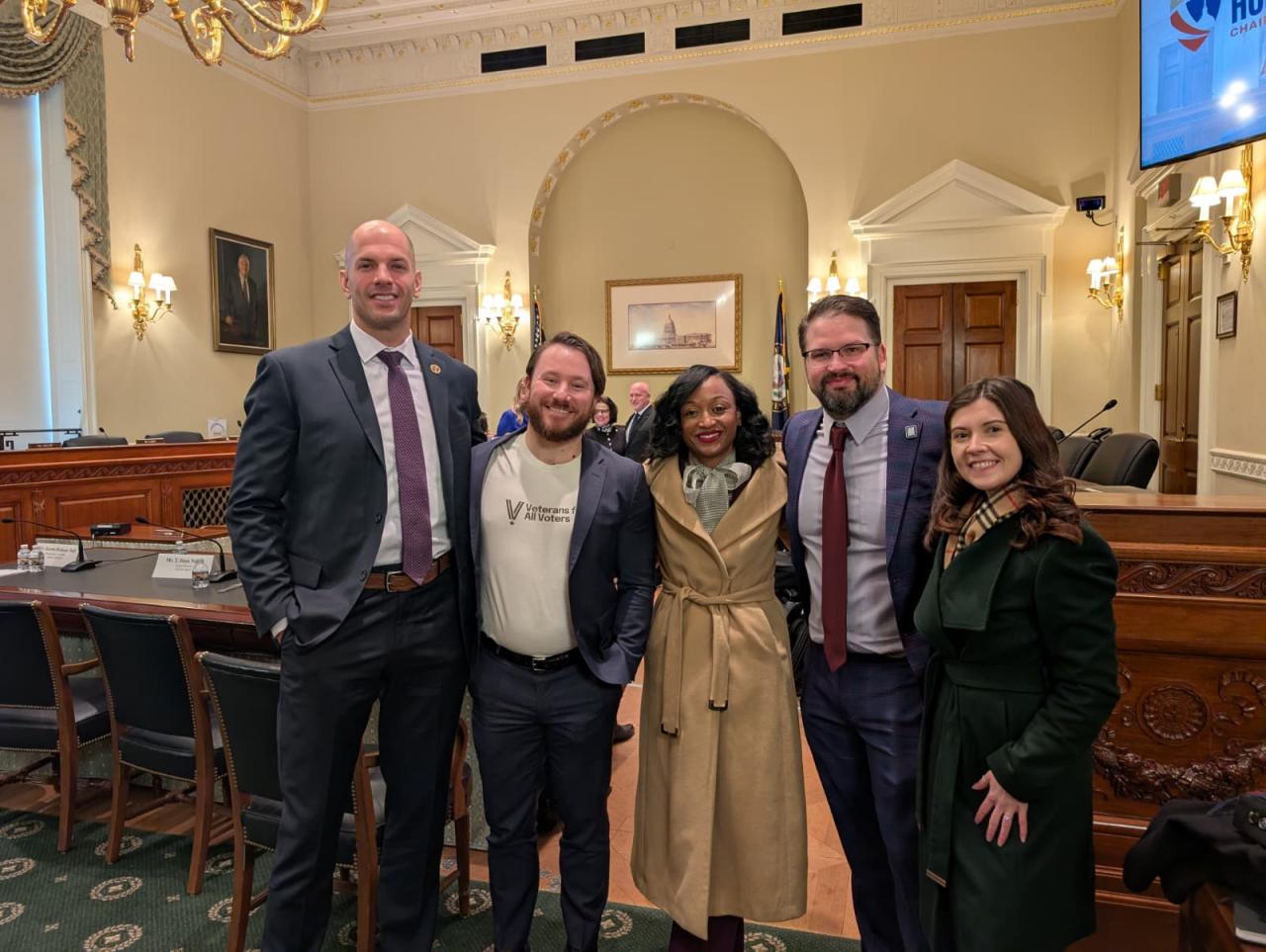
This week, our work extended beyond convening conversations; it also unfolded directly on Capitol Hill and in City Halls across the country.
Alana Persson, our communications lead, traveled to Washington to attend the first hearing on the newly introduced Make Elections Great Again (MEGA) Act. The bill, introduced by House Republicans, would dramatically expand federal oversight of elections and, notably, ban ranked-choice voting and other alternative voting systems in federal elections. Such prohibitions would overturn reforms already adopted by states and jurisdictions, including Alaska, Maine and Washington, D.C.
The proposal has drawn national attention and continues to be described by experts in the democracy space as one of the most dangerous attacks on voting rights ever proposed at the federal level, going even further than the SAVE Act in restricting voter access. As such, RepresentWomen felt it was important to join other partners in the movement, including FairVote and Veterans for All Voters, to better understand what legislators are discussing in real time as the bill moves forward.
At the state level, our advocacy continued. Tamaya Dennard, our programs and partnerships manager, testified in Boston in support of expanding ranked choice voting, highlighting its benefits for women candidates and voters alike. We also submitted testimony in Maryland, where ranked-choice voting is being considered more broadly across various jurisdictions.
Taken together, these efforts reflect the moment we are in. While some proposals seek to narrow voter choice at the federal level, states and localities continue to explore reforms to expand participation and representation. And we will continue to show up—in Congress, in statehouses, in city halls and in public forums—to ensure that women’s voices and evidence-based solutions remain part of the conversation.
Women Candidates Win Special Elections for Congress and State Legislature

Many states hold special elections to fill vacancies for Congress and the state legislature. Although rules for party nominations vary widely, many states allow parties to pick nominees, while others hold contested primaries. The big special election news was Analilia Mejia’s narrow win with less than 30 percent of the vote in the special election in New Jersey to succeed new governor Mikie Sherrill. Meijia is heavily favored in the April 16 general election.
Formerly head of the New Jersey Working Families Party, Meijia was outspent by several candidates, including former Congressman Tom Malinowski. The New Jersey Monitor reported on her upset win:
Malinowski, who said he supports Mejia in the April special election, attributed his loss in part to an advertising blitz on behalf of a super PAC linked to the American Israel Public Affairs Committee, which used Malinowski’s support of a 2019 appropriations bill in Congress to tie him to President Donald Trump and U.S. Immigration and Customs Enforcement. Malinowski joined several other New Jersey Democrats, including Sherrill, in supporting the 2019 bill.
Mejia on Tuesday said it was “horrendous” how AIPAC confused voters and created division among Democrats, but she denied that the group’s involvement handed her victory in the primary. “What they didn’t do is win this for us. How we won it was people power,” she said.
Mejia credited her victory to 10 weeks of knocking on doors with volunteers, spending early mornings talking to commuters at train stations, and grassroots support from unions and energized voters.”
Women Surge in State Legislative Special Elections

Down Ballot has a useful set of data for tracking state legislative special election results. Of 20 special elections in 2026 through Feb. 10, Democrats have won 15 and surpassed Kamala Harris’ vote share in the district in 17 races. Women have done particularly well, although all their wins kept the district with the same party. Here are links for wins by nine women in the 2026 special elections.
- Alabama house district 38: Kristin Nelson (R) won a seat previously held by a woman
- Connecticut’s house district 25: Iris Sanchez (D) won a seat previously held by a man.
- Louisiana house district 60: Chastity Martinez (D) won a seat previously held by a man, winning 62 percent in a district carried by Donald Trump in 2p24 with 56 percent.
- Minnesota’s house district 47A: Shelley Buck (D) won a seat previously held by a woman
- Minnesota’s house district 64A: Meg Luger-Nikolai (D) won a seat previously held by a woman
- New York assembly district 36: Diana Moreno (D) won a seat previously held by New York City mayor Zohran Mamdani.
- Virginia senate district 39: Democrat Elizabeth Bennett-Parker (D) won a seat previously held by a man.
- Virginia’s 11th house district: Gretchen Bulova (D) won a seat previously held by a man.
- Virginia’s 23rd house district: Margaret Franklin (D) won a seat previously held by a woman.
Women Gain Majority Status in Democratic Caucuses in State House of Representatives

Women candidates keep surging in the Democratic Party—and are now the majority of all Democrats in the House of Representatives, in state legislatures, and poised to move into majority status among Democrats in state legislatures overall. The voters ultimately decide, but it’s a testament to all the intentional work done over the years by funding groups like EMILY’s List and training groups like Emerge and Vote Run Lead. Here is the data from the end of 2025, courtesy of the remarkable team at the Center for American Women in Politics. Here’s what the RepresentWomen team took from the numbers, focused only on Democrats:
- Women hold 50.1 percent of all Democratic seats in the House of Representatives across states and 47.5 percent of state senates, for an overall share of 49.5 percent of Democratic state legislatures.
- Republicans, in stark contrast, hold only 21.4 percent of state legislative seats, including 22.5 percent of House members and 18.6 percent of state senators.
- Women are the majority of the Democratic caucus in 29 state legislatures, while Nevada at 47.8 percent is the only state where women are more than 40 percent of Republican state legislatures.
- Two of the top three states for Democratic women have multi-member house districts (Arizona and South Dakota), while two of the top three states for Republican women have all-candidate primaries (Alaska and California).
- Women make up fewer than a third of the Democratic caucus in just four states, while women make up more than a third of the Republican caucus in only seven states.
We’ll be doing a deep dive into this data throughout the year to better understand which interventions are making a difference—and where structural reforms may be the only reasonable path forward for Republican women.
Landslide for Japan’s First Woman Prime Minister
Just months after becoming Japan’s first woman prime minister amid challenges for her party, Sanae Takaichi has led her Liberal Democratic Party to a landslide win in snap elections on Feb. 8. In a nation where women’s political leadership lags nearly all well-established democracies, Takaishi’s success is stunning—and those skeptical of the viability of women candidates for president in the United States should take note. Here’s more from The Guardian:
Japan’s conservative governing coalition has dramatically strengthened its grip on power after a landslide victory in Sunday’s elections in what will be seen as an early public endorsement of the new prime minister, Sanae Takaichi. Her Liberal Democratic Party (LDP) had won 316 seats by early Monday, comfortably surpassing the 261 it needed for an absolute majority in the 465-member lower house and the highest number since the party was founded in 1955.
With her coalition partner, the Japan Innovation party, which won 36 seats, Takaichi now has a supermajority of two-thirds of seats, easing her legislative agenda as she can override the upper chamber, which she does not control…Takaichi’s personal popularity—particularly among younger voters—has transformed the LDP’s fortunes since winning the race to succeed Shigeru Ishiba as the party’s president in October.
FairVote Reviews Ranked-Choice Voting in 2025
RepresentWomen has reported extensively on how well women tend to do when running for office under ranked-choice voting (RCV), due to incentives to run more civil, collaborative campaigns. That made readers of FairVote’s new report on ranked choice voting in 2025. Here are a few highlights from the report:
- Eighteen cities and counties—home to 11 million Americans—held RCV elections in 2025. These contests produced record voter turnout and prominent “cross-endorsements” in New York City; increased turnout and voter power in Minnesota, Colorado, and New Mexico; the first-ever majority-women City Council in Salt Lake City, Utah; and the first woman mayor in St. Paul, Minn..
- New surveys from New York, California, Colorado, Virginia and New Mexico show that voters who use RCV like it and want to keep using it.
- Voters in Skokie, Ill., and Greenbelt, Md., voted for the proportional form of RCV for local elections. Local lawmakers advanced RCV legislation in Boston, Mass.; Washington, D.C.; and Arlington,Va..
- RCV was endorsed by prominent organizations, including the American Bar Association’s Task Force for Democracy..
- These developments position RCV to be prominent in discussions about the 2026 midterms, with crowded primaries and vote-splitting expected in many key congressional and statewide races. Competitive, high-profile RCV races are expected for all the major offices in Alaska, Maine and Washington, D.C.—where voters will use RCV for the first time.
Maine uses ranked-choice voting for all state and federal primaries and all federal elections. Maine Public Radio reports that the state legislature this week “advanced a bill that would expand ranked-choice voting to gubernatorial and legislative elections. Lawmakers also passed an order requesting the state law court to advise on whether the bill aligns with the state constitution.”
Future Caucus: “Why Decent People are Struggling to Serve in Public Office”

RepresentWomen focuses on women in politics as they run, win, serve and lead. We are increasingly focused on changes in how women run government when in power and how we can create the conditions for women—and all elected officials eager to serve—will choose to keep running. Future Caucus, which works for younger elected leaders around the country, issued an important report this month: The Exit Interview. Here’s more on the report:
For more than a decade, Future Caucus has worked to support a rising generation of lawmakers who believe that public service is a responsibility, not a performance. Across parties and across the country, we have seen young leaders step into elected office with courage, curiosity, and a deep commitment to solving problems for the people they represent.
This report began with a simple question: Why are so many of them leaving? In 2025, Future Caucus sought to hear directly from state legislators about the challenges of retaining emerging lawmakers. Across interviews and surveys with 89 lawmakers in 31 states, four consistent themes emerged.
- Lawmakers fear for their personal safety and their families’ well-being: Limited resources and lack of coordination with law enforcement leave them feeling powerless and vulnerable. This lack of agency erodes resilience.
- Young lawmakers are struggling to make ends meet: Legislative pay and benefits are often insufficient to support a family or household, forcing lawmakers—especially younger ones—to make untenable trade-offs to serve their communities.
- Lawmakers feel stretched thin, ineffective, and unsupported: Most state legislatures lack the staffing, technology, and administrative infrastructure to support meaningful policy and constituent work.
- Outdated workplace practices limit the effectiveness of legislatures: Unpredictable schedules and committee calendars, insufficient orientations, and limited bipartisan engagement make the job unnecessarily difficult and isolating for those who want to serve well.
P.S. —
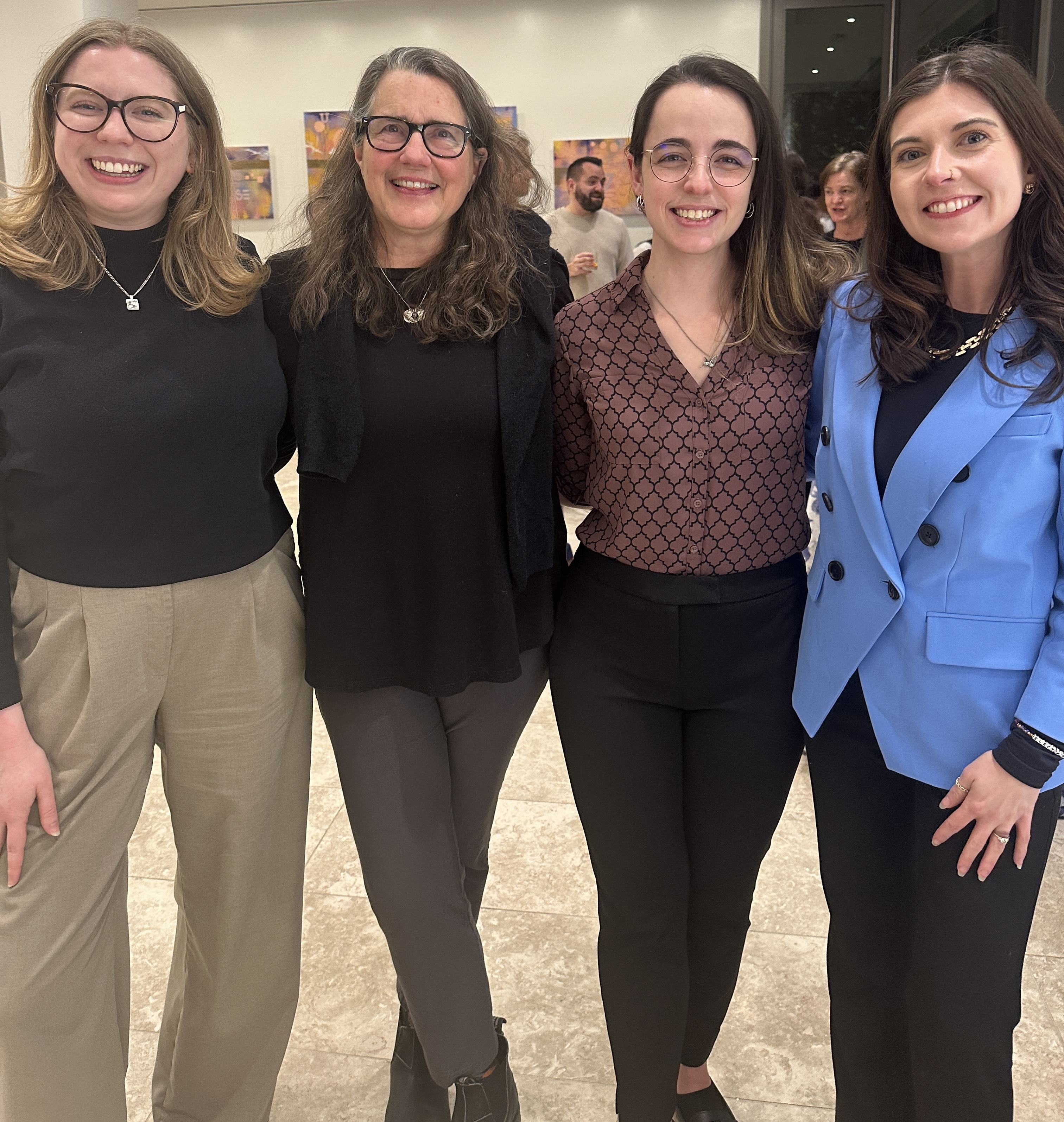
On Wednesday evening, members of the RepresentWomen team were honored to attend Path to Power, a forum hosted by NOTUS and presented by our movement partners at the Unite America Institute. The conversation focused on the future of America’s primaries and the structural choices that shape political power. We are grateful to be in community with organizations across the democracy reform space who are committed to strengthening participation and building systems that better reflect the people they serve.