A sweeping, multimedia guide to feminist resistance—past and present—grounding the nation’s 250th in the voices, histories and cultural work of those long excluded from its founding story.
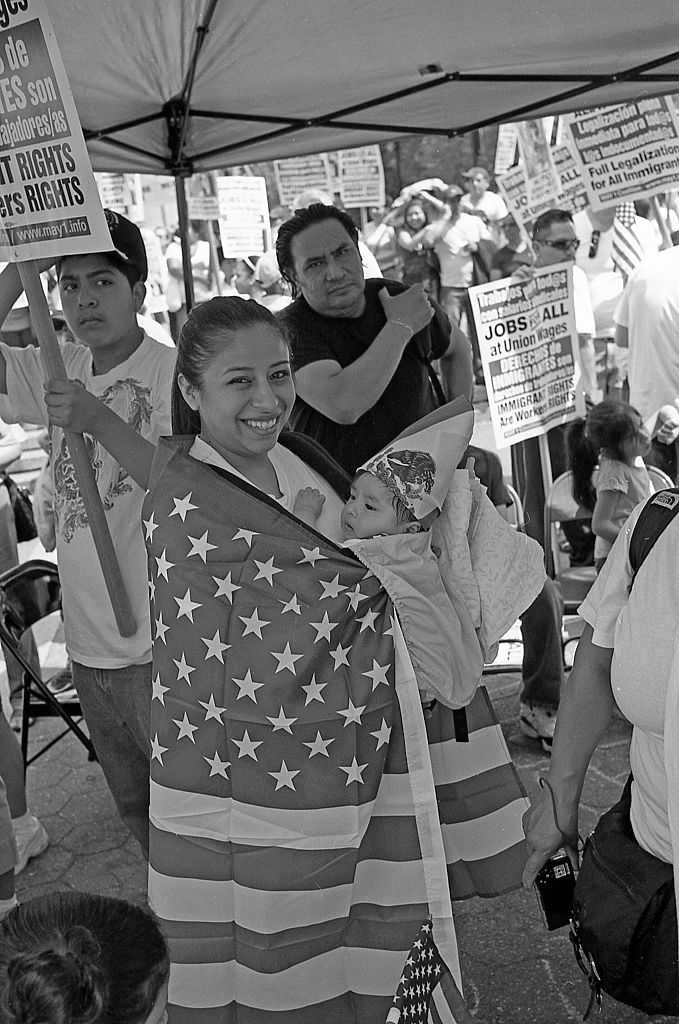
This public syllabus is a resource guide for readers of Ms.’: Founding Feminists project, part of the FEMINIST 250 project that spans from Women’s History Month to the midterm elections this November.
The multimedia syllabus curated below spans the Revolutionary era and the long afterlife of feminist resistance—from the 19th century to the present.
It includes works by series authors, books and articles, podcasts, films and television, primary-source collections, a Google Map of sites across the U.S. relevant to women’s histories, and a Spotify playlist tracing the legacy of protest music.
Many of these works center marginalized communities and are organized under the themes of Revolution, Resistance and Reclamation.
Two hundred and fifty years ago, a nation came into being … Will we remember the ‘founding feminists’ who planted these democratic seeds?
Explore the entire FEMINIST 250: Founding Feminists essay collection:
- The main Founding Feminists page contains original art and a historical timeline and invites readers to submit original poetry.
- America’s Founding Feminists: Rewriting America’s Origin Story, by Janell Hobson, professor of women’s, gender and sexuality studies at the University at Albany.
- Haudenosaunee Governance: The Matrilineal Democracy That Shaped America, by Michelle Schenandoah, founder of Rematriation, a Haudenosaunee women-led nonprofit organization.
- ‘This Is Our Country Too!’: The Enduring Legacy of Spanish-Speaking Women in Early America, by Allyson M. Poska, professor of history emerita at the University of Mary Washington, translated by Antonia Delgado-Poust, associate professor of Spanish at the University of Mary Washington. Lea este artículo en español aquí.
- Claiming the Revolution: Gender, Sexuality and the Radical Promise of 1776, by Charles Upchurch, professor of British history at Florida State University.
- Reclaiming Phillis Wheatley (Peters): Imagination as a Feminist Founding Project, by Dana Elle Murphy, assistant professor of Black studies and English at Caltech.
- The Radical Potential of Traditional Femininity, by Jacqueline Beatty, associate professor of history at York College of Pennsylvania.
- Queer Possibilities in Revolutionary America, Jen Manion, Winkley professor of history at Amherst College.
- She Wanted to Be Free: Black Women’s Revolutionary Resistance, Dr. Vanessa M. Holden, associate professor of history, director of African American and Africana studies at the University of Kentucky, and director of the Central Kentucky Slavery Initiative.
- Sally Hemings and the Making of Democracy, Jessina Emmert, doctoral candidate in the Department of Women’s, Gender and Sexuality Studies at the University of Kansas.
- The Abolitionist Origins of American Feminism, Manisha Sinha, Draper chair in American history at the University of Connecticut.
- The Curious Case of Afong Moy: Asian Womanhood and National Belonging in the U.S., Anne Anlin Cheng, Louis W. Fairchild class of ’24 professor of English at Princeton University
- Making Disability Visible in History: A Conversation With Rosemarie Garland-Thomson, Janell Hobson, professor of women’s, gender and sexuality studies at the University at Albany
- Educating Women: A History of Access, Exclusion and Backlash, Nimisha Barton, lecturer at Cal State Long Beach and a DEI consultant in higher education
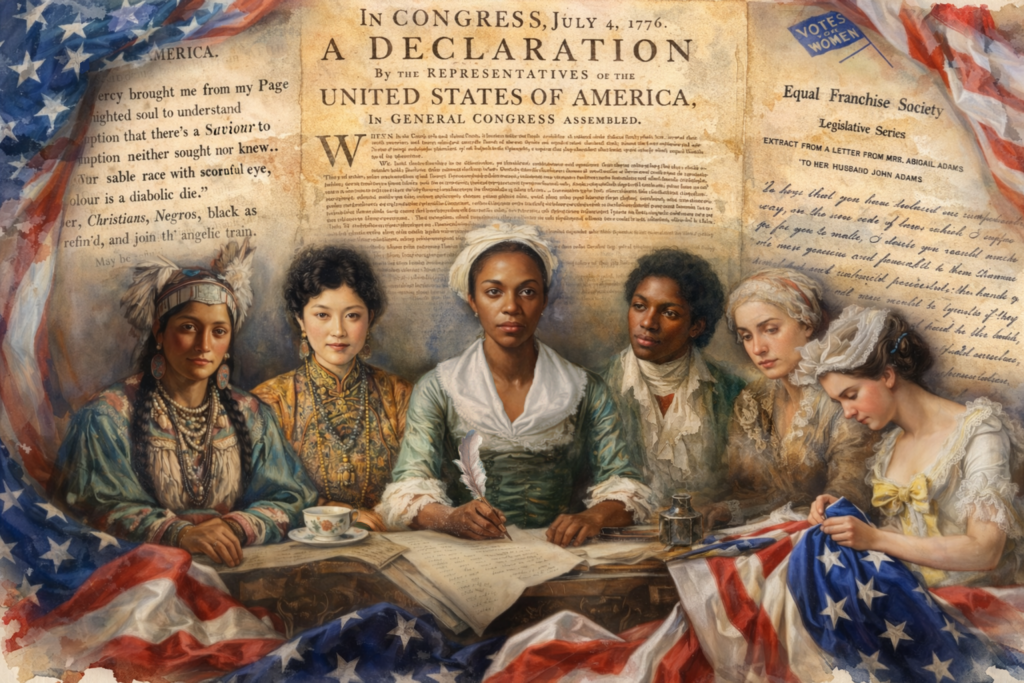
Key Works by Series Authors
- Nimisha Barton, A Just Future: Getting from Diversity and Inclusion to Equity and Justice in Higher Education (Cornell University Press, 2024)
- Jacqueline Beatty, In Dependence: Women and the Patriarchal State in Revolutionary America (New York University Press, 2023)
- Anne Anlin Cheng, The Melancholy of Race: Psychoanalysis, Assimilation and Hidden Grief (Oxford University Press, 2001)
- Anne Anlin Cheng, Ornamentalism (Oxford University Press, 2018)
- Anne Anlin Cheng, Ordinary Disasters: How I Stopped Being a Model Minority (Random House, 2024)
- Rosemarie Garland-Thomson, Extraordinary Bodies: Figuring Physical Disability in American Culture and Literature (Columbia University Press, 1997)
- Rosemarie Garland-Thomson, Staring: How We Look (Oxford University Press, 2009)
- Janell Hobson, Venus in the Dark: Blackness and Beauty in Popular Culture (Routledge, 2005; updated editions 2018, 2025)
- Janell Hobson, Body as Evidence: Mediating Race, Globalizing Gender (SUNY Press, 2012)
- Janell Hobson, When God Lost Her Tongue: Historical Consciousness and the Black Feminist Imagination (Routledge, 2021)
- Vanessa M. Holden, Surviving Southampton: African American Women and Resistance in Nat Turner’s Community (University of Illinois Press, 2021)
- Jen Manion, Female Husbands: A Trans History (Cambridge University Press, 2020)
- Dana Elle Murphy, Foremother Love: Phillis Wheatley and Black Feminist Criticism (Duke University Press, 2025)
- Allyson M. Poska, Women and Authority in Early Modern Spain: The Peasants of Galicia (Oxford University Press, 2005)
- Allyson M. Poska, Gendered Crossings: Women and Migration in the Spanish Empire (University of New Mexico Press, 2016)
- Michelle Schenandoah, Rematriation (nonprofit organization)
- Manisha Sinha, The Slave’s Cause: A History of Abolition (Yale University Press, 2016)
- Charles Upchurch, Before Wilde: Sex Between Men in Britain’s Age of Reform (University of California Press, 2009)
- Charles Upchurch, ‘Beyond the Law’: The Politics of Ending the Death Penalty for Sodomy in Britain (Temple University Press, 2021)
Primary sources and tools
- Women in the American Revolution (Library of Congress)
- Woman Suffrage and the 19th Amendment (National Archives)
- Women and Social Movements in the United States, 1600-2000
- Women’s History Map of the United States: Founding Feminists Google Map
Revolution
Before the Revolution: Indigenous and Early Histories
Articles, book chapters and essays
- Betty Bell, “Gender in Native America,” in A Companion to American Indian History, ed. Philip J. Deloria and Neal Salisbury (Blackwell, 2002), 307–320.
- Duane Braboy, “Two Spirits, One Heart, Five Genders,” ICT News, 2017.
- Tony Enos, “8 Things You Should Know About Two-Spirit People,” ICT News, 2017.
- Gregory D. Smithers, “Cherokee ‘Two Spirits’: Gender, Ritual, and Spirituality in the Native South,” Early American Studies 12, no. 3 (2014): 626–651.
- Matthew Wills, “One Barrier to Two-Spirit History: Settler Archives,” JSTOR Daily, 2020.
Books
- Jennifer L. Morgan, Laboring Women: Reproduction and Gender in New World Slavery (University of Pennsylvania Press, 2004).
- Sandra Slater and Fay A. Yarbrough, eds., Gender and Sexuality in Indigenous North America, 1400–1850 (University of South Carolina Press, 2011). Access free borrowing via Internet Archive.
- Emily West, Enslaved Women in America: From Colonial Times to Emancipation (Rowman & Littlefield, 2017).
Art
- George Catlin, Dance to the Berdash (1835–1837), Smithsonian American Art Museum.
- Kent Monkman, Saturnalia (2017), Denver Art Museum.
Video Lecture
Wade Blevins, “Gender in Pre-Columbian Cultures and Native Communities Today” (lecture, Gilcrease Museum, 2018). Watch:
Women in the American Revolution
Articles
- Ellen Douglass Baxter, “A Lesson From the Lives of the Women of the Revolution,” American Monthly Magazine 8, no. 1 (January 1896): 28–32.
- Nan Carroll, “Women Behind the Men,” Daughters of the American Revolution Magazine 109, no. 1 (January 1975): 23–25.
- John Gates Jr., “Contribution of Women to the American Revolution,” Daughters of the American Revolution Magazine 65, no. 9 (September 1931): 544–545.
- Erick Trickey, “Mary Katharine Goddard: The Woman Whose Name Appears on the Declaration of Independence,” Smithsonian Magazine, Nov. 14, 2018.
- Rosemarie Zagarri, “American Women in Leadership: Women’s Leadership in the American Revolution,” History Now 47 (2016).
Art and Museum Pieces
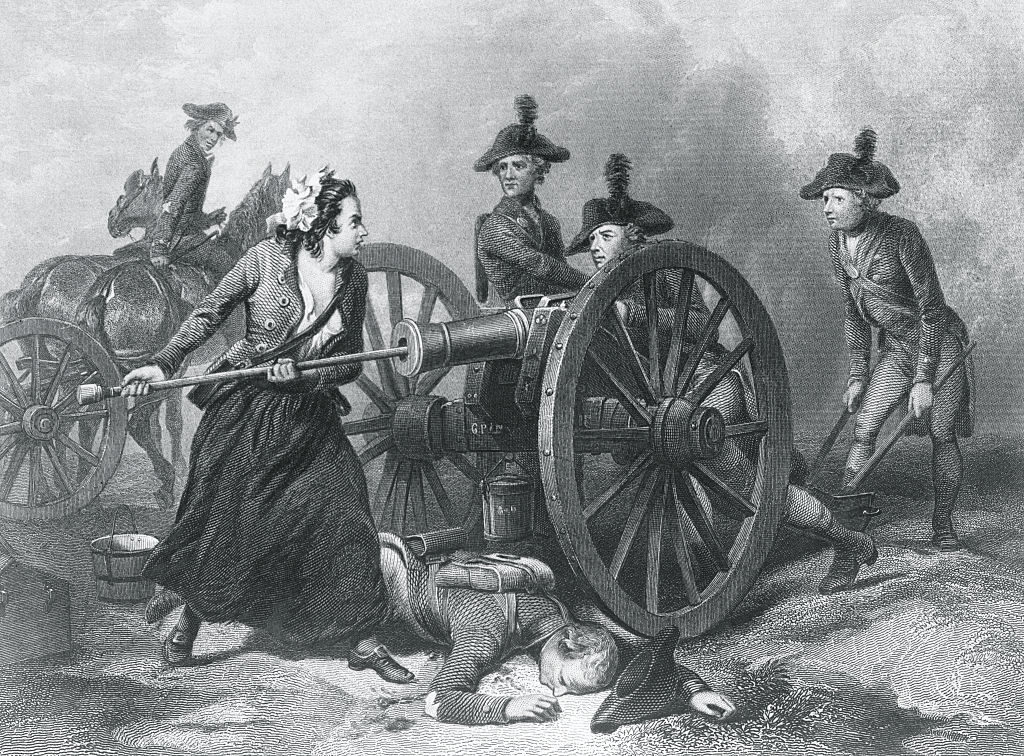
- Alonzo Chappel, Molly Pitcher at the Battle of Monmouth (engraving after J.C. Armytage), National Archives.
https://catalog.archives.gov/id/532935 - Edward Percy Moran, Molly Pitcher (lithograph, 1926), National Museum of American History.
https://www.si.edu/object/molly-pitcher:nmah_1756860 - Robert Edge Pine, Patience Lovell Wright (oil on canvas, 1782), National Portrait Gallery, Smithsonian Institution.
https://npg.si.edu/object/npg_NPG.86.168 - Phillis Wheatley’s poetry book (1773), Museum of the American Revolution.
https://timeline.amrevmuseum.org/objects/phillis-wheatleys-poetry-book
Books and Book Chapters
- Linda Grant De Pauw, Four Traditions: Women of New York During the American Revolution (1974).
- Phebe Ann Hanaford, Daughters of America: Women of the Century (1882).
- Mercy Otis Warren, Observations on the New Constitution (1787).
- Simon Wendt, “‘Woman Proved Herself Man’s Helpmate’: Nationalism, Gender, and the Memory of the American Revolution,” in The Daughters of the American Revolution and Patriotic Memory in the Twentieth Century (University Press of Florida, 2020), 16–57.
Letter
- Abigail Adams to John Adams, March 31–April 5, 1776.
Podcast
- Elizabeth F. Ellet, “Women of the American Revolution,” Biographies 2.0.
Videos
- “Revolutionary Transformation of Women’s Role in Society,” American Revolution Institute, Oct. 24, 2018.
- “Year in Revolution 1778: Women in the American Revolution,” Sept. 24, 2025.
Resistance
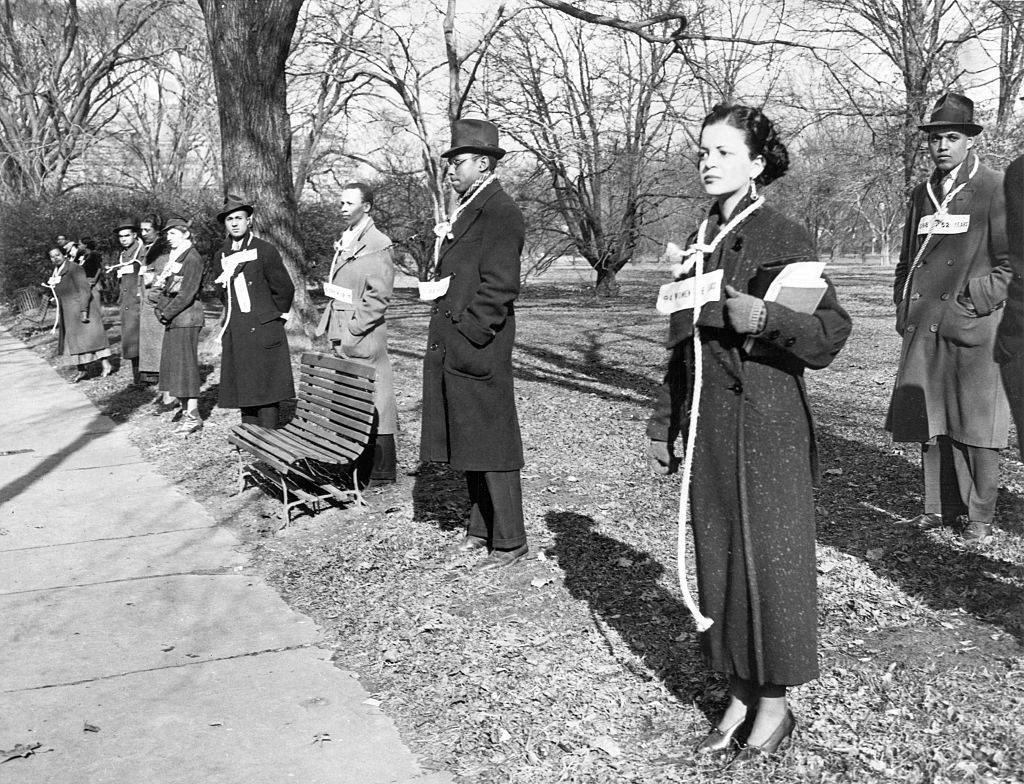
LGBTQ+ Resistance
- Harry Oosterhuis, “Sodomy, Possessive Individualism, and Godless Nature: Eighteenth-Century Traces of Homosexual Assertiveness,” Journal of the History of Sexuality 32, no. 3 (2023): 288–312.
https://doi.org/10.7560/jhs32303
Working-Class Resistance
- Alyssa DeSarbo and Akash Fewell, “Stamp Act Newspaper Clipping,” Resistance in Early American History.
https://courses.lsa.umich.edu/resistance-in-early-american-history/stamp-act-newspaper-clipping/
Disability
- “Disability in Art History,” Art History Teaching Resources.
https://arthistoryteachingresources.org/lessons/disability-in-art-history/ - Stefanie Hunt-Kennedy and Laurel Daen, “Stories From the Archives: Experiences of Disability in Early America,” All of Us, Aug. 13, 2024.
https://allofusdha.org/experiences-of-disability-in-early-america/stories-from-the-archives-experiences-of-disability-in-early-america/
Black Americans
- Rosalyn Baxandall, “Re-Visioning the Women’s Liberation Movement’s Narrative: Early Second Wave African American Feminists,” Feminist Studies 27, no. 1 (2001): 225–245.
https://doi.org/10.2307/3178460 - V. P. Franklin, “Hidden in Plain View: African American Women, Radical Feminism, and the Origins of Women’s Studies Programs, 1967–1974,” Journal of African American History 87 (2002): 433–445.
https://doi.org/10.2307/1562475 - Keisha Goode and Barbara Katz Rothman, “African American Midwifery: A History and a Lament,” American Journal of Economics and Sociology 76, no. 1 (2017): 65–94.
https://doi.org/10.1111/ajes.12173 - Nancy Hoffman, “Teaching About Slavery, the Abolitionist Movement, and Women’s Suffrage,” Women’s Studies Quarterly 14, no. 1/2 (1986): 2–6.
http://www.jstor.org/stable/25164255 - Marjory Nelson, “Women Suffrage and Race,” Off Our Backs 9, no. 10 (1979): 6–22.
http://www.jstor.org/stable/25793145 - Loretta J. Ross, “African American Women and Abortion: A Neglected History,” Journal of Health Care for the Poor and Underserved 3, no. 2 (1992): 274–284.
https://doi.org/10.1353/hpu.2010.0241 - J. B. Shaw, “‘& I’m Still Moving’: Pat Parker’s ‘Movement in Black’ and the Joy of Black Lesbian Movement,” African American Review 57, no. 1 (2024): 61–78.
- Rickie Solinger, Abortion Wars: A Half Century of Struggle, 1950–2000 (University of California Press, 1998).
- Rosalyn Terborg-Penn, “Woman Suffrage: ‘First Because We Are Women and Second Because We Are Colored Women,’” Negro History Bulletin 63, no. 1/4 (2000): 63–70.
http://www.jstor.org/stable/44985767 - Hettie V. Williams and Melissa Ziobro, eds., A Seat at the Table: Black Women Public Intellectuals in U.S. History and Culture (University Press of Mississippi, 2023).
Latino, Latina and Latine Americans
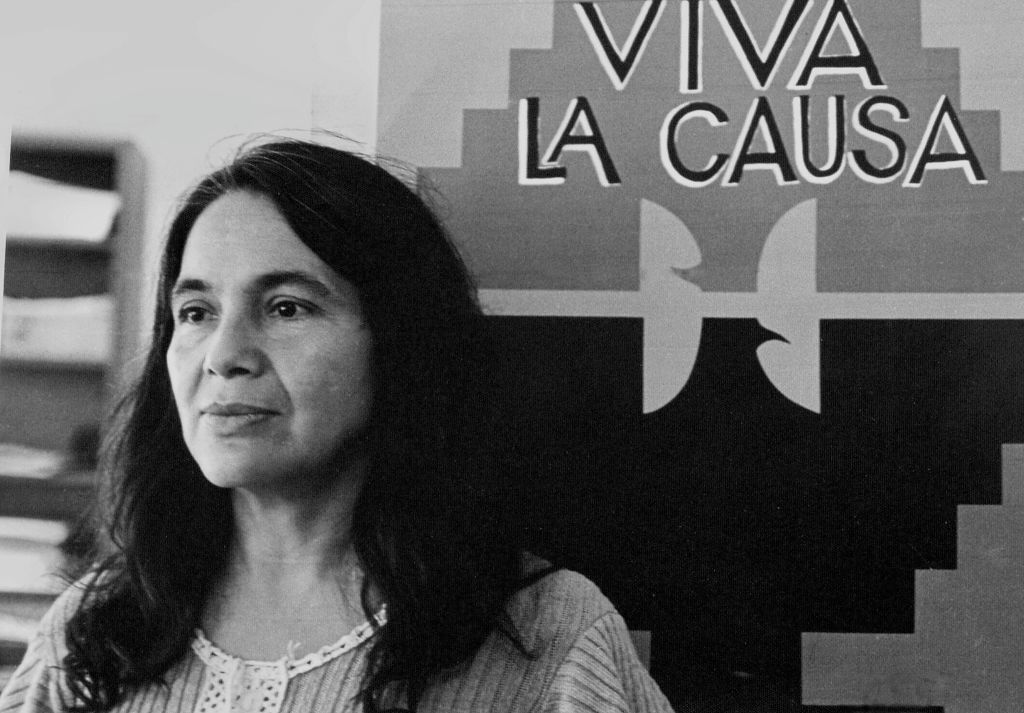
- Luz Alvarez, “The Latina Reproductive Rights Movement,” Guild Practitioner 50 (1993).
- Lisa J. Montoya, Carol Hardy-Fanta and Sonia Garcia, “Latina Politics: Gender, Participation, and Leadership,” PS: Political Science and Politics 33, no. 3 (2000): 555–561.
https://doi.org/10.2307/420858 - Jennifer Nelson, Women of Color and the Reproductive Rights Movement (NYU Press, 2003).
- Mary Pardo, “Mexican American Women Grassroots Community Activists: ‘Mothers of East Los Angeles,’” Frontiers 11, no. 1 (1990): 1–7.
- Andrea J. Pitts, Mariana Ortega and José Medina, eds., Theories of the Flesh: Latinx and Latin American Feminisms, Transformation, and Resistance (Oxford University Press, 2020).
- Ronald Schmidt, Edwina Barvosa-Carter and Rodolfo D. Torres, “Latina/o Identities: Social Diversity and U.S. Politics,” PS: Political Science and Politics 33, no. 3 (2000): 563–567.
- Sonia R. García and Marisela Márquez, “Motivational and Attitudinal Factors Amongst Latinas in U.S. Electoral Politics,” NWSA Journal 13, no. 2 (2001): 112–122.
Asian Americans
- Esther Ngan-Ling Chow, “The Feminist Movement: Where Are All the Asian American Women?” U.S.-Japan Women’s Journal 2 (1992): 96–111.
- Janine Young Kim, “Are Asians Black?: The Asian-American Civil Rights Agenda and the Contemporary Significance of the Black/White Paradigm,” Yale Law Journal 108, no. 8 (1999): 2385–2412.
- Elaine H. Kim, “‘At Least You’re Not Black’: Asian Americans in U.S. Race Relations,” Social Justice 25, no. 3 (1998): 3–12.
- Nancy I. Kim, “The General Survey Course on Asian American Women: Transformative Education and Asian American Feminist Pedagogy,” Journal of Asian American Studies 3, no. 1 (2000): 37–65.
- Julie Matthaei and Teresa Amott, “Race, Gender, Work: The History of Asian and Asian-American Women,” Race & Class 31, no. 3 (1990): 61–80.

Reclamation
Podcasts
Intersectionality Matters! By the African American Policy Forum, Battle for America’s Memory Part 1 and Battle for America’s Memory Part 2
- Intersectionality Matters! is a podcast hosted by renowned feminist and legal scholar Kimberlé Crenshaw. The first episode highlighted here focuses on the importance of preserving Black history in museums and education. The second episode focuses on the history of censorship and how that history has impacted current book bans and attacks on public education.
More Perfect by WNYC Studios, Not Even Past: Dred Scott Reprise
- More Perfect is a podcast that explores various Supreme Court cases and the impacts they had (and continue to have) on the United States. This episode focuses on the Dred Scott v. Sandford Supreme Court case in which the Supreme Court stated that enslaved individuals were not citizens of the U.S. and were instead property that could not become emancipated by moving to a state where slavery was illegal. This episode includes a meeting between the descendants of Dred and Harriet Scott and of Roger Brooke Taney, the Supreme Court Justice at the time of the Dred Scott decision.
The Heumann Perspective by Judy Heumann, The 45th Anniversary of the 504 Sit In with Dennis Billups & Emily Smith Beitiks
El Salon Chronicles by Qlona Perez, #250 Stories of rural resistance from the Holler
PsychEverywhere, A History of Black Psychologists, Interview with Rihana Mason, Ph.D.
Latino USA by My Cultura, Futuro and iHeartPodcasts
Asian American History 101 by Gen and Ted Lai
Making Gay History: LGBTQ Oral Histories from the Archive by Eric Marcus
Films & TV
Documentary Films
- Crip Camp, directed by James Lebrecht and Nicole Newnham (2020)
- How to Sue the Klan, directed by John Beder (2024)
- The Infiltrators, directed by Cristina Ibarra and Alex Rivera (2019)
- No Place to Grow, by Michelle Aguilar Ficarca (2020)
- They Never Left: Indigenous Return and Reclamation in the Southeast, directed by Quinn Smith (2023)
- Stamped from the Beginning, directed by Roger Ross Williams (2023)
Feature Films
- Hidden Figures, directed by Theodore Melfi (2017)
- Working Girls, directed by Lizzie Borden (1986)
Television Shows and Miniseries
- The Handmaid’s Tale, created by Bruce Miller (2017-2025)
- I May Destroy You, created by Michaela Coel (2020)
- Orange is the New Black, created by Jenji Kohan (2013-2019)
- Pose, created by Ryan Murphy, Brad Falchuk, and Steven Canals (2018-2021)
- When They See Us, created by Ava DuVernay (2019)
Books
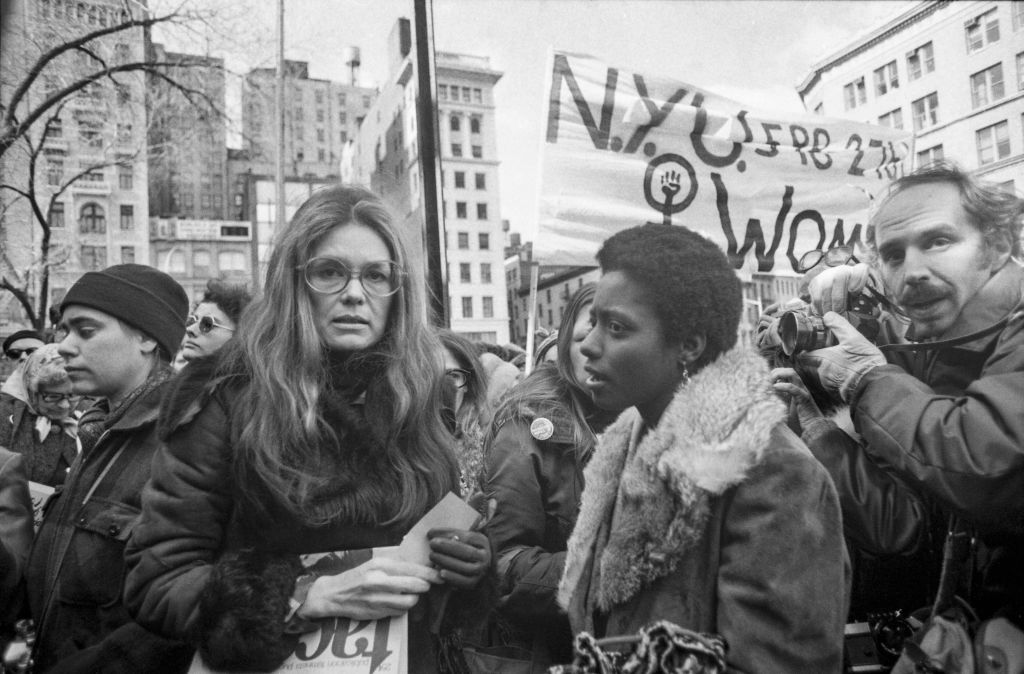
Bell, Diane, and Renate Klein, eds. Radically Speaking: Feminism Reclaimed. Spinifex Press, 1996.
Broude, Norma, and Mary D. Garrard, eds. Reclaiming Female Agency: Feminist Art History After Postmodernism. University of California Press, 2005.
Clark, Tiana. I Can’t Talk about the Trees Without the Blood. University of Pittsburgh Press, 2018.
Coretta Scott King and Barbara A Reynolds. Coretta: My Life, My Love, My Legacy. Hodder & Stoughton Ltd, 2018.
Kendi, Ibram X. Stamped from the Beginning: The Definitive History of Racist Ideas in America. Nation Books, 2017.
Schalk, Sami. Black Disability Politics. Duke University Press, 2022.
Smith, Dorothy E. The Everyday World as Problematic: A Feminist Sociology. University of Toronto Press, 1987.
Stryker, Susan. Transgender History. 2nd ed. 2008. Reprint, Seal Press, 2017.
Taylor, Keeanga-Yamahtta, ed. How We Get Free: Black Feminism and the Combahee River Collective. Haymarket Books, 2017.
Walker, Alice. In Search of Our Mothers’ Gardens: Womanist Prose. Houghton Mifflin Harcourt, 2004.
Articles
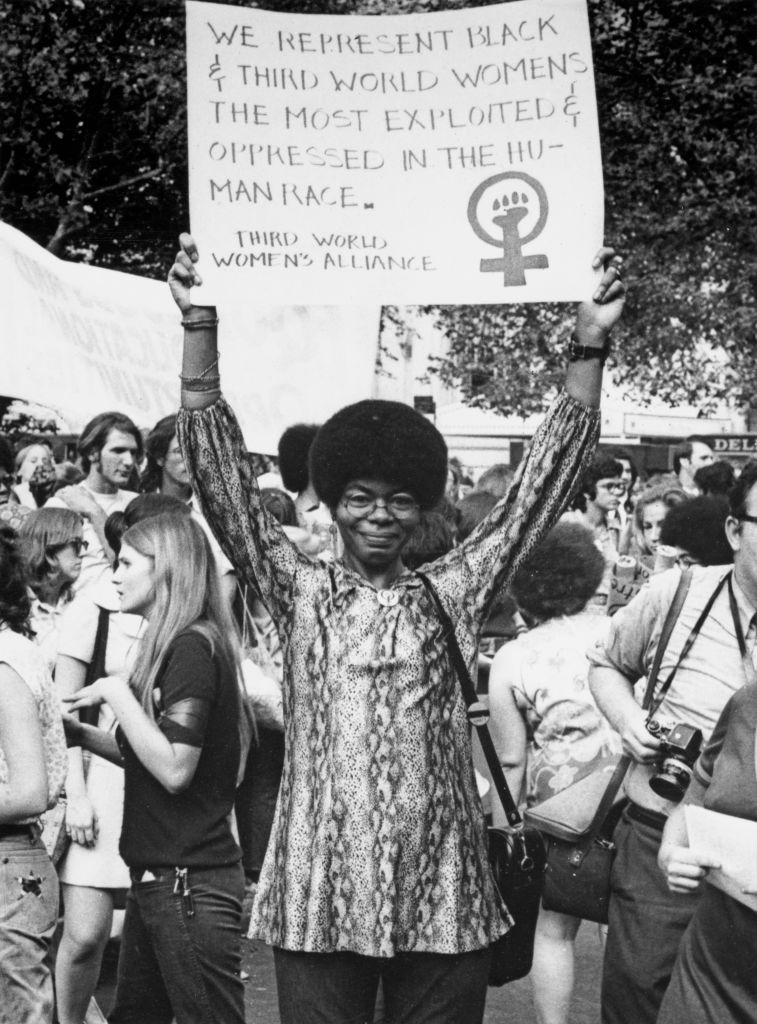
Alexander-Floyd, Nikol G. “Disappearing acts: Reclaiming intersectionality in the social sciences in a post-Black feminist era.” Feminist Formations 24, no. 1 (2012): 1-25.
Cornwall, Andrea, Jasmine Gideon, and Kalpana Wilson. “Introduction: Reclaiming feminism: Gender and neoliberalism.” IDS bulletin 39, no. 6 (2008): 1-9.
Crenshaw, Kimberlé Williams. “Mapping the Margins: Intersectionality, Identity Politics, and Violence Against Women of Color.” In The Public Nature of Private Violence, pp. 93-118. Routledge, 2013.
Evans, Elizabeth. “Reclaiming and Rebranding Feminist Activism.” In The Politics of Third Wave Feminisms: Neoliberalism, Intersectionality, and the State in Britain and the US, pp. 60-83. London: Palgrave Macmillan UK, 2015.
Fraser, Nancy. “How Feminism Became Capitalism’s Handmaiden—and How to Reclaim It.” The Guardian 14, no. 10 (2013): 2013.
Heller, Dana. 2001. “Shooting Solanas: Radical Feminist History and the Technology of Failure.” Feminist Studies 27, (1) (Spring): 167-189.
Lazar, Michelle. “Recuperating Feminism, Reclaiming Femininity.” Gender and Language 8, no. 2 (2014): 205-224.
Lintott, Sheila and Sherri Irvin. “A Feminist Reclamation of Sexiness.” Body Aesthetics 299 (2016).
Mann, Regis. 2011. “Theorizing ‘What Could Have Been’: Black Feminism, Historical Memory, and the Politics of Reclamation.” Women’s Studies 40 (5): 575–99. doi:10.1080/00497878.2011.581564.
Nic Yiu, Wei Si. “Self-Care.” In Rethinking Women’s and Gender Studies Volume 2, pp. 179-188. Routledge, 2023.
The Legacy of Protest Songs
Songs include:
- “We Shall Not Be Moved” (1800s?): hymnal, popularized in mid 1900s
- “The Suffrage Flag” (1884)
- “Strange Fruit” by Billie Holiday (1939)
- “We Rise” by Rhiannon Giddens (2014)
- “Un Violador en Tu Camino / A Rapist in Your Path”: Chilean protest song that spread to the U.S. (2019)
- “I Can’t Breathe” by H.E.R (2020)
- “Drew Barrymore” by Sza (2017)
- “Stand up” by Cynthia Erivio (2019)
- “Los Olivos”: Afro-Dominican Palo song reclaiming spiritual awareness in Afro-Dominican community and going back to our roots to bond with ancestors
- “The Bigger Picture” by Lil Baby (2020)
- “A Change Is Gonna Come” by Sam Cooke (1964)
- “True Believer” by Hayley Williams (2025)
- “Fight Song” by Rachel Platten (2015)
- “Firework” by Katy Perry (2010)
- “1-800-273-8255: by Logic (2017)
- “La Rebelión” by Joe Arroyo (1986)
This syllabus reflects collaborative research conducted by graduate students in Janell Hobson’s Women’s, Gender and Sexuality Studies seminar at the University at Albany: Genevieve Bombard, Daiyi Chen, Evans Garvis, Elise Herrera, Alyssa Prather, Xiaowen Tan and Yanru Yang.