A leading voice in feminist disability studies, Rosemarie Garland-Thomson reflects on how centering disability reshapes our understanding of history, citizenship and whose lives are recognized as foundational to U.S. democracy.
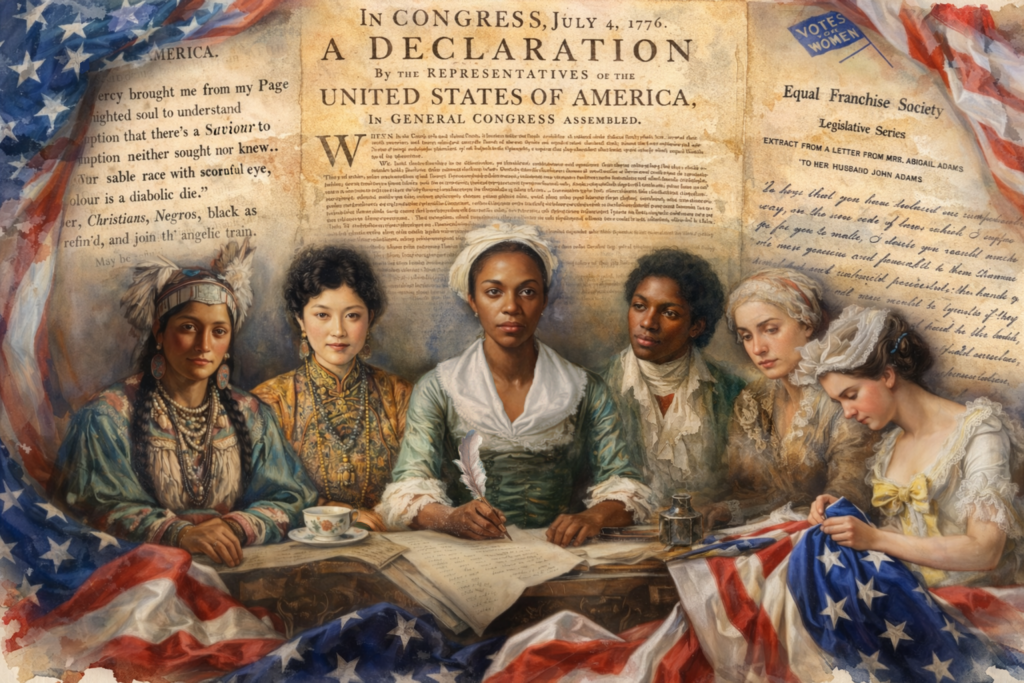
This essay is part of the FEMINIST 250: Founding Feminists series, marking the 250th anniversary of America by reclaiming the revolution through the women and gender-expansive people whose ideas, labor and resistance shaped U.S. democracy. Taking the form of essays, audio, poetry and original art, historians and scholars revisit the nation’s origins to center those written out of the founding documents and reimagine what a truly inclusive democracy requires.
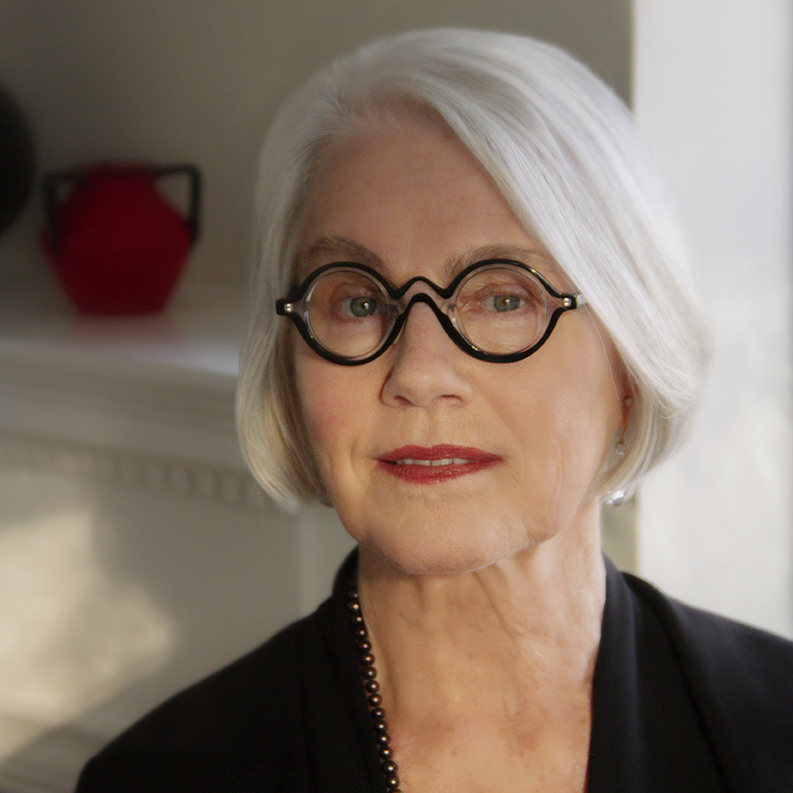
Dr. Rosemarie Garland-Thomson is a pioneering scholar of bioethics, humanities, disability justice and culture, and professor emerita at Emory University. Widely considered the founder of feminist disability studies, Garland-Thomson is the author of several canonical works, including Extraordinary Bodies: Figuring Disability in American Culture and Literature (1997) and the influential essay, “Integrating Disability, Transforming Feminist Theory” (2002). Her op-ed “Becoming Disabled” (2016) served as the inaugural article for an ongoing series for The New York Times and is part of her collection About Us: Essays from the Disability Series.
These days, Garland-Thomson is completing work for an upcoming exhibit Broken, which explores the subject of disability in the arts of antiquity, and will be coming to the National Gallery of Art in Washington, D.C.

On the nation’s 250th anniversary and for the series on America’s Founding Feminists, Ms.’ guest editor Janell Hobson spoke with Garland-Thomson about disability history and its connections to women’s history.
This interview has been lightly edited for length and clarity.
Janell Hobson: What is the legacy of the 250th anniversary of the U.S. republic as it relates to feminist disability studies?
Rosemarie Garland-Thomson: Your question makes me think of Danielle Allen’s Our Declaration, which focuses on the concept laid out in the Declaration of Independence, and that is the idea that “All men are created equal,” and how that concept has been elaborated through laws, policies and practices. The idea of what a citizen is has evolved from a very narrow definition to civil rights and human rights that proposed legislation to expand the notion of who we’re thinking about as equal.
This led to the expansion of the vote to people who had not been included before and to questions about who counts as a full citizen. And what’s very specific about disability inclusion, if you will, is that there needed to be a rebuilt infrastructure to include people with disabilities. This includes women with disabilities, anyone for whom the built and designed environment was a barrier.
For example, if someone is blind, to have them be able to attend school, there had to be a kind of investment in the material infrastructure of inclusion. Accessible transit is a perfect example of how this infrastructure had to change. So now, if you ride the bus today, you might be able to ride the bus with a wheelchair user, and that simply would not have occurred in the 1950s and 1960s. Thanks to the Americans with Disabilities Act, which carries out the promise that all people are created equal.
Hobson: What are some ways that we can look at this anniversary year through a disability lens?
Garland-Thomson: There are many history books on the subject. For example, Douglas Baynton writes about this, as does Laurel Daen. They recognize disability as a political and social category rather than reduce it to a medical category.
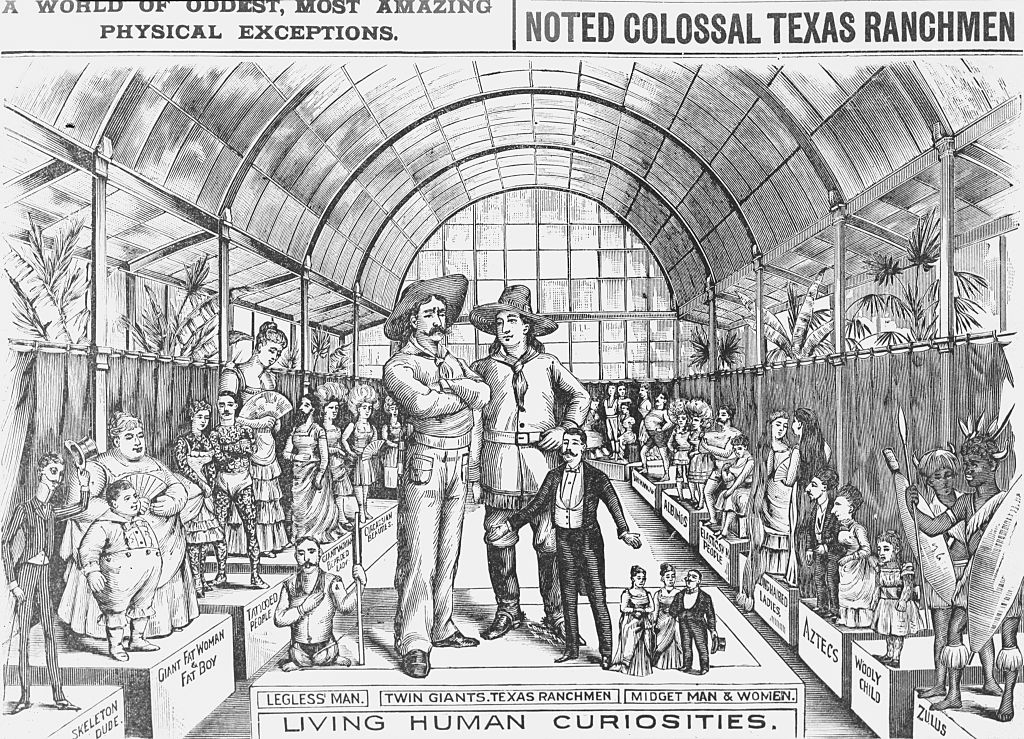
Hobson: Your work on Extraordinary Bodies gave us an important feminist lens to look at intersections of race, class and gender that also includes disability as a category of analysis. I’m thinking specifically of how you engage the peculiar history of Joice Heth, an African American woman who has the distinction of being the first “freak show” exhibit promoted by P.T. Barnum. Specifically, Barnum billed her as the “131-year-old” nurse maid of George Washington, the nation’s first president.
Why do you think this narrative was so successful in its time, and what does it reveal about national narratives, and “founding” narratives in particular, as they pertain to women’s bodies?
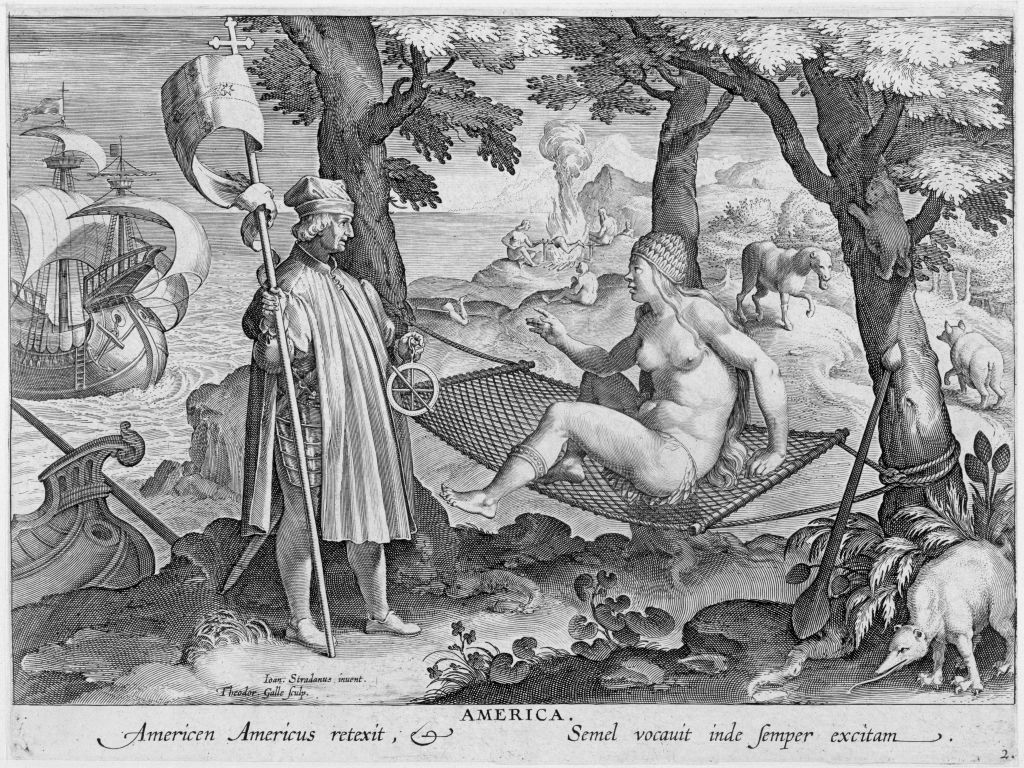
Garland-Thomson: Women’s bodies have always offered men an opportunity to talk about nations, to talk about themselves, to talk about government. And perhaps the first and most pervasive example of this is the metaphor of woman as land, to think about the metaphor of the founding of America as a “virgin land,” and to think about land as a place where men plant their seeds.
These births and reproduction metaphors are everywhere in patriarchy, but also specifically in the founding narratives of America. And of course, what it shows us is this ambivalent place in history for women and women’s bodies.
Women’s bodies have always offered men an opportunity to talk about nations, to talk about themselves, to talk about government.
Hobson: This reliance on women’s bodies to create history suggests that women occupy a more central space in myth-making narratives, instead of being on the periphery, doesn’t it?
Garland-Thomson: The feminist historian Gerda Lerner was one of the founders of women’s history, who writes in her books about ‘The Creation of Patriarchy,’ which is a 4,000-year-old enterprise. The observation that she makes, which I think is important, is that women have always contributed to making culture and making the material life of humanity and making history, but what has been lost is the record of their contributions.
And so, somebody like Joice Heth and the whole group of women who were drawn into the entertainment industry —the part of the entertainment industry called “freak shows”—this was an important source of entry into the public world. P.T. Barnum put Joice Heth forward as George Washington’s nursemaid, and of course the most grotesque part of this is that after she died [she may have been 80 years old], he sold tickets to a public autopsy of her, which was set to reveal the truth of her embodiment. Now, this sort of thing seems extraordinarily exploitative and grotesque to us now, and it certainly was back then too, but I think the important thing is for us to understand how this operated [in its historical context] …
Hobson: These histories certainly seem disturbing when we examine the power dynamics of who is on display and who is controlling the spectacles around such bodies.
Garland-Thomson: This is what I’m saying: This is one of the things that I think we need to be cautious about, and that is a kind of sensationalism and a kind of righteous indignation that certainly we feel, but I think we have to be assiduous about the historical context of all this …
Hobson: Historically, though, Barnum seemed invested in the creation of a certain national myth around George Washington, especially considering how he fabricated Joice Heth’s age in this hyperbolic misrepresentation.
Garland-Thomson: To suggest that [Barnum] fabricated or lied is to suggest that there was some investment in truth. But in the entertainment industry it was all about story … We need to avoid the presentism that can erase the nuance that we want to capture in understanding what these lives were like in the past.
Hobson: Could you explain how a school of thought that you helped to develop—feminist disability studies—can aid us in nuance?
Garland-Thomson: I think the concept of feminist disability studies is useful because it brings together knowledge enterprises. … Feminist disability studies can bring the whole knowledge enterprise of feminism together with the whole enterprise of disability studies, as well as the larger enterprises of what we think of as critical race theory. These can all be brought together in a very specific kind of intersectionality.
What a phrase like ‘feminist disability studies’ does is it can be used like a search term, if you will, or to offer something generative. There is some good work that the term does in generating knowledge and pulling people together and giving people a way to organize what we do with making knowledge as scholars and academics.
Hobson: You have explored subjects like “freak shows” in this kind of work. Are there other arenas that you can highlight through the lens of feminist disability studies?
Garland-Thomson: Oh, absolutely. The human variations that we think of, and that we call disabilities now, are part of the human experience. They’ve been part of every family, they’ve been part of every community throughout all of human history. The scholars who work in this area have noted that these human variations that we think of as disabilities are often an opportunity for resourcefulness.
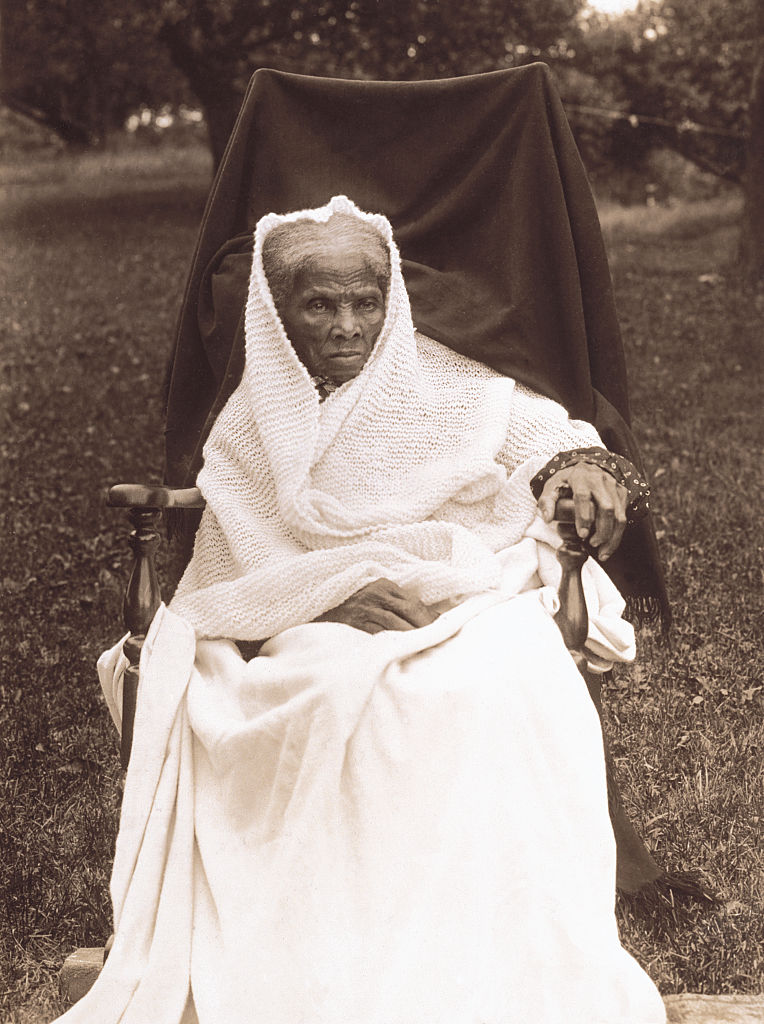
Think of the work that somebody like Helen Keller has done, or Harriet Tubman, of course, who was also a disabled woman. We want to be able to recuperate those histories of how these bodily variations shaped, literally, the people who had them, and how the interpretation of these bodily variations shaped history and culture. I’m perpetually pointing out that disability is everywhere in the world, and what we want to do is call attention to how it shapes lives and history and communities.
Hobson: You bring up two iconic women in American history. We have an idea of Helen Keller as disabled, but only more recently have we begun to recognize Harriet Tubman as disabled.
When we align these histories together, how do we make their stories fuller, more intersectional?
Garland-Thomson: I mean, Helen Keller was deaf and blind, so her disability is more legible. But somebody like Harriet Tubman we can now look at through this lens and that is thanks to the concept of disability history. The work of knowledge-making, this is what historians do, what literary scholars do, what humanists do. We are recuperating those stories, which is really important.
… These human variations that we think of as disabilities are often an opportunity for resourcefulness.
Rosemarie Garland-Thomson
Hobson: I like that your argument is really to make a category like “disability” more visible in what we do and what we study.
Garland-Thomson: Feminist disability studies, or the whole knowledge project, stretches back into antiquity and also is perpetually present in culture and in our knowledge-making. … If disability is everywhere, its representation and its meaning is everywhere also. We must create a sense of how broad the application of what we think of as disability, and gender and race, intersectional categories, can be. These analyses make our projects more fruitful and more generative.
Hobson: As we prepare to celebrate this 250th anniversary of U.S. democracy, we also feel ourselves slipping away from this legacy at the same time. What do you think our focus should be when determining our place in history?
Garland-Thomson: I’m thinking of the important work of Susan Faludi’s Backlash. I think that’s what happens when any fundamental change takes place in any society. It’s better to have a narrative which recognizes this, rather than present a straight-forward progress narrative. Every action is going to have a reaction.
We must be able to lay out a history that recognizes not a simplified progress narrative, or even a narrative of decline, but rather a narrative of change. It’s not that we should not be alarmed by backlash against progressive change but to recognize, plan, and strategize how we will recuperate from this backlash. We must be able to respond to that.
Explore the entire FEMINIST 250: Founding Feminists essay collection:
- The main Founding Feminists page contains original art and a historical timeline and invites readers to submit original poetry.
- America’s Founding Feminists: Rewriting America’s Origin Story, by Janell Hobson, professor of women’s, gender and sexuality studies at the University at Albany.
- Haudenosaunee Governance: The Matrilineal Democracy That Shaped America, by Michelle Schenandoah, founder of Rematriation, a Haudenosaunee women-led nonprofit organization.
- ‘This Is Our Country Too!’: The Enduring Legacy of Spanish-Speaking Women in Early America, by Allyson M. Poska, professor of history emerita at the University of Mary Washington, translated by Antonia Delgado-Poust, associate professor of Spanish at the University of Mary Washington. Lea este artículo en español aquí.
- Claiming the Revolution: Gender, Sexuality and the Radical Promise of 1776, by Charles Upchurch, professor of British history at Florida State University.
- Reclaiming Phillis Wheatley (Peters): Imagination as a Feminist Founding Project, by Dana Elle Murphy, assistant professor of Black studies and English at Caltech.
- The Radical Potential of Traditional Femininity, by Jacqueline Beatty, associate professor of history at York College of Pennsylvania.
- Queer Possibilities in Revolutionary America, Jen Manion, Winkley professor of history at Amherst College.
- She Wanted to Be Free: Black Women’s Revolutionary Resistance, Dr. Vanessa M. Holden, associate professor of history, director of African American and Africana studies at the University of Kentucky, and director of the Central Kentucky Slavery Initiative.
- Sally Hemings and the Making of Democracy, Jessina Emmert, doctoral candidate in the Department of Women’s, Gender and Sexuality Studies at the University of Kansas.
- The Abolitionist Origins of American Feminism, Manisha Sinha, Draper chair in American history at the University of Connecticut.
- The Curious Case of Afong Moy: Asian Womanhood and National Belonging in the U.S., Anne Anlin Cheng, Louis W. Fairchild class of ’24 professor of English at Princeton University
- Making Disability Visible in History: A Conversation With Rosemarie Garland-Thomson, Janell Hobson, professor of women’s, gender and sexuality studies at the University at Albany
- Educating Women: A History of Access, Exclusion and Backlash, Nimisha Barton, lecturer at Cal State Long Beach and a DEI consultant in higher education