A (Brief) History of Women’s Rights, 1600 to Present

From the Haudenosaunee women who successfully challenged warfare in the 17th century, to today’s feminist organizers defending democracy, reproductive freedom and civil rights, the struggle for women’s equality has never been a straight line. It is a story of persistence, resistance and collective action spanning centuries.

Compiled by editors at Ms. and researchers from the National Women’s History Alliance, this women’s history timeline traces the interconnected histories of feminism, abolition, labor organizing, civil rights, reproductive justice, LGBTQ+ liberation and democratic participation.

No timeline can fully capture more than 400 years of feminist history, let alone every movement, leader, victory and setback that has shaped the ongoing fight for equality. Rather than offering a comprehensive account, this chronology highlights pivotal moments and turning points that help tell the story of how women have expanded the boundaries of freedom, democracy and human rights in the United States and beyond.

The timeline is part of Ms. magazine’s FEMINIST 250: Founding Feminists project, a multimedia essay series marking the 250th anniversary of the Declaration of Independence by examining the women and feminist movements that have worked to make the nation’s founding promises more fully realized. Through reported features, essays, interviews and historical analysis, FEMINIST 250 explores not only where we have been, but where we must go next to achieve true equality.

FEMINIST 250’s Parts 2 and 3—Feminist Lessons and Feminist Futures—drop this month on MsMagazine.com.

Making Disability Visible in History: A Conversation With Rosemarie Garland-Thomson

Dr. Rosemarie Garland-Thomson is a pioneering scholar of bioethics, humanities, disability justice and culture, and professor emerita at Emory University. Widely considered the founder of feminist disability studies, Garland-Thomson is the author of several canonical works, including Extraordinary Bodies: Figuring Disability in American Culture and Literature (1997) and the influential essay, “Integrating Disability, Transforming Feminist Theory” (2002).

On the nation’s 250th anniversary and for the series on “America’s Founding Feminists,” Ms.’ guest editor Janell Hobson spoke with Garland-Thomson about disability history and its connections to women’s history.

She argues centering disability reshapes our understanding of history, citizenship and whose lives are recognized as foundational to U.S. democracy.

“Women’s bodies have always offered men an opportunity to talk about nations, to talk about themselves, to talk about government.”

“… These human variations that we think of as disabilities are often an opportunity for resourcefulness.”

(This essay is part of the FEMINIST 250: Founding Feminists series, marking the 250th anniversary of America by reclaiming the revolution through the women and gender-expansive people whose ideas, labor and resistance shaped U.S. democracy.)

Could This Be the Last Women’s History Month?

Since 1987, the United States has celebrated Women’s History Month every March.

We have used this month to correct the record. To make sure that the women who built this nation—who are often systematically written out of history books and erased from the stories we tell ourselves about who we are—are named out loud and recognized. It is a national reminder that women are not a footnote to the American project. We are central to it.

But today, just shy of its 40th anniversary, Women’s History Month celebrations are quietly disappearing. Not because communities stopped caring—but because an administration decided that honoring women is a threat.

Harriet Tubman did not free herself and stop. Fannie Lou Hamer did not survive a Mississippi jail cell to just go home. Shirley Chisholm did not run for president, unbought and unbossed, so that we could sit down now.

It’s up to us now to saddle up and make sure that future generations of women and girls can not only know about the incredible shared history of the bad ass women that helped shape the world, but can feel the full freedom of it—which means we now have work to do. 

We ride at dawn.

Artist Autumn Breon’s Requiem for Reproductive Freedom: Honoring Adriana Smith Through Performance

Autumn Breon is using performance and mixed media art to both celebrate Black women’s achievements and honor their struggles. Her latest performance, Dignity Denied, shines a light on the case of Adriana Smith.

“I wanted to show what lack of autonomy, what surveillance looks like, and durational performance felt like the best way to highlight her situation.”

“You might have a six-week abortion ban. You might have whatever other oppressive policies in place. We have always found ways to aid and abet each other, and we always will.”

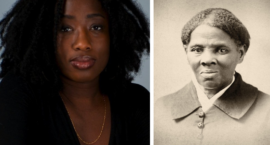
Documenting Harriet Tubman’s Leadership: Pulitzer Prize-Winning Edda L. Fields-Black on the Combahee River Raid

The Combahee River Raid was a military operation during the American Civil War led by Harriet Tubman on June 1-2, 1863. Historian Edda L. Fields-Black—this year’s winner of the Pulitzer Prize in History—reflects on Tubman’s revolutionary Civil War raid and the power of preserving Black history in the face of political pushback.

“What I speculate is that the Union told the enslaved people who she was. And her presence facilitated the enslaved people in trusting the Union. We know, from some of the sources I’ve brought together in [my latest book] Combee that Harriet Tubman was on the ground in the raid, that she participated in the burning of buildings, and that she went to the slave cabins and coaxed the people there to come onto the boats and come to freedom. So how she convinced them to do that, we don’t know, but they did trust her, even if they didn’t know her entire backstory.”

Harriet Tubman’s ‘Shadow of a Face’: New Monument Advances Inclusive History

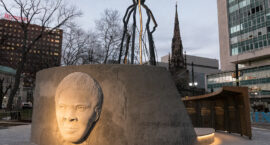
Friday, March 10, is Harriet Tubman Day, which marks the 110th anniversary of Harriet Tubman’s passing on March 10, 1913. Last year, we celebrated Tubman’s bicentennial birthday with Ms. magazine’s Tubman 200 project. Today, we continue in the celebration of our Black feminist hero as we recognize the latest Harriet Tubman Monument. Designed by artist Nina Cooke John, Shadow of a Face opened to the public yesterday in Newark, N.J., in Harriet Tubman Square, renamed from Washington Park on Juneteenth of 2022. 

The new Harriet Tubman monument replaces a statue of Christopher Columbus, which was removed in 2020. Newark’s arts and cultural affairs director Fayemi Shakur said the city’s choice to replace of a symbol of conquest with “an ideal figure for democracy and freedom” is part of a larger project of healing. 

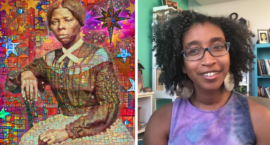
‘Dark Energy’: Poetry for Harriet Tubman

Last year marked 200 years since Harriet Tubman’s birth. To commemorate Tubman’s bicentennial, Ms. magazine launched the Tubman 200 project, honoring her extraordinary legacy.

The multi-disciplinary project included: conversations with Tubman’s descendants; an interactive timeline of Tubman’s life; essays from experts including Dr. Keisha N. Blain and Kate Clifford Larson; a calculator that determines what the U.S. (literally) owes Tubman; a portal for readers to submit their own haikus celebrating Tubman’s legacy; and original poetry—including the show-stopping “dark energy” by scholar and poet Alexis Pauline Gumbs.

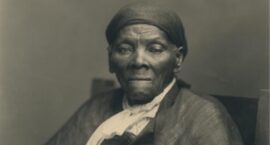
A Conversation with Mary N. Elliott, Curator of American Slavery at the Smithsonian Museum

Our final conversation in the Harriet Tubman Bicentennial Project features Mary N. Elliott, museum specialist and curator of American slavery at the Smithsonian Museum. Elliott helped to research, conceptualize and design the “Slavery and Freedom” inaugural exhibition for Smithsonian’s National Museum of African American History and Culture.

“Who is this woman beyond the iconic? That was really important for us: to humanize the experiences of African Americans and to also show that we’re not monolithic.”