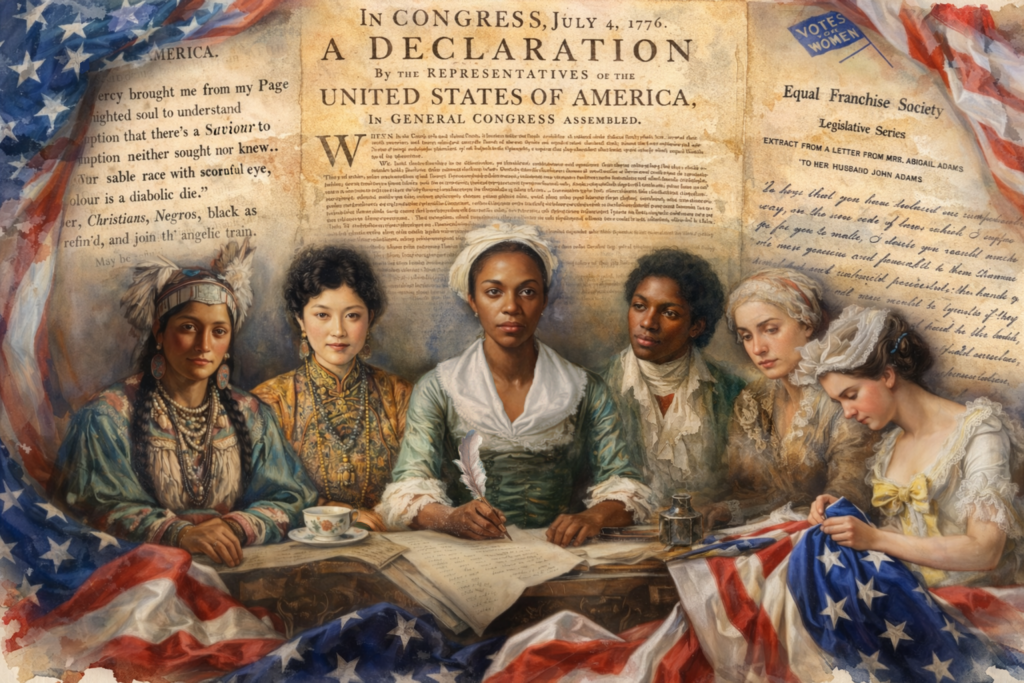
As the United States marks 250 years, an older Indigenous system of women-led governance offers a radically different blueprint for power and responsibility.
This essay is part of the FEMINIST 250: Founding Feminists series, marking the 250th anniversary of America by reclaiming the revolution through the women and gender-expansive people whose ideas, labor and resistance shaped U.S. democracy. Taking the form of essays, audio, poetry and original art, historians and scholars revisit the nation’s origins to center those written out of the founding documents and reimagine what a truly inclusive democracy requires.
The dirt beneath her feet crumbled. Grasping onto roots and soil, her body’s weight pulled her into the hole of darkness beneath the uprooted tree. Sky World quickly faded behind her. As she fell through the cosmos, she saw a shimmering light coming toward her. He moved so fast that fire trailed behind him. He embraced her as they hurdled together through darkness toward a shimmering orb. He told her he could go no further and let go.
Her body tumbled and several winged beings slowed her descent. As they lowered her toward the dark surface, she felt cool air and heard birds trill. They rested her on a turtle’s back. In an act of love and compassion, a small water animal swam to the bottom of the ocean and gave his last breath of life as he offered her dirt. Sky Woman was pregnant. Feeling the rhythms of contractions, she danced upon the dirt, and the turtle’s back began to grow. Land was being created beneath her shuffling feet. She gave birth to a girl, and this new world became their home.
This is the beginning of the Haudenosaunee Creation Story.
In my latest work, Rematriated Voices, I interviewed Mohawk Bear Clan Mother “Mommabear” Louise McDonald Herne and the late Dr. Sally Roesch Wagner to explore modern realities inherited by the daughters of Sky Woman and Eve. Roesch Wagner shares how Eve’s story of being pulled from Adam’s rib subjugated women legally and spiritually throughout time.
In honor of my dear friend Sally, I ask the question for the reader: What if Eve had met Sky Woman? How different would the world be?
Today’s turbulence reflects a departure from the reciprocal, gendered-balanced governance that has sustained the Haudenosaunee for over a millennium.
Haudenosaunee Wisdom: The Matrilineal Heart of Democracy
The Haudenosaunee Creation Story sits at the heart of my people’s cosmology, grounding our matrilineal system of governance and our way of life. I am a member of the Oneida Nation Wolf Clan of the Haudenosaunee Confederacy, whose governance model influenced elements of modern democracy and the early U.S. women’s rights movement.
This lineage traces to the celestial descent of Sky Woman. Haudenosaunee women hold political, economic and spiritual authority. This is a significant departure from colonial patriarchy.
As the United States marks the 250th anniversary of its founding documents, amid political, social and ecological upheaval, the country has an opportunity to reconsider the Indigenous foundations that shaped American democracy.
This article explores how today’s turbulence reflects a departure from the reciprocal, gendered-balanced governance that has sustained the Haudenosaunee for over a millennium. I also offer historical evidence to help complete the history being celebrated.

Haudenosaunee Governance: A Blueprint from Turtle Island
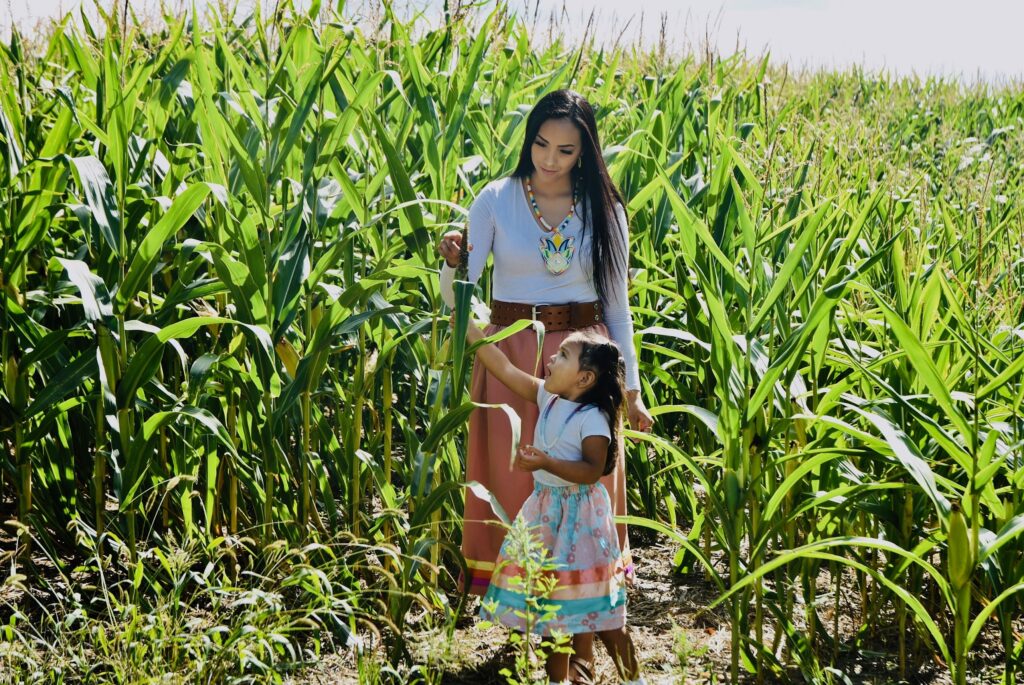
The Haudenosaunee Confederacy is recognized as the oldest continuous, participatory democracy in the world. Our representative form of government, organized on local, state, national and international levels, flows organically from our Creation Story, which begins with Sky Woman, pregnant, falling from Sky World. She descends toward an endless water world, where water animals already reside and help form the first land, known as Turtle Island. Through their efforts, the living world we inhabit today was brought forth.
In the early days of human beings, the first experience of death brought overwhelming and confusing emotions, leaving people paralyzed and unable to carry on their daily responsibilities. A young man came forward with a vision that offered a path through the grief. Following his vision, the eldest woman from each family was asked to gather water at a stream and report the first animal she saw, noting on which side of the stream it appeared. That animal became her family’s clan and determined which side of the house her clan would sit. Crucially, each clan was instructed on how to support clans on the opposite side of the house during times of grief and daily living.
This is the origin of our clan system, guided by Clan Mothers.
In one instance, two women reported seeing a bear on opposite sides of the stream. The young man met with them, and they decided together on what side the Bear Clan would sit. This three-sided decision-making process is the foundational principle of Haudenosaunee governance: Matters are passed back and forth across the house until a consensus is reached.
Matrilineal Authority Among the Haudenosaunee
To this day, family lineage among the Haudenosaunee is passed down through the women. Children receive their clan, name and nation from their mother’s clan—a sharp contrast to the patriarchal structures of the colonial world.
Similarly, it is the Clan Mothers who oversee the political and spiritual well-being for their clan family. She oversees the economy and governance, ensuring matters are handled fairly, settling disputes and ensuring that everyone is provided for.
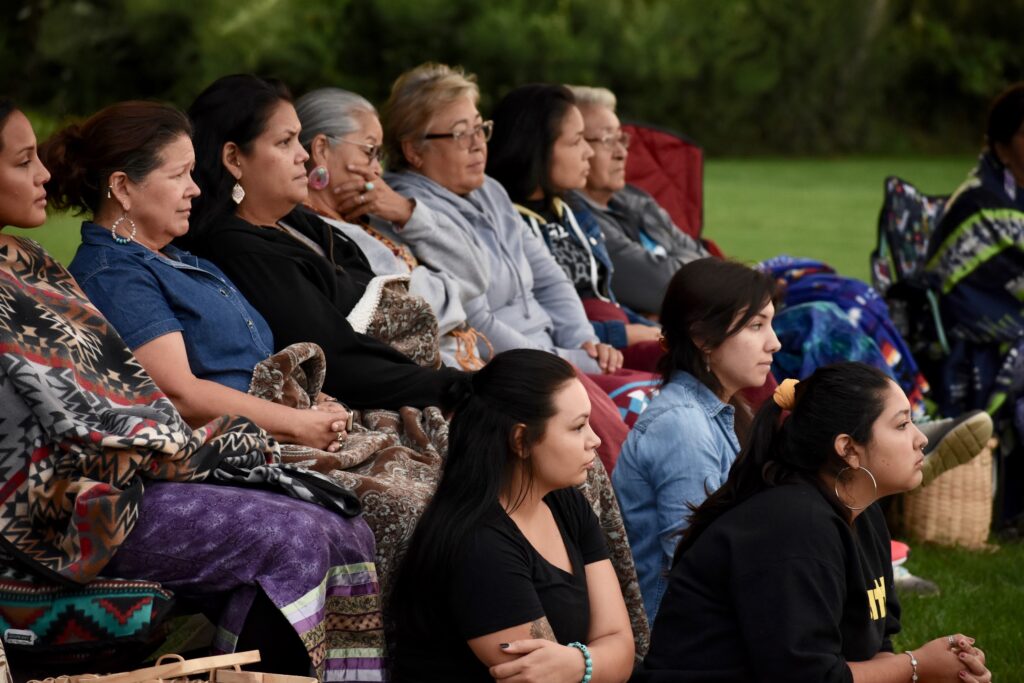
Our clan system is an ancient system that was later integrated into a peacemaking, political form of governance with our chiefs that is now over 1,000 years old. This political process merged the support of chiefs and Clan Mothers through the three-sided structure of governance of passing matters across the house at local, national and international levels. With equanimity and balance the Haudenosaunee continue to engage and interact with all parties, foreign and domestic in this manner.
Each Clan Mother selects one chief to represent the voice of the people in her clan. She instructs him on all matters that must be elevated to the national or international level among the Haudenosaunee Confederacy of Six Nations or beyond. She consults with her chief and sets the bounds on his decisions in council meetings. In this form of governance, all voices of the people are represented within their nation and beyond.
Notably, she holds the absolute, undeniable right to remove her chief if he acts in his self-interest rather than for the peace and well-being of the people.
Clan Mothers also hold the responsibility to decide if their nation goes to war or shall remain at peace. As mothers, they will first consider the loss of their children’s lives and bearing responsibility for bloodshed before rushing to fight.
… Family lineage among the Haudenosaunee is passed down through the women. Children receive their clan, name and nation from their mother’s clan—a sharp contrast to the patriarchal structures of the colonial world.
When the Haudenosaunee Confederacy convenes in the Grand Council, each nation sits in its designated place within our Longhouse, mirroring the organizational structure like our clans. The nations care for one another in the same reciprocal way that clan families do at the local level.
Within the Grand Council, agendas are set, issues are raised, and matters among our nations or with outside nations are passed back and forth across the house until consensus is reached—the same deliberative process as where the Bear Clan sits.
This all existed long before Columbus set sail for the Americas. Every European that came into contact with the Haudenosaunee, including the forefathers and foremothers of this country, observed and engaged with our form of government.
The Foundational Omission in U.S. Democracy
When the U.S. founding fathers drafted their Constitution, drawing inspiration from Haudenosaunee governance, they committed a catastrophic omission: matrilineal leadership.
Though Benjamin Franklin openly urged the colonists to model their government after the Haudenosaunee, the colonial settlers could not reconcile themselves with the idea of women holding central authority in governance and political affairs. Abigail Adams famously warned her husband John Adams (later serving as the first vice president and second president of the United States) that such exclusion would “cement a rebellion,” as noted by Roesch Wagner.
At that time, white women upon marriage lost their legal identity, including her name and property, rights to children and safety from rape and beatings by her husband.
In contrast, Haudenosaunee women have always held full autonomy over our minds, bodies, children, homes and possessions. We have exercised full authority in all matters concerning our nations and the land.
The organizers of the 1848 Seneca Falls Convention had direct, firsthand knowledge of the vital role of Haudenosaunee women. Roesch Wagner’s research reveals that several early suffragists felt a sense of safety and belonging among the Haudenosaunee and were reluctant to leave Haudenosaunee villages.
Matilda Josyln Gage, who was adopted into the Mohawk Nation, wrote of the Haudenosaunee: “Never was justice more perfect, never was civilization higher.”
Where We Stand Today: A Call for Reciprocity
Today, the Haudenosaunee understand that the U.S., despite its global reach, is still in its infancy. Many of the challenges it faces stems from a foundational failure to include the voices of all life in its decision-making processes.
The U.S. Constitution was drafted thinking only of propertied white men. Women, children, all genders and peoples, the natural world and the generations yet to come, were never truly considered.
As Haudenosaunee, we understand that all human beings hold a sacred responsibility now, for seven generations into the future, to care for each other and the well-being of all life.
Clan Mothers also hold the responsibility to decide if their nation goes to war … They will first consider the loss of their children’s lives and bearing responsibility for bloodshed before rushing to fight.

Women as life givers, like Sky Woman, are the foundation to nurturing a healthy world—starting with our children, families, the seeds of our foods, the lands and the vital waters that sustain all of life. These responsibilities, and the political authority required to fulfill them, were not mentioned in the U.S. Constitution. Yet, as Haudenosaunee, we know that they are central to maintaining a balanced and peaceful democracy.
A truth exists on Mother Earth that most do not know. Sky Woman danced and created Turtle Island, where freedom, peace and democracy flourished, a truth that has influenced the world over.
If Sky Woman had met Eve, she may have said something like what Clan Mother Mommabear said in the film, Without A Whisper: Konnón:kwe, on a panel with Gloria Steinem and Dr. Roesch Wagner. In response to a question about feminism and the Haudenosaunee, she stated, “We’re not feminists. We’re the law.”
Explore the entire FEMINIST 250: Founding Feminists essay collection:
- The main Founding Feminists page contains original art and a historical timeline and invites readers to submit original poetry.
- America’s Founding Feminists: Rewriting America’s Origin Story, by Janell Hobson, professor of women’s, gender and sexuality studies at the University at Albany.
- Haudenosaunee Governance: The Matrilineal Democracy That Shaped America, by Michelle Schenandoah, founder of Rematriation, a Haudenosaunee women-led nonprofit organization.
- ‘This Is Our Country Too!’: The Enduring Legacy of Spanish-Speaking Women in Early America, by Allyson M. Poska, professor of history emerita at the University of Mary Washington, translated by Antonia Delgado-Poust, associate professor of Spanish at the University of Mary Washington. Lea este artículo en español aquí.
- Claiming the Revolution: Gender, Sexuality and the Radical Promise of 1776, by Charles Upchurch, professor of British history at Florida State University.
- Reclaiming Phillis Wheatley (Peters): Imagination as a Feminist Founding Project, by Dana Elle Murphy, assistant professor of Black studies and English at Caltech.
- The Radical Potential of Traditional Femininity, by Jacqueline Beatty, associate professor of history at York College of Pennsylvania.
- Queer Possibilities in Revolutionary America, Jen Manion, Winkley professor of history at Amherst College.
- She Wanted to Be Free: Black Women’s Revolutionary Resistance, Dr. Vanessa M. Holden, associate professor of history, director of African American and Africana studies at the University of Kentucky, and director of the Central Kentucky Slavery Initiative.
- Sally Hemings and the Making of Democracy, Jessina Emmert, doctoral candidate in the Department of Women’s, Gender and Sexuality Studies at the University of Kansas.
- The Abolitionist Origins of American Feminism, Manisha Sinha, Draper chair in American history at the University of Connecticut.
- The Curious Case of Afong Moy: Asian Womanhood and National Belonging in the U.S., Anne Anlin Cheng, Louis W. Fairchild class of ’24 professor of English at Princeton University
- Making Disability Visible in History: A Conversation With Rosemarie Garland-Thomson, Janell Hobson, professor of women’s, gender and sexuality studies at the University at Albany
- Educating Women: A History of Access, Exclusion and Backlash, Nimisha Barton, lecturer at Cal State Long Beach and a DEI consultant in higher education