Trump’s FDA pick, the Supreme Court’s shadow docket and dozens of state supreme court races could reshape reproductive freedom, voting rights and the balance of power heading into the midterms.
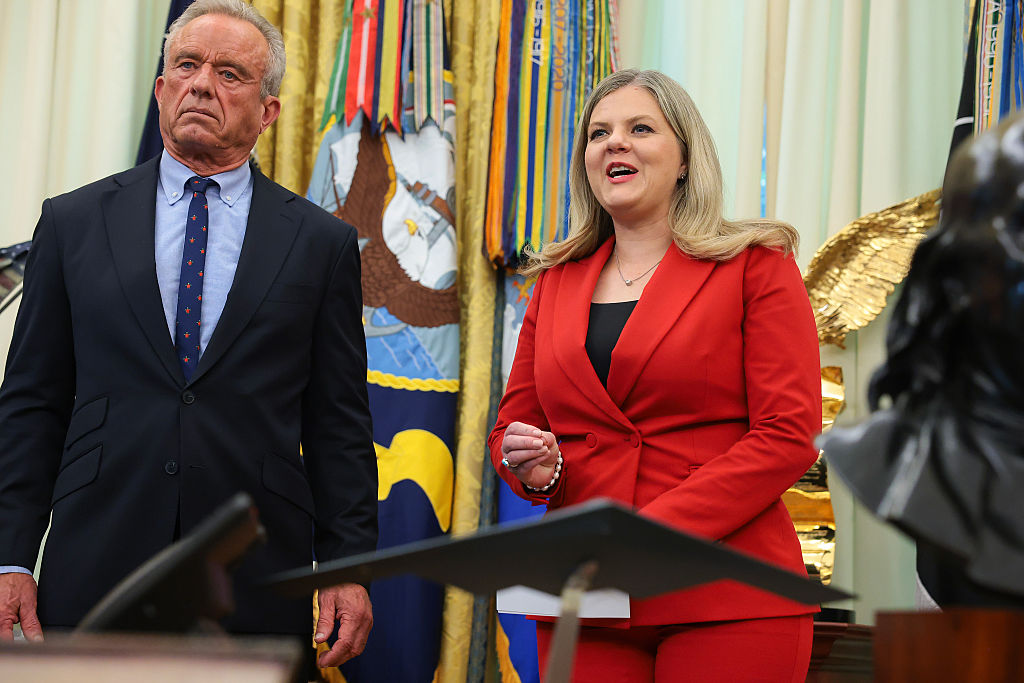
Trump has officially nominated Dr. Heidi Overton as the FDA commissioner. Overton previously called the abortion pill “telebortion,” and called on Congress to strictly regulate it. With the FDA currently reevaluating its approval of mifepristone and its regulations permitting providers to mail the medication, Overton’s nomination represents yet another challenge to mifepristone’s widespread usage—which accounts for over two-thirds of all abortions, including in states with bans.
Not to mention the fact that Overton also recently appeared next to Trump during a press conference in which he spouted dangerous misinformation about childhood vaccines.
We will keep Ms. readers up to date as her nomination makes its way toward Senate confirmation hearings. Asking for a friend: Will the physician in the Senate who holds a key vote on the Health Committee cave again?
The Supreme Court might be on summer break—but its shadow docket is still up and running.
Among the cases still pending are several relating to Trump’s executive actions, including the administration’s request to stay an injunction that prevented his executive order restricting mail-in voting from being implemented. The proposed mail-in ballot restriction (if allowed to be implemented) could have a profound impact on the upcoming midterm elections: Amplifying Trump’s unsubstantiated claims of widespread voter fraud, the executive order calls for DHS to make a list of verified U.S. citizens who will be “above the age of 18 at the time of an upcoming Federal election,” and calls on the USPS to introduce a number of new rules that dictate how states conduct mail-in voting.
The decision in the mail-in voting case should be a slam dunk: The Constitution reserves election matters, like mail-in voting, to the states—not the federal government. But nothing is certain before this Supreme Court, which has committed itself to expanding Trump’s executive powers. We’ll be watching and reporting on these important cases as they unfold.

While all eyes are usually on the Supreme Court, I’d like to take a moment to remind everyone of some of the electoral battles for state supreme court seats.
Thanks to SCOTUS and state legislators’ rollback of many fundamental rights, state supreme court races have been receiving increased attention, and attracted significant outside spending.
This week in Ms., Bonnie Stabile reports on contests in states like North Carolina, a pivotal election battleground where Justice Anita Earls, the only Black justice on the North Carolina Supreme Court, is campaigning to hold onto her seat.
“In 2025, half of state supreme courts had no women of color, and 24 states had no Black justices at all, while 79 percent of seats on the courts were held by white justices and 57 percent occupied by men,” reports Stabile.
This fall, 32 states are holding state supreme court elections, and 63 out of a total 344 seats are on the ballot. “The outcomes could incrementally alter the ideological makeup of courts in states currently in play and lay the groundwork for future shifts in control,” Stabile points out.
We’ll be following these consequential races closely this November, along with the rest of our elections coverage.
Earlier this month, Ms. contributor Justine Andronici spoke with attorney and former MSNBC anchor Katie Phang about her lawsuit against Todd Blanche’s Justice Department, which resulted in a federal judge ordering the DOJ to turn over key unredacted Epstein files for judicial review. Phang called her current fight for the documents “a smaller battle in the bigger war.”
We know journalists like Phang have a crucial role to play in that war. That’s why in our Fall issue, we’re delving further into Epstein’s world, with an investigation by Andronici into the modeling industry’s role in the international trafficking of women and girls.
Subscribe here to be the first to get the Fall issue delivered straight to your mailbox—and fuel another year of our reporting, rebelling and truth-telling.
P.S. — Abortion and reproductive healthcare will be a key issue in this fall’s elections. We’re documenting how access to this healthcare has enabled people of all ages to build their own lives—and we’d love to hear from you! Join us and add your voice here.
*
Look to these trusted groups if you or a loved one needs to know more about reliable abortion care:
- A one-stop-shop for abortion seekers: I Need An A
- Other websites to explore all your options for abortion care: Plan C Pills, Abortion Finder
- Safe websites to buy abortion medication: Aid Access, Massachusetts Medication Abortion Access Project, Hey Jane
- If you need help affording abortion care, tell your telemedicine provider or contact an abortion fund near you.
- To protect your digital privacy when planning your abortion, click here.
- For free legal help as a patient or doctor, call If/When/How’s Repro Helpline—844-868-2812—or contact Pregnancy Justice.
- For medical advice, contact the Miscarriage & Abortion Hotline: 833-246-2632.
- If you need to know the abortion law in your state, look to the Center for Reproductive Rights. or Guttmacher Institute.