



50 YEARS OF Ms.: THE BEST OF THE PATHFINDING MAGAZINE THAT IGNITED A REVOLUTION (Alfred A. Knopf) will be released in September and we couldn’t be more excited to share it with our readers—and with the entire world.
Author: Jennifer Weiss-Wolf
Jennifer Weiss-Wolf is the executive director of Ms. partnerships and strategy. A lawyer, fierce advocate and frequent writer on issues of gender, feminism and politics in America, Weiss-Wolf has been dubbed the “architect of the U.S. campaign to squash the tampon tax” by Newsweek. She is the author of Periods Gone Public: Taking a Stand for Menstrual Equity, which was lauded by Gloria Steinem as “the beginning of liberation for us all,” and is a contributor to Period: Twelve Voices Tell the Bloody Truth. She is also the executive director of the Birnbaum Women’s Leadership Center at NYU Law. Find her on Twitter: @jweisswolf.

Midterms and ‘Mid-Cycle Spotting’: Getting Real About Women’s Health
We have been left all alone, our bodies overlooked by the law and undermined by the courts. We’re left, quite literally, to save our own lives. But perhaps one silver lining of the overturning of Roe v. Wade has been creating space for women to openly and deliberately trace the arc of their reproductive lives—in public—from menstruation to menopause.
As advocates, scholars and providers now work to reimagine and rebuild what meaningful reproductive care looks like in this country, we have an opportunity to be more holistic in addressing the full continuum of women’s reproductive lives. Private sector interventions and public policy solutions must reflect those intersections. Period. Full stop.

HHS Issued Guidance to Protect Private Medical Information. Here Are Some Best Practices for Users of Period-Tracking Apps
In the wake of Roe‘s overturn, among the urgent unmet needs are ensuring that people’s private health information is vigorously safeguarded. This includes period-tracking apps, used by millions of women to help chart and better understand their reproductive cycle.

The Fight for Abortion Rights in Post-Roe America
The Supreme Court’s ruling in Dobbs v. Jackson Women’s Health Organization is a devastating blow. What comes next?

Why Roe Was Never Enough—and What Comes Next
Late Monday night, a leaked version of the draft of the majority decision in Dobbs v. Jackson Women’s Health Organization was made public. When the final decision is issued, there will no longer be a federally guaranteed right to abortion in America for the first time in nearly 50 years.
What are the democratic dysfunctions that have led to this pivotal point? How should we consider parallel affronts to participation and representation—the wave of voting restrictions and outsize role of big money in politics—and the anti-abortion agenda? Can we look to state courts to provide new avenues for protecting reproductive rights? And what is the legal and societal impact of criminalizing pregnancy and abortion, especially on communities of color?

Join the Conversation: Why Abortion Is Essential to Democracy—and Democracy Is Essential for Reproductive Justice
Join a special event streaming from NPR’s studio in New York City on Wednesday, April 20, 2022.
Panelists will dig deep on key questions:
*How should we consider parallel affronts to participation and representation—the wave of voting restrictions and outsize role of big money in politics?
*Can we look to state courts to provide new avenues in the aftermath of the Supreme Court’s Dobbs ruling?
*What are the legal and societal impacts of criminalizing pregnancy and abortion, especially on communities of color?

With a Powerhouse All-Women Cast, ‘Suffs’ Explores Activists Who Made Women’s Voting Rights Happen
Unlike the limited lessons of women’s suffrage many learn—Seneca Falls and Susan B. Anthony—Suffs digs deep into the gamesmanship wielded by the movement’s early 20th century leaders. Suffs opens April 6 at the venerable Public Theater in New York City. Lin-Manuel Miranda himself tweeted this week that >Suffs is “gobsmackingly incredible” and its writer and star, Shaina Taub as Alice Paul, is “the FUTURE.” I couldn’t agree more.
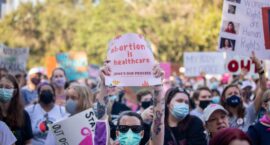
Women’s Rights and Democracy Are Inextricably Linked
Last fall, America was featured for the first time on a list of backsliding democracies. With inadequate progress in women’s participation in government, reproductive rights, and maternal mortality, this title may reflect recent attacks on gender equality. America’s longstanding and abysmal record on myriad gender equity markers has been the true harbinger for our downgraded democracy status.

Our Democracy Has Problems. Women Have Solutions.
The U.S., one of the world’s oldest democracies, is now seeing a rise of antidemocratic views. But never fear. We come bearing good news. There is hope. And that hope, we believe, is the shared power and potential of mobilized women to forge a new movement for a 21st century democracy.
We hope you are inspired and encouraged by what this slate of women experts—working at all levels to reform and revitalize our democracy—have to say. And to hear more about democracy solutions and how you can get involved, join us March 8–10 from 3–5 p.m. ET for RepresentWomen’s democracy Solutions Summit, which brings together experts and leaders in election administration, voting rights and democracy reform who are working on innovative solutions that upgrade and strengthen our democracy.

Abortion Funds Enable Access: The Time to Invest in Direct Aid Is Now
Expanded investment in abortion funds is urgently needed to keep up with current demand for direct aid, as well as to prepare for an uncertain and surely more challenging future.
Central to the defense of reproductive rights for all must be the provision of and commitment to direct aid to the communities facing those attacks head-on.