Women Made History in the East Wing. It Was Razed for Trump’s Ballroom.

When bulldozers began to tear down the East Wing of the White House this week to clear the way for President Donald Trump’s $250 million ballroom, historians raised alarms that important American history was being buried in the rubble, including chapters about previous first ladies and their roles uplifting women going back nearly a century.

Among the offices housed in the East Wing is the Office of the First Lady, first professionalized by Eleanor Roosevelt during her husband’s administration.

“To me, this demolition suggests that the current White House does not think that the first lady does anything of value,” said Katherine A.S. Sibley, professor of history. “I’m not talking about [Melania Trump] particularly, but the office itself—they’re not cognizant of the history.” 

From Iceland’s ‘Women’s Day Off’ to No Kings, Progress Begins When Women Stand Together

Weekend Reading for Women’s Representation is a compilation of stories about women’s representation in politics, sports and entertainment, judicial offices and the private sector—with a little gardening mixed in!

This week:
—Fifty years ago, the women of Iceland changed the course of their nation … not through an election or a revolution, but through one simple, collective act: They stopped. On Oct. 24, 1975, 90 percent of Icelandic women refused to work, cook or care for children for a single day. That strike, known as the Women’s Day Off, became a watershed moment for equality, but it didn’t emerge overnight.
—Women hold the majority in the Bolivia legislature.
—Japan confirms Sanae Takaichi as its first woman prime minister.

… and more.

‘Freeing Black Girls’ and ‘Loving Black Boys’: Tamura Lomax on Revolutionary Mothering During Troubled Times

Tamura Lomax, a trailblazing Black feminist religious scholar, is on a mission to deliver a “Black feminist Bible on racism and revolutionary mother” with two companion books. The first, Freeing Black Girls, was published this year (2025); the second, Loving Black Boys, comes out next year.

Ms. contributing editor Janell Hobson spoke with Dr. Lomax about her latest works and the radical vision of “revolutionary mothering” that guides them.

“Black feminist mothering becomes this experiment. If people can teach sexism and hatred and racism, can we teach Black feminist politics? Is that possible? If we just do it from birth, and it’s just normal everyday talk it’s not this lesson that happens once at the dinner table but it’s just part of our everyday living. Can we do that the same way that we teach hatred?

“Revolutionary mothering is teaching those Black feminist politics everywhere—in the car, on the couch, during movie night, after the basketball game, in the football stands. It’s teaching a radical politics of our rights, our collective right to bodily autonomy first and foremost.”

Russia Was Once a Revolutionary Feminist Motherland

Russia’s hostility to feminism today stems not from its foreignness, but from memory. A century ago, it was Russian women who lit the first sparks of revolution. On International Women’s Day in 1917, factory workers filled the streets of Petrograd demanding bread, peace and equality—an uprising that toppled the Romanovs and pulled the world into modernity. Under the Bolsheviks, women won the right to vote, divorce became accessible and abortion was legalized. For a brief, radical moment, the Soviet experiment made women’s liberation a pillar of the state.

Julia Ioffe’s book, Motherland: A Feminist History of Modern Russia, from Revolution to Autocracy, reminds us that today’s Russia rejects feminism precisely because it once knew what it could do: ignite revolutions, upend hierarchies and reimagine power itself.

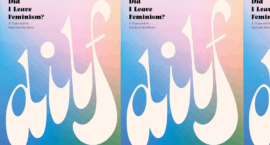
‘DILF (Did I Leave Feminism?)’ Is a New Transmasculine Manifesto

An excerpt from Jude Ellison S. Doyle’s new book, DILF (Did I Leave Feminism?), out Oct. 21:

Transmasculine people are one of feminism’s biggest blind spots. No one knows quite what to do with us, so it’s easier to pretend we’re not there. Books on “male feminism” or “feminist men” mostly teach men how to be allies to women’s struggle—the idea that there might be men who actually experience pregnancy, or abortion, or being cat-called or sexually harassed or pay-gapped or any of the other things we traditionally call “women’s issues” is not accounted for. Books on trans feminism understandably stress the importance of feminism for trans women—which is important, what with them being women and all—but do tend to reinforce the assumption that feminism is just for girls.

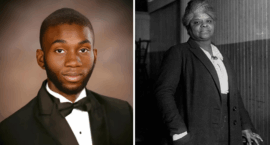
Trey Reed’s Death—and Its Swift Labeling as Suicide—Demands the Scrutiny Ida B. Wells Called For

Trey Reed, a young Black student, was found hanging from a tree on his college campus of Delta State University in Mississippi on Sept. 15, 2025. Trey Reed was a computer science major from Grenada, Miss., and a first-generation student, described as ambitious and eager to create a positive future for himself and his family.

Mississippi police and the Bolivar County coroner’s office have labeled the death a suicide. But Reed’s family members and other advocates, including Reps. Bennie Thompson (D-Miss.) and Ayanna Pressley (D-Mass.), activist and former NFL quarterback Colin Kaepernick, attorneys Ben Crump and Vanessa J. Jones (both of whom are representing the family), are calling for further investigation. 

Cases like Reed’s awaken questions rooted in legacies of racial violence in the South. “While the details of this case are still emerging, we cannot ignore Mississippi’s painful history of lynching and racial violence against African Americans,” said Thompson in the days following Reed’s death. That history is not distant: Mississippi recorded more lynchings than any other state, and the echoes of those crimes persist in how the deaths of Black people are investigated and discussed. The reflex to dismiss possible racial motives—or to declare a death a suicide before all evidence is known—reflects a deeper national unwillingness to confront the full scope of anti-Black violence.

Who Gets to Procreate and Parent? A Black Feminist Critique of the Pronatalist Agenda

Pronatalism is not simply about encouraging births—it is a political project rooted in racism and control. Its goal is to engineer a future that permits only certain people to bear and raise children while coercing or punishing others for reproducing or parenting.

Adriana Smith’s experience of coerced reproduction is a devastating example: a Black nurse and mother declared brain-dead, yet kept on life support for months to sustain her pregnancy under Georgia’s restrictive abortion laws. This is what pronatalism looks like in practice—the state asserting ownership over a Black woman’s body.

As Black feminists, we understand that reproductive choices are personal, but they are also deeply shaped by structural power. Pronatalist leaders and influencers cloak their agenda in the language of family and morality, but in truth, they seek to restrict autonomy and consolidate control. Reproductive justice, by contrast, insists on every person’s right to decide whether and how to have children, and to parent in safety and dignity.

After the War: Author and Aid Worker Claudia Krich Challenges the Myths of Vietnam

American humanitarian worker Claudia Krich—co-director of the American Friends Service Committee medical relief program from 1973 to 1975—was one of only a handful of Americans who stayed in Vietnam past April, 30, 1975, after the war ended. (She and her husband finally left in July 1975.)

Fifty years later, in April, Krich published her full journal from those months in Vietnam. Those Who Stayed: A Vietnam Diary, now available from the University of Virginia Press, combines Krich’s 1975 diary—including sections originally published in Ms.‘ July 1976 print issue—with extra historical content and some first-person accounts by people mentioned in or relevant to the book.

To celebrate the book’s release earlier this year, Claudia Krich communicated with Ms. about her book and her experiences as an American woman living and working in Vietnam during this historic moment.

“People think the war was North versus South, but that’s not true. … I hope my book motivates more people to travel, to take risks, to be outspoken, to record what they experience.”

As Trump Targets Portland, a New Report Shows How the City Became a Model for Women’s Representation

Weekend Reading for Women’s Representation is a compilation of stories about women’s representation in politics, sports and entertainment, judicial offices and the private sector—with a little gardening mixed in!

This week:
—How did Portland, Ore., achieve one of the mosdt representative city councils in the country? Through structural reform and community-driven organizing.
—A woman will be Ireland’s next president.
—Japan is posed to make a historic shift in women’s leadership.
—For the first time, a woman will lead one of Christianity’s oldest institutions.
—We celebrate the life of Jane Goodall.
—We mark what would be Eleanor Roosevelt’s birthday. She helped craft the Universal Declaration of Human Rights—insisting that freedom must include not only political rights, but also the right to food, housing and dignity: “You cannot talk civil rights to people who are hungry.” In the midst of Cold War tension, Roosevelt’s words were a quiet but radical act—a reminder that peace often begins not in policy or power, but in empathy and connection.

… and more.

This International Day of the Girl, ‘Doing Nothing Is Not an Acceptable Choice’

On Oct. 11, we celebrate International Day of the Girl, a global call to recognize girls’ rights and confront persistent inequality.

When hope wavers and progress stalls, I look for words that steady me. Recently, I found them in writer Roxane Gay’s powerful essay in The New York Times, “Civility Is a Fantasy,” where she writes: “As a writer, as a person, I do not know how to live and write and thrive in a world where working for decency and fairness and equality can be seen as incivility … I worry and I worry and I worry, and I feel helpless and angry and tired, but also recognize that doing nothing is not an acceptable choice.”

After reading Gay’s words, I reminded myself of the girl I am and the change I lead, and thought about the many girls who might be feeling that same helplessness right now—those watching rights roll back, hearing their worth debated or wondering if their voices still matter. So, on International Day of the Girl, this letter is for them. It’s a call for action.