Serious Work Begins to Create a Treaty on Crimes Against Humanity

Afghanistan. Myanmar. Syria. The Democratic Republic of the Congo.

Over the last 80 years, there has rarely been a situation of atrocity that has not been marked by the commission of crimes against humanity. These crimes, defined by their widespread or systematic nature, target civilians and devastate societies.

Yet, while the international community has created legal regimes to address war crimes and genocide, we lack a global legal architecture for the prevention, suppression and punishment of crimes against humanity, leaving millions across the globe at risk and justice elusive for survivors.

The start of negotiations for such a treaty is not just overdue; it is of historic importance. Late last month, the United Nations General Assembly launched a four-year process to prepare for and negotiate a new global treaty to prevent and punish crimes against humanity by 2028. If it is crafted with ambition and resolve, it can be a game-changer for international accountability, strengthen the rules-based order and offer hope and justice to victims and survivors.

War on Women Report: Meta Removes Abortion-Related Accounts; Louisiana Tries to Extradite California Abortion Provider; Fatal ICE Shootings

MAGA Republicans are back in the White House, and Project 2025 is their guide—the right-wing plan to turn back the clock on women’s rights, remove abortion access, and force women into roles as wives and mothers in the “ideal, natural family structure.” We know an empowered female electorate is essential to democracy. That’s why day after day, we stay vigilant in our goals to dismantle patriarchy at every turn. We are watching, and we refuse to go back. This is the War on Women Report.

Since our last report:
—Kentucky Attorney General Russell Coleman has tried to remove pro-abortion ads from Mayday Health, an organization that shares information about abortion pills, birth control and gender-affirming care.
—The FDA withdrew a rule requiring cosmetics companies to test their products made with talc for asbestos, alarming public health advocates.
—Two Pennsylvania hospitals told the state they may not provide emergency contraception to sexual assault survivors because of religious objections.
—Some good news out of Wyoming: The state’s supreme court started the new year by striking down Wyoming’s two abortion bans.

… and more.

Massachusetts Could Be the Next State to Give Abuse Survivors a Pathway Out of Prison

In June, Karen Edwards testified via video from MCI Framingham, Massachusetts’ only women’s prison, where she is serving a sentence of 15 years to life for the death of her abusive husband. Speaking through tears, Edwards described years of isolation, surveillance and threats—how her husband controlled her movements, cut her off from loved ones and warned that if she left, he would kill her and her children. She urged legislators to pass the Massachusetts Survivors Act, a bill that would allow judges to reduce sentences or offer alternatives to incarceration when a person’s conviction is directly tied to their experience of abuse.

The proposed legislation mirrors resentencing reforms adopted in a handful of other states and could dramatically change Edwards’ future, potentially reducing her life sentence to a term she has already served. Advocates say the bill would offer a long-overdue pathway home for survivors whose actions were shaped by violence, coercion and survival.

As lawmakers consider the measure during the current legislative session, formerly incarcerated survivors and those still behind bars are watching closely—some, for the first time, allowing themselves to imagine a future beyond prison walls.

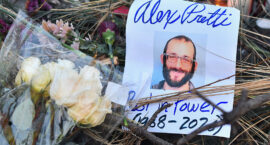
Misogyny Isn’t Just About Women—and the Killing of Alex Pretti Proves It

The Trump administration has made misogyny a governing principle, deploying it not only to control women but to enforce a rigid hierarchy of power that punishes anyone who disrupts it. The killing of Alex Pretti makes that unmistakably clear.

Pretti—a 37-year-old ICU nurse—was not threatening law enforcement. He was doing what the administration endlessly romanticizes and selectively rewards: stepping in to protect a woman who was being shoved and pepper-sprayed by federal agents. For that, he was tackled, disarmed and shot 10 times. The violence that ended his life did not contradict the administration’s worldview—it followed it to its logical conclusion.

Misogyny functions as a system, not a personality trait. It relies on domination masquerading as protection, and it turns lethal when its myths are exposed. Pretti shattered two of them at once: the fantasy of the “good guy with a gun” and the claim that this administration acts as a protector of women. His calm, visible effort to shield someone else left no room for reinterpretation, only denial. When authoritarian power cannot reconcile what we have seen with what it insists we believe, it chooses force. We know what happened in Minneapolis. We know who tried to protect whom. And we should be clear about what kind of politics requires us to look away.

How Misogyny and White Nationalism Converge in ICE Enforcement

The brutality we are witnessing in Minnesota, at the hands of thousands of poorly trained, heavily armed and trigger-happy men who have full reign to hunt and harass anyone who is non-white, is nothing short of state-sponsored terror. It is a horrific illustration of what unfettered power does in the hands of leadership that celebrates and demands violence, especially from men. 

As thousands of amped up men are deployed in the streets and taught there are no consequences for killing anyone who refuses to submit to their authority, we should anticipate more violence to come.

After all: The violence is the point.

The Cruel and Unusual Killings of Renee Good and Alex Pretti

Barely two weeks apart, two American citizens have been slain in Minnesota by U.S. Immigration and Customs Enforcement (ICE) agents in the Twin Cities. Their deaths raise important questions—not just about the violation of First Amendment freedoms, but also the trampling of Eighth Amendment protections that bar the government from inflicting “cruel and unusual punishment.” 

After Decades of Institutional Silence, Survivors of Child Sexual Abuse Deserve More Than the Catholic Church’s PR

When the archdiocese of New York announced plans to raise at least $300 million toward a potential global settlement with childhood sexual abuse survivors, headlines framed it as progress. For those living with the trauma, it landed as a mix of relief, anger, exhaustion and deep skepticism shaped by decades of abuse of power, institutional denial and calculated delay. 

The story isn’t the dollar amount; it’s the decades survivors have waited for justice. They had to fight just to be heard by the very institution that failed to protect them and now must watch that same institution frame overdue negotiations as moral penance. 

Any willingness by the church to engage in meaningful talks is better than silence, but this moment should not be mistaken for accountability. It signals the start of a process survivors should never have had to force through legislation, litigation and relentless public pressure. 

U.S. Turns Its Back on Global Efforts for Women and Children Terrorized by Violence and Conflict

The Trump administration’s recent announcement that it is withdrawing from 66 international organizations and treaties is another blow to the global system where all countries unite to share concerns, agree on rules of conduct and determine agendas for collective action.

With the White House already defunding the foreign assistance that supported many of these organizations and the U.N. system, regardless of congressional appropriations, this stated withdrawal is unlikely to alter much for these organizations in the short term.

The loss is likely greater for America.

Foreign policy experts assert that leaving the U.S. seat empty at the table will result in an increasingly isolated America and enable its adversaries, such as China, to fill the void.

U.S. withdrawal from these organizations also risks undercutting lasting peace and human rights accountability, especially for women and children terrorized by violence and conflict.

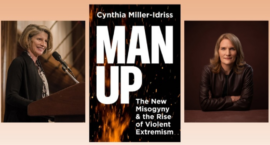
The New Misogyny, Violent Extremism and What It Will Take to Stop It: RSVP for a Live Conversation (Online or in L.A.; Wednesday, Feb. 18)

Across ideologies, the clearest and most consistent predictor of mass shootings is not political extremism alone—it is rising gendered grievances, patriarchal backlash, and perpetrators’ histories of gender-based violence and misogyny.

That is the focus of Miller-Idriss’ groundbreaking new book, Man Up: The New Misogyny and the Rise of Violent Extremism.

On Feb. 18, 2026, Miller-Idriss and Ms. executive editor Kathy Spillar will explore how misogyny fuels radicalization, how gender-based grievances are weaponized by extremist movements, and why confronting patriarchy is essential to preventing future violence. Join us in person or online.

A Catch-22 for Survivors of Domestic Violence: Trump Admin Simultaneously Slashes Housing and VAWA Funds

Federally underfunded programs that support survivors of domestic violence have struggled to provide services for years. Now, the Trump administration’s budget bill threatens to sever the last lifelines many women’s shelters were clinging to: funding for the Violence Against Women Act (VAWA) and the U.S. Department of Housing and Urban Development’s Continuum of Care programs. 

Thanks to callous indifference from Republican lawmakers, obliterating women’s emergency services will leave the blood of women and children across the nation on their hands. In the U.S., domestic violence is typically treated with band-aid solutions rather than infrastructural change that would decrease need for places like shelters—something most lawmakers have never relied on themselves.