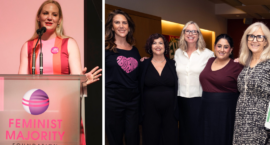
A black dress, bought on Amazon, was the small detail that brought home a poignant truth about the challenges women encounter in finding abortion care in a post-Roe America.


More Than A Magazine, A Movement

A black dress, bought on Amazon, was the small detail that brought home a poignant truth about the challenges women encounter in finding abortion care in a post-Roe America.

Four guaranteed income recipients share how consistent economic stability fueled their creativity and helped them thrive.
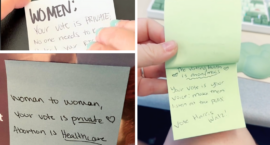
In a world where the political gender gap is growing as women move left, a clever grassroots campaign is reminding women of a fundamental truth: Their vote is private. This guerrilla movement uses a simple yet powerful tool—Post-It notes—to reach women whose partners may disagree with their political choices.
The premise is simple: small, brightly colored notes discreetly placed in public spaces, like bathroom stalls, libraries, cafes, dorm buildings, workplace lounges, doctors’ offices and community boards. Each note carries the message that every woman has the right to cast her vote freely and privately.

We need to acknowledge self-centered individualism as the destructive force that it is. I encounter its effects far too frequently.
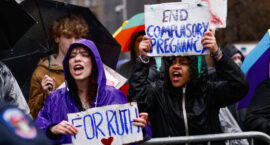
No one—not even New Yorkers—can count on having a right to an abortion. This is why, New Yorkers must vote yes on Prop 1 to “protect abortion permanently.”
Proposal 1, however, does far more than establish constitutional protection for abortion. New York’s Prop 1 explicitly protects women who experience miscarriages and stillbirths, as well as those who carry their pregnancies to term and give birth. Prop 1 will also ensure equality for all those who want to travel—even if they happen to be pregnant. Proposal 1 will, for the first time, close the pregnancy loophole that has been used to deny pregnant patients equal rights to follow their religious beliefs.
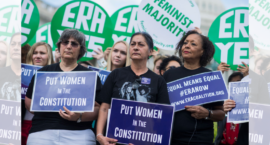
Smack dab in the middle of “Constitution Week”—beginning Sept. 17 and ending Sept. 23 each year—it’s ironic that, with the exception of the right to vote, American women are left out of our Constitution.
Although the ERA has been ratified by the required three-quarters of the states and all that remains is for Congress to pass a simple resolution directing it be placed in the Constitution, politicians continue to block its placement with political games. Every woman in America deserves to have her rights enshrined in the Constitution—not left vulnerable to the whims of a changing political landscape.

Tasked with examining pregnancy-related deaths to improve maternal health, a panel of experts, including 10 doctors, deemed Amber Nicole Thurman’s death “preventable” and said the hospital’s delay in performing the critical procedure had a “large” impact on her fatal outcome.
Thurman’s case marks the first time an abortion-related death, officially deemed “preventable,” is coming to public light.
Their reviews of individual patient cases are not made public. But ProPublica obtained reports that confirm that at least two women have already died after they couldn’t access legal abortions and timely medical care in their state. There are almost certainly others. Though Republican lawmakers who voted for state bans on abortion say the laws have exceptions to protect the “life of the mother,” medical experts cautioned that the language is not rooted in science and ignores the fast-moving realities of medicine.
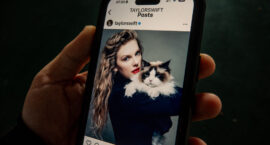
Ordinarily, celebrity endorsements don’t matter much in a presidential race. But Taylor Swift is no ordinary celebrity.
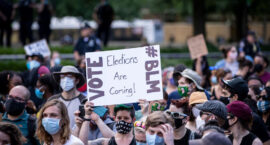
Advocacy groups are mobilizing to safeguard access to the ballot as states implement laws that could deter trans people from voting in November.
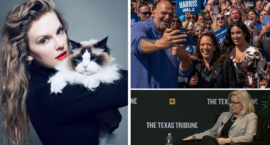
In every issue of Ms., we track research on our progress in the fight for equality, catalogue can’t-miss quotes from feminist voices and keep tabs on the feminist movement’s many milestones. We’re Keeping Score online, too—in this biweekly roundup.
This week: Ohio Secretary of State Frank LaRose admits anti-abortion groups helped him write abortion rights ballot language; Kamala Harris and Donald Trump spar over abortion, Project 2025 and immigration at the presidential debate; Paralympics athletes and Emmy winners break records; Taylor Swift endorses Harris and Walz; Montana Supreme Court protects minors seeking abortion care; attacks on women journalists and LGBTQ people; new pay gap data is worse than last year; and more.