The U.S. Democratic Backslide and Gender Equity: Its ‘Own Form of Intersectionality’

“Women’s power as decision makers in the political process does not reflect our numbers or our needs. Who holds legislative or executive office, and whether we do so in critical mass numbers and with agenda-setting authority, obviously matters tremendously to the design, the enactment, the implementation and the enforcement of laws that can help us or harm us. That includes of course the power to select the judges who interpret these laws.”

(This essay is part of Women’s Rights and Backsliding Democracies project—a multimedia project made up of essays, video and podcast programming, presented by Ms., NYU Law’s Birnbaum Women’s Leadership Network and Rewire News Group.)


This Mother’s Day, I Cherish My Mother’s Strength and the Gift of Time

My mother, Ethel Kennedy, is extraordinary. Seeing such resilience and strength has allowed me to better recognize and come to understand attributes in the many courageous mothers I’ve met in my own human rights work:

The mother of slain LGBTQ+ activist Vicky Hernandez, who refused to give up the fight for justice for her daughter until the Honduran government took accountability for her murder. The mother of slain Colombian activist Nelson Carvajal, who has heartbreaking strength and had to watch each of her grandchildren and children head into exile because their lives are threatened when they demanded accountability. The Polish mothers who have thoughtfully left their own strollers at train stations for Ukrainian refugees to take, and use, after they fled their homeland. And so many others.

Skip the Flowers: This Mother’s Day, Help Save Women Who Suffer During Childbirth

Every year, nearly 300,000 women die because of pregnancy and childbirth—and 95 percent of those deaths are preventable. The biggest health disparity between rich and poor is reflected in how likely a woman is to die while bringing new life into this world.

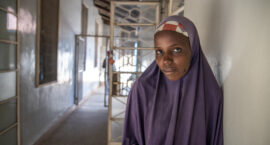
For every woman who dies, another 20 to 30 suffer from preventable and treatable injuries like obstetric fistula—a childbirth injury that causes urinary and/or fecal incontinence and destroys a woman’s life. Obstetric fistula is just a symptom of a larger problem: the global under-investment in maternal healthcare.

Black Mamas Reclaim Their Space in Reproductive Justice

Forward Together’s 13th annual Mamas Day campaign “Black Mamas Reclaiming their Space in the Reproductive Justice Movement,” celebrates Black mamahood and the Black mamas who continue to push the work forward—since Black mamas are the founders of the reproductive justice framework and are the foundation of our movement.

Visit MamasDay.org to send a card to the mamas in your life.

This Mother’s Day, Congress Should Put the Check in the Mail

My mom dreamed of getting an education, and becoming the teacher she’d always aspired to be; of being able to take a day off, instead of working seven days straight. But after nearly 25 years of working multiple minimum wage jobs to make ends meet, my mom passed away unexpectedly in 2020.

A lack of policies to help mothers in general means that stories like my mom’s are tragically common. But, we can make better choices as a country—we can allow folks to live healthier, more dignified lives by providing a guaranteed income and expanding the child tax credit.

Celebrate Mother’s Day by Listening to Guaranteed Income Recipients

When it comes to policy decisions that affect low-income families, Congress should listen to those most affected: low-income Black moms, who disproportionately bear the brunt of unemployment, wage gaps and unpaid childcare and domestic labor.

In the Front and Center series, Ms. and Springboard to Opportunities’ Magnolia Mother’s Trust (MMT) team up to give low-income Black moms in Jackson, Miss., an opportunity to share their story. Each MMT mom receives a guaranteed income payment of $1,000 per month for a year, with no strings attached. Now in its fourth cohort, MMT has changed hundreds of lives and proved that unrestricted monthly payments empower women to do what’s best for their families.

Weekend Reading for Women’s Representation: U.S. Women Call on Mexican Feminists for Abortion Care; Congress Isn’t Built for Moms, Says New Report

Weekend Reading for Women’s Representation is a compilation of stories about women’s representation. 

This week: Kelly Brough will face Mike Johnston in the Denver mayor’s runoff election on June 6; just 1 percent of Congress members are mothers with young kids; Mexican feminist groups see an increased demand for abortion help; and more.

Our Crisis in Maternal Healthcare Is Uniquely American

Maternal healthcare in the U.S. is largely not accessible, equitable, affordable or person-centered. When maternal health suffers, so does newborn health and future child health.

For this Mother’s Day, policymakers, administrators, medical practitioners and healthcare providers need to demonstrate to mothers in the U.S. that they are a priority and advocate for legislation that promotes comprehensive maternal healthcare.

Ukraine’s Frontline Mothers

More and more women have joined the ranks of the Ukrainian Armed Forces (UAF) since the country’s large-scale mobilization rapidly rolled out this past year, switching up the traditional wartime narrative that portrays women, and mothers with children especially, as victims of war instead of as agents of change.

(This article originally appears in the Spring 2023 issue of Ms. Join the Ms. community today and you’ll get the issue delivered straight to your mailbox!)