Lauding the Taliban Despite Glaring Human Rights Abuses Normalizes Their Violence

Feridun Sinirlioğlu, the United Nations’ special coordinator for Afghan affairs, said last week that “good progress had been made in Afghanistan, and there is a “misunderstanding” between the international community and the Islamic Emirate of Afghanistan.

If gender apartheid is a misunderstanding, then it should be immediately recognized by the United Nations so the Taliban can be held accountable for their actions against Afghan women and girls.
Women Speak Out for Pathway to Peace

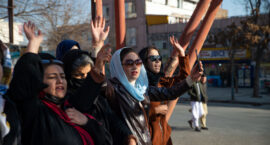
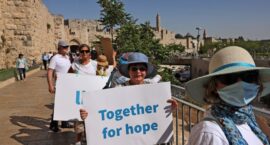
There are times throughout recorded history when women have stepped up, spoken up, and taken action to resolve border and boundary disputes, to protect their cities, communities and families, and to demand and negotiate peaceful resolutions of long-term conflicts.

I am reflecting on those times today as the suffering, death and destruction in Ukraine, Israel and Gaza, and the violent oppression in Iran and Afghanistan, seem beyond our ability to do anything that would mediate the violence or end the suffering. Yet, sometimes, women have come together and accomplished just that.

How the World Is Letting Girls Fall Behind

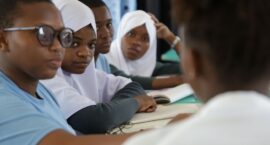
The world is letting girls fall behind at an alarming rate. This International Day of the Girl, the world must reassess its commitments to girls everywhere—for a flourishing world and, most importantly, for the individual health, rights and well-being of each girl, no matter what. 

Girls will reach their fullest potential when global governments comprehensively prioritize their education, safety, health and autonomy.

Women Need the Afghan Adjustment Act

Thousands of Afghan women entered the United States as part of Operation Allies Welcome. Still, they continue to be hampered by the lack of a simple, straightforward and reliable way to obtain permanent legal status and to become citizens.

Congress can change that by passing the Afghan Adjustment Act (AAA), which was reintroduced this summer by a bipartisan group of senators and representatives. AAA would allow Afghans paroled into the United States to apply for their green cards, provided they met basic background checks and other eligibility requirements.

Ms. Global: 11-Year-Old Peruvian Rape Victim Denied Abortion; Indigenous Women in Canada Forcibly Sterilized; Fair Pay in FIFA Women’s World Cup

The U.S. ranks as the 19th most dangerous country for women, 11th in maternal mortality, 30th in closing the gender pay gap, 75th in women’s political representation, and painfully lacks paid family leave and equal access to health care. But Ms. has always understood: Feminist movements around the world hold answers to some of the U.S.’s most intractable problems. Ms. Global is taking note of feminists worldwide.

This time with news from Peru, Afghanistan, Taiwan, Canada and more.

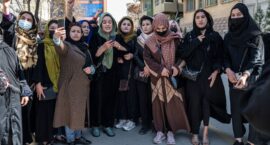
A Timeline of Horror: 100+ Taliban Edicts, Orders and Directives Denying Afghan Women and Girls Their Human Rights and Existence

The Taliban has issued over 100 edicts stripping Afghan women and girls of their most basic human rights and opportunities, effectively putting them under house arrest.

The timeline we’ve assembled here encompasses all the edicts and orders that impact women and girls, often addressing issues related to human rights, media freedom and movement restrictions.

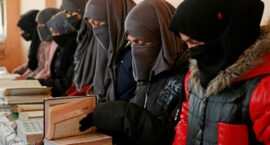
Two Years After the Taliban Takeover, an Afghan Girl Is Holding On to Hope: ‘I Am Young, But I Am Everything for My Family’

Last summer, almost one year after the Taliban takeover, I spoke to 17-year-old Farzana about her life in Kabul. Now, two years since the U.S. withdrew their troops, Farzana, 18, feels she has very little to live for.

“It has been two years and the future looks dark. It’s not being alive, and not being dead. We have permission for neither. … I had the hope to be a great athlete and leader in the world—a leader for Afghan women. These are still my hopes and my goals, and even in this hard situation, I am doing my best to get an opportunity to find a university outside of Afghanistan.”

Ms. Global: Taliban’s Leader Says Women Prosper Under His Rule; Singapore Pride Returns; Disabled Women in DR Against Obstetric Violence; Kenyan Workers Forced to Strip in Period Shaming Incident

The U.S. ranks as the 19th most dangerous country for women, 11th in maternal mortality, 30th in closing the gender pay gap, 75th in women’s political representation, and painfully lacks paid family leave and equal access to health care. But Ms. has always understood: Feminist movements around the world hold answers to some of the U.S.’s most intractable problems. Ms. Global is taking note of feminists worldwide.

This time with news from Afghanistan, Peru, India, Colombia, Kenya and more.