Keeping Score: Supreme Court Blow to Voting Rights Will ‘Silence Our Voices’; Conservative Judges Try to Restrict Mifepristone; Moms Worry About Putting Food on the Table

In every issue of Ms., we track research on our progress in the fight for equality, catalogue can’t-miss quotes from feminist voices and keep tabs on the feminist movement’s many milestones. We’re Keeping Score online, too—in this biweekly roundup.

This week:
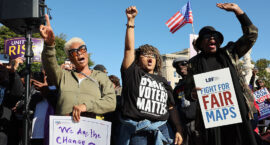
—The Supreme Court gutted the Voting Rights Act, slashing protections against racially discriminatory voting laws.
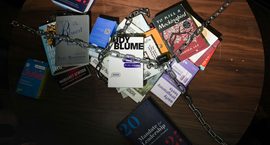
—A record high amount of books were censored from libraries in 2025, often due to LGBTQ characters or plotlines addressing racism.
—A third of moms living on low incomes have gone into debt or skipped meals so their kids could eat.
—Just 22 percent of American voters have significant confidence in the Supreme Court.
—In 2025 the number of abortions in the U.S. remained stable, but more patients in states with bans turned to telehealth services instead of traveling out of state.
—The Department of Justice announced plans to expand the use of the federal death penalty.
—An Epstein-Maxwell survivor, who asked to remain anonymous, laments, “I kept my identity protected as Jane Doe. I woke up one day with my name mentioned over 500 times. While the rich and powerful remain protected by redaction, my name was exposed to the world.”
—The Trump administration launched a Moms.gov site on Mother’s Day that refers pregnant people to unregulated crisis pregnancy centers.
—A Ms. piece on solitary confinement by Kwaneta Harris and her daughter Summer Knight won Kwaneta second place in the Collaboration category of the Stillwater Awards for prison journalism.
Liberation, a play about 1970s feminism by Bess Wohl, won the Pulitzer Prize for drama. It was also nominated for the Tony Award for Best Play. Wohl was inspired by her own life: Her mother, Lisa Cronin Wohl, was an early Ms. contributor.

… and more.

Keeping Score: Trump Attacks Iran, Pressures Senate Republicans to Pass ‘Show Your Papers’ Voter Registration Bill; States Expand Access to Childcare and Paid Leave

In every issue of Ms., we track research on our progress in the fight for equality, catalogue can’t-miss quotes from feminist voices and keep tabs on the feminist movement’s many milestones. We’re Keeping Score online, too—in this biweekly roundup.

This week:
—Dolores Huerta breaks her silence at 96: “I have never identified myself as a victim, but I now understand that I am a survivor.”
—Trump pressures Senate Republicans to pass the SAVE America Act, a “show your papers” policy that would require U.S. citizens to show a passport or birth certificate in order to register to vote.
—A performative personnel exchange at DHS: from Kristi Noem … to Markwayne Mullin?
—The U.S. and Israel launched strikes on Iran, killing at least 1,332 people.
—March 10 is Abortion Provider Appreciation Day.
—DHS Secretary Kristi Noem was fired, as ICE reports 32 deaths in detention facilities in 2025.
—Access to early prenatal care is declining in the U.S., especially in states with abortion bans.
—A record one-third of American workers not have access to government-mandated paid leave.
—The U.S. deported a gay woman to Morocco, where her sexuality is illegal and she faces violence from her family.
—Texas Attorney General Ken Paxton claimed gender-affirming mental healthcare for trans youth is “child abuse.”
—New Mexico and New York take steps towards free universal childcare.
—Jessie Buckley took home the Academy Award for Best Actress in a Leading Role for her role in Hamnet. The film was directed by Chloé Zhao, one of nine women to ever be nominated for the award of Best Director and the only woman nominated this year.

… and more.

International Telehealth Provider ‘Women on Web’ Vows to Keep Abortion Pills Flowing to the U.S., No Matter What

As Republicans push the FDA to restrict mifepristone, the international online abortion service Women on Web is reassuring Americans that they will continue to support access to abortion pills in all 50 states, no matter what. Women on Web has served over 130,000 people worldwide since 2005 and began serving the U.S. in July 2024.

Venny Ala-Siurua, executive director of Women on Web, was recently named to the Top 100 Canada’s Most Powerful Women by the Women’s Executive Network Academe. Ms. spoke with Ala-Siurua about how their service connects people with pills, how they’re removing medical gatekeeping, and how they’re defending abortion access against digital censorship.

“We’ve always focused on countries where there are high restrictions on abortion. Unfortunately, the situation in some of the states in the U.S. qualifies now. … Many pharmacies and providers have stepped up internationally to support the U.S. and found ways of dispensing and shipping medicines really, really fast. …

“We are receiving around 30 requests per day from people in the U.S., though that number can rise during major political moments—for example, when Trump was elected or took office. Our U.S. care seekers live primarily in states with abortion bans. Globally, we currently handle approximately 4,000 requests each month.”

Keeping Score: Trump’s Dangerous Claims About Tylenol; Government Shutdown Begins; Diddy’s Four-Year Sentence

In every issue of Ms., we track research on our progress in the fight for equality, catalogue can’t-miss quotes from feminist voices and keep tabs on the feminist movement’s many milestones. We’re Keeping Score online, too—in this biweekly roundup.

This week:
—Doctors push back against Trump’s dangerous claims that Tylenol in pregnancy increases the risk of autism.
—The U.S. entered a government shutdown, affecting millions of federal workers.
—Sean “Diddy” Combs was sentenced to four years in prison.
—Zoologist and anthropologist Jane Goodall died at age 91.
—University of California students and faculty are suing the Trump administration for violating free speech rights.
—Student activists are stepping up to get around birth control bans on campus.
—Louisiana admits non-citizens voting is not a systemic problem.
—The ACLU and religious freedom organizations are suing to block 14 more Texas school districts from implementing a law requiring classrooms to display Ten Commandments posters.

… and more.

Mary Beth Tinker Is Still Teaching the World How Kids Can Change It

Five students, including Mary Beth Tinker, were suspended from school in 1965 for wearing black armbands to support a Christmas truce in the Vietnam War and mourn the deaths of Vietnamese people and U.S. soldiers. Tinker was an eighth grader at the time. Represented by the ACLU, the students sued for freedom of speech after their suspension.

On Feb. 24, 1969, the Supreme Court reached a landmark ruling on student speech in Tinker v. Des Moines, cementing the precedent that students and teachers retain their First Amendment rights in public K-12 classrooms so long as they do not substantially disrupt education.

More than 50 years later, Mary Beth Tinker is still an activist for demilitarization, children’s rights, free speech, LGBTQ+ rights, environmental protection and transnational feminism.

A Podcast for Our Constitutional Crisis: ‘Speaking Freely’ Provides Echoes of History—and Warnings for Today

As threats to free speech continue to escalate under the Trump administration, we must do our part to defend First Amendment rights for all.

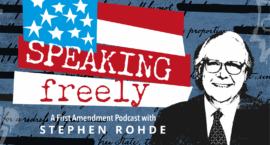
In an illuminating new 10-episode series, Speaking Freely: A First Amendment Podcast, Stephen Rohde, who has litigated and written about freedom of expression for decades, explores some of the most controversial free speech and free press cases decided by the U.S. Supreme Court—looking at hot-button issues like hate speech, defamation, incitement, social media, obscenity, flag burning, espionage and academic freedom.

Listen to Speaking Freely on Apple Podcasts, Spotify or iHeart. All 10 episodes available now.

Trump Is Creating Unique Problems for Gen Z

Since November, much of the media coverage of this most recent election cycle has focused on Gen Z—especially the Gen Z gender gap, and how young men in particular seem to be swinging further and further right.

At the same time, Gen Z (born between the mid 1990s and the early 2010s, so around ages 13 to 28 in 2025) is the most diverse generation in American history… which might be why so many of the Trump administration’s recent actions, like attacks on higher ed, seem to be targeting Gen Z specifically.

Female Filmmakers at SXSW Face a Familiar Challenge: Funding

With South by Southwest (SXSW) Film Festival in Austin’s rearview mirror, some of its most talented female filmmakers still have a long road ahead to bring their movies to public screens. Even the women who clinched premieres at one of America’s most prestigious festivals have to hustle to support their craft.

“The streaming channels that dominate global viewership are no longer buying many smaller or risk-taking projects,” wrote Keri Putnam of the Harvard Kennedy School’s Shorenstein Center.

“The number one challenge is fundraising,” said Anayansi Prado, director of Uvalde Mom, which premiered at SXSW and tells story of Angeli Rose Gomez made worldwide headlines during by jumping a fence during a school shooting and racing in unarmed to save her two young sons.

The Publishers and Authors Fighting Back Against Book Bans

A number of prominent U.S. publishers, including the “Big 5”—Penguin Random House, Hachette Book Group, HarperCollins Publishers, Macmillan Publishers, Simon & Schuster and Sourcebooks—along with several best-selling young adult authors, parents, teens and a library district, filed a lawsuit last week against an Idaho bill that restricts access to books accused of inappropriate “sexual content.”

The lawsuit is the latest in an ongoing battle against right-wing book bans, which often target LGBTQ+ content under the guise of “protecting children.”

Age-Verification Laws Seek to Erase LGBTQ+ Identity from the Internet

The internet age-verification craze that’s sweeping the nation isn’t really about protecting little Dick and Jane from Pornhub—it’s about giving government and companies the power to decide what’s “harmful” and rolling back all Americans’ rights, especially those of LGBTQ+ people. 

This growing legislative trend has sparked a lot of concerns and First Amendment challenges, including a case now pending before the Supreme Court, Free Speech Coalition v. Paxton. These pernicious “for the children” bills would let politicians deem harmful LGBTQ+ content, or content about abortion rights, or even content about a political party other than their own. These are censorship bills, and let us assure you, porn is only a small aspect of these politicians’ real worries.