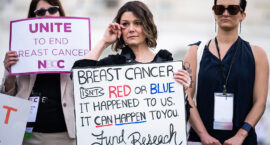
My Hysterectomy Was a Gift. Dr. Kemi Doll Shows Why Women Need to Share Our ‘Womb Stories’

Determined to prevent uterine cancer deaths, Dr. Doll published A Terrible Strength: The Hidden Crisis of the Black Womb and Your Survival Guide to Healing in May. Both comprehensive and compassionate, the book focuses on individuals of African descent, showing how everyone will benefit.

Upon finishing A Terrible Strength, I took its message to heart: One need not have a womb to prioritize womb health. We can all join Kemi Doll’s Womb Sisterhood through the “deliberate telling and sharing” of “womb stories” with “our true friends.” 

Fortunately, women have already started talking. Personal testimonies changed health outcomes in the 1970s and ’80s—and they’re doing the same now. Earlier generations suffered through perimenopause in silence, but today, women in their 20s, 30s and 40s hear about not only hot flashes but also itchy ears and frozen shoulders. And, as a woman in my early 50s, I’m not completely in the dark about hormone replacement therapy (HRT).

Nevertheless, deadly silence remains.

I am childfree by choice, so pregnancy never fueled my concerns, but I became preoccupied with gynecology in 2017. Fibroids were wreaking havoc in my life, and I pursued a hysterectomy to end my suffering. As Doll puts it, this “definitive treatment” is “welcomed by some and mourned by others.” Though I very much welcomed a hysterectomy, I couldn’t secure one until May 2021, despite my best efforts. 

From now on, I will participate in the “deliberate telling and sharing” of “womb stories.” Doing so is difficult but necessary. As Doll explains, sharing our experience requires us to “shift away from a strength that withstands suffering, silence and pain.” It requires, in her words, “a strength that embraces our vulnerability and can demand better care from the larger world.”

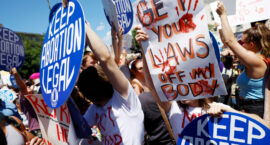
Keeping Score: Feminists Denounce Supreme Court Anti-Trans Ruling; Trump Tries to Hijack America 250; Camp Mystic Will Not Reopen; Birthright Citizenship Safe for Now

In every issue of Ms., we track research on our progress in the fight for equality, catalogue can’t-miss quotes from feminist voices and keep tabs on the feminist movement’s many milestones. We’re Keeping Score online, too—in this biweekly roundup.

This week:
—The Supreme Court upheld birthright citizenship, but also allowed discrimination against trans student athletes. “When politicians convince the public that any girl could be ‘the wrong kind of girl,’ they invite harassment, intimidation, invasive questioning or even an inspection of their body by a total stranger,” warns Kelley Robinson, president of the Human Rights Campaign.
—Feminists mark four years without Roe.
—Trump continues to push voter suppression tactics through any means necessary.
—Young women who receive the HPV vaccine are at almost zero risk of dying from cervical cancer.
—A weekend of action on voting rights will take place from July 17-19.
—Olivia Rodrigo launches all-women music festival to raise money for organizations centered on women and girls.
Ninety-seven percent of single moms experienced housing hardships in the past year, and 85 percent reported food insecurity.
—Federal agents shot and killed Joan Sebastián Guerrero in Maine and Lorenzo Salgado Araujo in Texas, during traffic stops by ICE. Both men had been living in the U.S. for years with their partners and children.
—Feminist Majority Foundation president and publisher of Ms. Ellie Smeal won the National Organization for Women Lifetime Achievement Award, honoring her decades of feminist activism and organizing.
—The inhumane “Alligator Alcatraz” immigration detention center has closed.
Camp Mystic in central Texas won’t reopen this summer, a year after the tragic flood that killed 28 people, primarily young girls.
—Ahead of their wedding, Taylor Swift and Travis Kelce donated a total of $26 million to 20 charities, including food banks, children’s hospitals, Dolly Parton’s Imagination Library and other education nonprofits.
—Aviator Wally Funk died at age 87. She was the first female flight inspector for the Federal Aviation Administration and taught more than 3,000 people how to fly.

… and more.

How Attacks on Immigrant Teens Helped Build the Post-Roe Playbook

A conversation between legal scholar Shoshanna Ehrlich and Brigitte Amiri, deputy director of the ACLU’s Reproductive Freedom Project.

“In the first Trump administration, we still had Roe. By losing that underlying constitutional right to abortion at the federal level, the door has been opened for the second Trump administration to both compound the attacks and move in new directions,” Amiri told Ms.

“We were screaming from the rooftops that they were coming after Roe, and abortion was going to be banned, and we were not believed. … As with all rights, they’re tenuous and you have to continue to fight to enforce them.

“It’s always the most marginalized, as we’ve been talking about. It’s the people who have the fewest resources, people who live in rural areas, young people, people without documentation, people with limited language skills. That is who will feel the brunt the hardest of these policies.”

Hitting Where It Hurts: Expiring Healthcare Tax Credit Means Price Hikes for Americans with Cancer

For more than 18 million Americans living with cancer, access to healthcare and health coverage is more than just financial security. It connects them to life-saving care that maintains and improves their quality of life.

However, federal action—and inaction—may sever that connection for people with cancer.

Without congressional action, current marketplace premium tax credits will plummet on Jan. 1, 2026—by an average of 93 percent in HealthCare.gov states. Among people with cancer receiving these tax credits, 86 percent report they will have difficulty affording and getting necessary health care services.

Meet Milwaukee’s New Abortion Clinic and Its Determined Medical Director: ‘Everybody Needs Abortions’

A new healthcare center in Milwaukee, Care For All Community Clinic, provides both surgical and medication abortions, as well as miscarriage care, to anyone with a uterus—regardless of their ability to pay, or their immigration status. In coming months, STI testing, emergency contraception, pap smears to test for cervical cancer, contraceptive counseling, and gender-affirming care will also be available.

“It’s easy to think that, oh, someone else can do it, but they actually can’t,” said Dr. A, the medical director the nonprofit clinic. “There are not that many OB-GYNs out there, and there’s going to be even fewer and fewer as the years go by. If I know how to do this safely and well, I want to help.”

“The thing they express to me afterward is relief and gratitude,” she added. “I feel like I’ve never had patients that are so thankful and filled with gratitude as the patients that I do abortions for.”

“There are always going to be forces that don’t want us to do abortions,” Dr. A said, “and their goal is to make us scared. But we can’t let them win.”

As Support for Abortion Grows, the Court Doubles Down on Restricting Care

In its Medina v. Planned Parenthood South Atlantic ruling last week, the U.S. Supreme Court issued a devastating blow to reproductive health clinics across the nation. A substantial slate of decisions issued by the Court Friday dealt several more severe blows to the rule of law and our constitutional rights—though a silver lining was the Court’s decision to uphold the Affordable Care Act’s preventive-care mandate.

Supreme Court Allows States to Exclude Reproductive Health Clinics From Medicaid

In a landmark decision released Thursday morning, the U.S. Supreme Court ruled 6-3 in favor of South Carolina in Medina v. Planned Parenthood, granting states the authority to exclude reproductive health clinics from their Medicaid programs—even when those clinics provide essential care such as cancer screenings, birth control and STI testing. This decision could embolden Republican-led states to “defund” Planned Parenthood across the country.

‘This Is About Life or Death’: Leading Feminists Discuss Women’s Rights in Post-Roe America

Clara Bingham, Jamia Wilson and Jessica Valenti on the state of abortion access and the feminist resistance rising up in every state in the U.S.:

“The 14th Amendment is what antiabortion activists are using right now to fight for fetal personhood. Anytime you see the 14th Amendment mentioned, that’s what it’s about.”

“We are no longer first-class citizens in banned states.”

“There are countries in this world where the pro-life movement is the movement that is about choice. … They’re surprised when they hear the framing of pro-life being used to dominate and control women’s bodies.”

“As terrible as things are every single day, in every single community and in every single state, there are rooms full of women, and there are rooms full of activists who are working their asses off, who are using their time, their money, their energy to make sure that if someone needs care, they can get it, whether or not we see it.”

Medicaid Cuts Will Raise Costs for Millions of Women

Over 70 million people, including 13 million women of reproductive age, are enrolled in Medicaid—America’s biggest single health insurance program. Now, congressional Republicans are ready to take an axe to it. Proposed Republican cuts to Medicaid would strip millions of women of affordable access to birth control, prenatal care, STI treatment and other essential healthcare services.

The Casualties of Title X Cuts: Cancer Screenings, Fertility Treatments and Sex Ed

The Trump administration earlier this month cut more than $65 million in federal funding for family planning under Title X, the program signed into law by President Richard Nixon that has supported comprehensive family planning and related preventive health services—including contraception, cancer screenings, infertility treatments, pregnancy care and STI testing—for low-income Americans since 1970. The cuts will impact dozens of clinics nationwide, including nine Planned Parenthood affiliates, and leave seven states without any Title X funding—to say nothing of other funding cuts and freezes to social services like Social Security and Medicaid.

In March, Nourbese Flint, president of the national abortion justice organization All* Above All, wrote a piece for Ms. about Republicans’ proposed cuts to Medicaid, which would strip healthcare from millions of Americans, including 40 percent of all pregnant women in the United States. Last week, I spoke with her about the Title X freeze on reproductive healthcare and the long-term effects of these funding cuts, which will put infant and maternal healthcare even more in jeopardy.