One Year In: 53 Ways the Second Trump Administration Is Harming Women and Families

A sweeping, year-one rundown of how Trump’s second-term power grabs and policy rollbacks are eroding women’s rights, healthcare and economic security, including—from dismantling the Women’s Bureau at the Department of Labor and shuttering reproductive health clinics, to passing historic cuts to the Medicaid program and sowing mistrust in abortion pill safety.

Keeping Score: 137 Women Are Killed by Partners or Family Per Day; Bipartisan Push for Epstein Files; Trans Day of Remembrance and Native Women’s Equal Pay Day

In every issue of Ms., we track research on our progress in the fight for equality, catalogue can’t-miss quotes from feminist voices and keep tabs on the feminist movement’s many milestones. We’re Keeping Score online, too—in this biweekly roundup.

This week:
—137 women and girls are killed by intimate partners or family members every day.
—Congress votes overhwlemingly to force the Justice Department to release their Epstein files.
—Donald Trump snaps at women journalists: “Quiet, piggy” and “you are an obnoxious—a terrible, actually a terrible reporter.”
—Violence against trans women remains high.
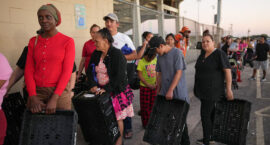
—DACA recipients are being targeted and detained under the Trump administration.
—Higher-income college students often receive more financial support than they need, while low-income students struggle.
—Tierra Walker died from preeclampsia in Texas after being repeatedly denied an abortion.
—Viola Ford Fletcher died at age 111. She was the oldest living survivor of the 1921 Tulsa Race Massacre. 
—North Dakota’s total abortion ban was reinstated after the state’s Supreme Court reversed a temporary injunction from a lower court. There are now 13 states with total bans.

… and more.

Breaking the Silence: Zimbabwe Initiative Reaches Survivors of Violence

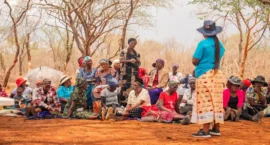
For years, Tjedza endured sexual violence at the hands of her father. Clara, an elderly woman, experienced abuse at the hands of her son. And for most of Tabeth’s married life, she bore abuse at the hands of her husband. 

These abuses—and many more like them—went unseen for far too long. Yet in rural Zimbabwe, services to support survivors of gender-based violence are often out of reach. Survivors often must travel long distances to seek help, and when they do, they risk facing stigma and blame from the very responders who are meant to protect them.  

But today, for survivors like Tjedza, Clara and Tabeth, the years of fear and silence are over. 

An initiative in Zimbabwe’s Bubi District, known as Women at the Center, is improving access to essential protection and support services—and improving the quality and delivery of these services as well. Now, when one survivor receives respectful care and protection, others are emboldened to speak out too.

“I only got the confidence to report after seeing how other survivors had received care and were in a much better place,” Tjedza shared.

“This program didn’t just save my life; it gave me back my dignity,” said Clara.

Are We Ever Off Work, or Just Out of Office? The OOO Messages Exposing America’s Care Crisis

A new public awareness campaign, “Out of Office for Care,” launched this week invites employees to set their “OOO” automated email replies to accurately reflect the array of care responsibilities that pull them away from work, and then share those messages publicly.

People across industries—artists, founders, caregivers, cultural influencers, nurses, educators, nonprofit leaders, small business owners and parents—can give the country an unfiltered look at why they step away from work, and what it costs to do so without paid leave.

OOO replies range from clever to catastrophic. Some name the person they are caring for; others reveal the exhaustion of trying to do it all. All together, they show a country exerting caring in every direction and a policy landscape that hasn’t caught up.

Among those making the rounds:
—”I’m OOO because inexplicably school ends at 3 and work ends at 5 at best. … I can’t keep up, I need sleep, I’m getting a cold, everything is expensive and unnecessarily hard, and the holidays are coming.”
—”I’m OOO because my parents are getting older and I can’t manage their RX and 500 unread emails at once. In-home care is $60K and I have limited PTO. WiIl get back to you ASAP!”
—“Hi, sorry to miss you! I’m OOO because I just gave birth, but like 1 in 4 women in the U.S. I’ll be back at work in a couple weeks.”

A Century After the Eugenics Movement, the U.S. Is Again Barring Disabled Immigrants

This month, Secretary of State Marco Rubio instructed visa officers to consider obesity and other chronic health conditions, such as heart disease, cancer and diabetes, as justification to deny people visas to the United States.

Many were outraged and shocked, observing the Trump administration’s new expansion of the “public charge” rule—directing visa officers to deny entry to people with disabilities, chronic illnesses or age-related conditions—as a modern revival of eugenic immigration policy designed to exclude, control and institutionalize disabled and marginalized people.

When Trump first took office in 2016, the Trump administration broadened the definition of public charge to include people who receive SNAP benefits, medicaid, housing assistance, childcare subsidies and more. This new rule was published in 2019 and went into effect in 2020 and early 2021; President Biden ended the use of this public charge rule definition in March 2021, returning it to the older but still restrictive version. Following Trump’s new rule, visa denials based on the “public charge” rule exploded during Trump’s first residency, rising from just over 1,000 denials in 2016 to over 20,000 in 2019, and it had disastrous effects.

As the Migration Policy Institute (MPI) found, broadening this public charge rule led many people to reduce or stop using benefits or services for themselves.

‘The Rent Eats First’: Rationing Expired Food in the Wealthiest Country in the World

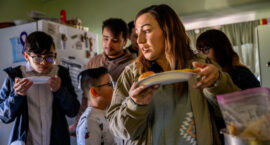
Throughout the United States, the millions of families that rely on Supplemental Nutrition Assistance Program (SNAP) benefits—which make up 12.3 percent of Americans—have spent at least 10 days without them. The uncertainties about whether they will return, and when, has left families desperate. For many, the crisis has reinforced what they’ve long felt: The nation’s social safety programs are failing to meet real, everyday needs—and across Iowa, Michigan and Pennsylvania, Americans are growing disillusioned with politicians who can’t protect their most basic ones.

For many disabled Americans, losing SNAP also means losing the nutritional needs that help keep them out of the floundering U.S. healthcare system. They shared with Ms. a glimpse into what the past 10 days without SNAP have looked like, and what millions of Americans who rely on these programs actually need.

“If I lose benefits, am I going to be able to remain going to school?”

“They’re thinking about next week. Will they have food? Will they be hungry?”

“The problem is, the rent always eats first, or the house payment is going to eat first. After that? Are you going to [get your] medicine? No, we [have to pay] our utilities…. then you [think], ‘Okay, I’ve only got enough for either food or my medicine.’”

From Veterans to Caregivers—The Importance of Expanding Remote Education for Women Worldwide

We need to continue normalizing and destigmatizing nontraditional remote learning opportunities as valid, accessible pathways toward women’s realization of their right to an education. 

This means expanding the number of hybrid and remote learning options available through well-established colleges and universities.

It means rethinking the types of technological adaptations deemed as “undue hardships” in the context of student disability.

It means investing in longitudinal research regarding best pedagogical practices—the impacts of evidence-based instructional interventions in the remote learning milieu—and in the professional development of online instructors in synchronous and asynchronous online programs to ensure impact. 

To do so is to ensure that those who fight to pursue their education in nontraditional ways are not shortchanged, but rather equipped with the social and intellectual capital needed to work against the existential threats of our time.

Facing Our Violent Histories: Teaching Empathy in a Divided World

One of my international conflict management students at Kennesaw State University recently approached me with a question: How can they be sure that they are not—like the “white theory” dudes they study—imposing their own worldview on the Global South communities they are researching?

As a woman of color from the Global South whose scholarship and practice centers around decolonial feminist peace, my response to my students and others who ask me: Your whiteness does not affect the good work you do; however, not understanding and fully accepting this whiteness as it informs your work probably does.

Decolonial feminism calls for critically reflecting on our own role in generating knowledge (aka conducting research) within the academy, as well as the changes that our scholarship hopes to effect in the real world. When applied to our everyday practice, such reflexivity can minimize the harm we sometimes inadvertently inflict on vulnerable communities and violence-affected people.

Keeping Score: Democrats Fight Republican Redistricting; Periods Make College Students Miss Class; Costco Refuses to Sell (Safe, Legal) Abortion Pills to Appease Antiabortion Politics

In every issue of Ms., we track research on our progress in the fight for equality, catalogue can’t-miss quotes from feminist voices and keep tabs on the feminist movement’s many milestones. We’re Keeping Score online, too—in this biweekly roundup.

This week:
—“I am deeply alarmed by news reports that Costco is refusing to sell safe, effective, and legal medication for no other reason than to appease the politics of antiabortion fanatics,” said Sen. Patty Murray (D-Wash.).
—The Democratic Legislative Campaign Committee called for Democrat-led state legislatures to pursue redistricting: “The DLCC refuses to allow Republicans to rig the maps to keep themselves in power.”
—“A troubling shift is underway: Women are leaving the U.S. workforce in unprecedented numbers. But this isn’t a choice; it’s a consequence,” warned Catalyst president and CEO Jennifer McCollum after a report showed 212,000 women have left the workforce since January.
—A third of college students have missed class because of their period.
—The Trump administration is planning to restrict coverage of abortion care for veterans in almost all circumstances.
—RFK Jr. takes aim at antidepressant use during pregnancy, despite American College of Obstetricians and Gynecologists’ approving of their usage.
—Texas’ abortion ban has made miscarriages more dangerous.
—A federal court blocked the Trump administration’s restrictions on grants from the Office on Violence Against Women. Seventeen states had challenged the restrictions, and the order is a temporary win for organizations supporting survivors of domestic and sexual violence. 

… and more.