Equity Cannot Wait: Confronting the Unequal Burden of HIV and AIDS on Women of Color

Women have been part of the HIV/AIDS epidemic since the beginning, yet their experiences were long marginalized in research, surveillance and public narratives that focused primarily on white gay men.

As the United States marked National Women and Girls HIV/AIDS Awareness Day on Tuesday, the data tell a stark story: Black and Latina women continue to bear a disproportionate burden of HIV, shaped by systemic inequities that affect access to prevention, testing, treatment and long-term care.

Today, women account for more than one in five people living with HIV in the United States, but racial disparities remain severe. Black women represent about half of new HIV diagnoses among women despite making up only 13 percent of the U.S. female population, while Latina women experience diagnosis rates nearly six times higher than white women. These disparities are even more pronounced for transgender women—especially Black and Latina transgender women—underscoring that ending the epidemic requires confronting the structural inequities that continue to drive unequal risk and unequal access to care.

‘America’s Next Top Model’ Was a Microcosm of the Modeling Industry’s Power Problem

Modeling appears glamorous. Beautiful people, high end clothing and photo shoots in exotic locations. But the reality is far more bleak. 

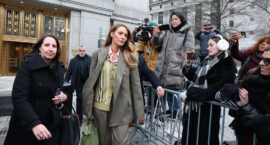
I was ecstatic when I was selected to be on America’s Next Top Model. By the time I understood how little control I had, it felt too late to ask questions. Personal phones were gone. Contact with the outside world was restricted.

When Netflix released Reality Check: Inside America’s Next Top Model, my reaction was not shock. It was recognition.

Ms. Global: Iranian Girls’ School Hit in U.S.-Israeli Strikes, Taliban Legalize Domestic Violence, The Netherlands’ First Gay Prime Minister, and More

The U.S. ranks as the 19th most dangerous country for women, 11th in maternal mortality, 30th in closing the gender pay gap, 75th in women’s political representation, and painfully lacks paid family leave and equal access to healthcare. But Ms. has always understood: Feminist movements around the world hold answers to some of the U.S.’s most intractable problems. Ms. Global is taking note of feminists worldwide.

This week: stories from Iran, Afghanistan, the Netherlands and more.

The Road to the ERA Runs Through Congress

In 1916, just as Americans were beginning to enjoy the new travel freedoms that came with motorized vehicles, a couple of frustrated leaders of the campaign to secure women’s rights to vote, Alice Snitjer Burke and Nell Richardson, secured one of the first gas-driven automobiles in the country. They named the car, a Saxon, Golden Flyer and set off across the country to get support for what would become the 19th Amendment, guaranteeing women the right to vote.

Yes, the original ‘road trip’ was an act of political audacity. Long before women even had the vote, these two women drove into towns across America, on their own, spoke in town squares, slept in boarding houses and not surprisingly, endured ridicule and resistance. They were history’s first “Thelma and Louise.” This road trip had a very different ending, of course, as it led to the passage of constitutional clarity on the question of voting rights, at least for white women, with the 19th Amendment. Getting that right guaranteed for all women, whatever race or circumstances, would still take other struggles. And the campaign for full equality for all women didn’t end with the Drive across America for voting rights.

The struggle for a constitutional guarantee of equality has led to another road trip across America: Driving the Vote for Women’s Equality Tour.

When Burke and Richardson set out in the Golden Flyer in 1916, they did not know the outcome. They only knew that democracy requires action. And the action now is to finish the work through the ERA joint resolution. The message to policymakers is direct and clear: Recognize the will of the states and acknowledge that the ratification threshold has been met. Finish the work.

Equal means equal. It did in 1916. It does now. And this time, we will not stop until the Constitution says so.

America’s Founding Feminists: Rewriting America’s Origin Story

Two hundred and fifty years ago, a small group of men declared that “all men are created equal,” casting a vision of liberty that has shaped the American imagination ever since.

Yet even as they debated freedom in Philadelphia, women were writing, organizing, governing, resisting and insisting on their place within the nation taking form. Some, like Mary Katherine Goddard, literally set their names in print; others, like Phillis Wheatley, wrote themselves into intellectual existence against a backdrop of enslavement and doubt. Still others left their mark through acts of refusal and flight, choosing freedom when the republic would not grant it.

A new series, Founding Feminists—launching at the start of Women’s History Month—unfolds over two months, twice a week. On this semiquincentennial of the United States, Ms. turns to these “founding feminists” not as anachronistic heroines, but as architects of an unfinished democratic project. There is no nation without women at its core—no democracy without their labor, intellect, resistance and imagination.

From Haudenosaunee matrilineal governance, to Black women’s freedom-seeking acts, from revolutionary manifestos to quiet domestic rebellions, our Founding Feminists series reexamines the past to illuminate our present moment of backlash and possibility.

If the Declaration of Independence set forth a promise of equality, it was women—across race, class, sexuality and nationality—who pressed the nation to live up to it.

Two hundred and fifty years later, their questions remain ours: What does freedom truly mean, and who gets to claim it?

‘My Heart Breaks for the Survivors’: Hillary Clinton Defends Anti-Trafficking Record, Demands Transparency in Epstein Probe

The following statement was delivered by former Secretary of State and U.S. Sen. Hillary Rodham Clinton at the start of a closed-door deposition before the House Oversight Committee, as part of its ongoing inquiry into the federal government’s handling of Jeffrey Epstein’s crimes.

In the statement, Clinton tells lawmakers she had no knowledge of Epstein’s or Ghislaine Maxwell’s criminal activities and does not recall ever meeting or speaking with Epstein, flying on his planes or visiting any of his properties. She says she has no new information to provide to the committee.

Her testimony is both a denial of involvement and a broader political and policy argument—one that defends her record on combating human trafficking, criticizes the committee’s approach and calls for wider accountability in Epstein-related investigations and anti-trafficking efforts. Clinton characterizes the subpoena as part of a partisan investigation designed to create “political theater” and distract from what she describes as more relevant lines of inquiry, particularly those involving former President Donald Trump and others named in Epstein-related materials.

Texas Sues California Doctor Over Abortion Pills in Escalating Interstate Fight

Texas antiabortion politicians have made one thing clear: Their ban was never meant to stop at the Texas border.

On Feb. 1, Dr. Remy Coeytaux of California became the first person to be sued in federal court under Texas’ newly enacted House Bill 7, a bounty-hunter law that invites private citizens to file civil suits against anyone who manufactures, distributes, mails or provides abortion medication to women in Texas. The plaintiff in the lawsuit is Jerry Rodriguez, a private citizen who claims that Coeytaux prescribed and mailed abortion pills used by his former girlfriend to end her pregnancy.

The legal pressure on telehealth providers intensified this week: On Tuesday, Feb. 24, Texas Attorney General Ken Paxton also filed suit against Aid Access, an Austria-based nonprofit that ships medication abortion internationally (including to all 50 states), along with its founders Rebecca Gomperts and Coeytaux. The complaint alleges the defendants violated Texas law by prescribing and mailing abortion medication to Texas patients and seeks an injunction preventing them from providing services to residents of the state.

Telehealth providers in states like California, New York and Massachusetts have been able to serve patients in banned states because of these shield laws: legal protections that prevent states with bans from prosecuting providers who are acting lawfully in the states where they work. So far, shield laws have withstood attacks from banned states. 

The Strange Hopefulness of Growing a Human While the World Burns

As I write this, I’m in my third trimester, anxious and excited for my daughter’s arrival, which feels imminent.

Yes, it’s an extremely dark time, but that’s not exactly a historical outlier. People have been making babies throughout the worst of them. And nothing motivates me more to build a better future for all of us than this little girl—who, like every child, deserves safety, stability, love and care, and a world equipped to give it to her.

I can’t wait for her to see it.

What This Moment Requires of Us: Women, Voting Rights and the Battle for Representation

Weekend Reading on Women’s Representation is a compilation of stories about women’s representation in politics, on boards, in sports and entertainment, in judicial offices and in the private sector in the U.S. and around the world—with a little gardening and goodwill mixed in for refreshment!

This week:
—As February begins and we mark Black History Month, I’m reminded that the fight for a more representative democracy has always been carried forward by women who refused to accept exclusion as inevitable.
—”Republicans in Congress have unveiled a new bill that would impose the most extreme voting restrictions ever proposed at the federal level,” warns Democracy Docket of the so-called “Make Elections Great Again” (MEGA) Act.
—Washington, D.C.’s legendary delegate to Congress, Eleanor Holmes Norton, will not run for re-election this year after 35 years in office.
—Republican state Sen. Ileana Garcia, a Coral Gables resident who co-founded Latinas for Trump, is now concerned about the overt racial profiling and indiscriminate aggression against citizens, legal immigrants, and undocumented people alike. 
—In Minnesota, Peggy Flanagan leads polls and just secured the endorsement of incumbent Sen. Tina Smith in her bid for the Democratic nomination for Senate.

… and more.

A Catch-22 for Survivors of Domestic Violence: Trump Admin Simultaneously Slashes Housing and VAWA Funds

Federally underfunded programs that support survivors of domestic violence have struggled to provide services for years. Now, the Trump administration’s budget bill threatens to sever the last lifelines many women’s shelters were clinging to: funding for the Violence Against Women Act (VAWA) and the U.S. Department of Housing and Urban Development’s Continuum of Care programs. 

Thanks to callous indifference from Republican lawmakers, obliterating women’s emergency services will leave the blood of women and children across the nation on their hands. In the U.S., domestic violence is typically treated with band-aid solutions rather than infrastructural change that would decrease need for places like shelters—something most lawmakers have never relied on themselves.