What We Learned When We Stayed: What 50 Years of Care in the South Taught Us About Abortion and Trans Rights

We’ve been here before.

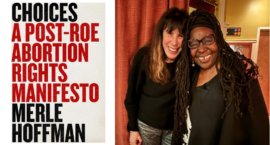
When Dobbs v. Jackson came for abortion care in our states, we did two things: We opened clinics across state lines so our patients would still have a legal option. And we stayed. We kept our original clinics open, expanding the care we’d always offered or always wanted to offer.

When U.S. v. Skrmetti came for gender-affirming care, we kept providing that too, because abortion care patients and transgender patients are not separate communities.

The calculation patients make before they walk through the door is identical for both communities: Will I be seen? Will I be safe? Will the person across from me treat my body with humanity, or like a problem to be managed?

June marks anniversaries of both Dobbs and Skrmetti, and that conviction has never felt more urgent. Long before these two cases, the intersection of abortion rights and trans rights was already living in our waiting rooms; in the patients who received reproductive care and gender-affirming hormone therapy under the same roof; in the person who drove hours across the state because we were the only provider they trusted; and in those who trust us with their whole-person care because their grandmothers, mothers, sisters, aunts and friends have relied on our clinics for care for 50 years.

Between our two organizations, we’ve earned a century’s worth of experience at the practice of staying and enduring. CHOICES has kept their doors open for 52 years, and the Women’s Health Centers of West Virginia and Maryland will celebrate 50 years of care on June 24—the same day Roe v. Wade was overturned four years ago.

Support independent clinics in hard places keeping the doors open. And when the next fight comes, show up for the communities under pressure. Remember that those targeted first won’t be the last, but they will be the ones to lead the way.

‘Access to Reproductive Choices Gave Me the Freedom To…’: 12 Answers We Can’t Stop Thinking About

Four years after Dobbs, it’s clear that reproductive freedom is not an abstract political issue. It is the freedom to build a life.

This week, we’re launching The Majority campaign—and we want you in it. The ask is simple: Finish the sentence, “Access to reproductive choices gave me the freedom to …”

The responses so far are from women and men, parents and nonparents, abortion patients and birth control users, people who needed miscarriage care, gender-affirming healthcare, fertility treatment, or simply the ability to decide their own future.

These are some of the stories we can’t stop thinking about.

The Majority Has Spoken on Abortion. Now We’re Sharing the Lives Reproductive Freedom Made Possible.

Four years after Dobbs overturned Roe v. Wade, the evidence is overwhelming: Reproductive freedom is not a fringe issue. It is a majority value.

You, or someone you love, has benefited from contraception, sex education, maternal care, assisted reproduction, miscarriage care or abortion. This isn’t a privilege we ask permission for. It’s a right millions of us exercise every day—legal or not, restricted or not, named or not.

On the fourth anniversary of Dobbs, Ms. is joining reproductive justice movement partners Center for Reproductive Rights and Reproductive Freedom for All to launch The Majority, a storytelling campaign centered on a simple question: What did access to reproductive choices give you the freedom to build?

One woman credits birth control with helping her manage PMOS (formerly PCOS) and pursue the education and career she dreamed of. A mother was able to raise the children she already had because she was not forced into a pregnancy she did not choose. Another mother received emergency reproductive healthcare and lived long enough to see her daughter grow up. A sister got to grow up alongside her younger brother because their mother had access to reproductive healthcare when she needed it. Young women were able to build lives on their own timeline—not one dictated by circumstance, politics or chance.

The campaign’s call to action is simple: Add your voice to the record and share the life you built. Then, once you’ve shared, use #TheLifeIBuilt to tell your story. Follow #TheMajority to hear from others doing the same.

A (Brief) History of Women’s Rights, 1600 to Present

From the Haudenosaunee women who successfully challenged warfare in the 17th century, to today’s feminist organizers defending democracy, reproductive freedom and civil rights, the struggle for women’s equality has never been a straight line. It is a story of persistence, resistance and collective action spanning centuries.

Compiled by editors at Ms. and researchers from the National Women’s History Alliance, this women’s history timeline traces the interconnected histories of feminism, abolition, labor organizing, civil rights, reproductive justice, LGBTQ+ liberation and democratic participation.

No timeline can fully capture more than 400 years of feminist history, let alone every movement, leader, victory and setback that has shaped the ongoing fight for equality. Rather than offering a comprehensive account, this chronology highlights pivotal moments and turning points that help tell the story of how women have expanded the boundaries of freedom, democracy and human rights in the United States and beyond.

The timeline is part of Ms. magazine’s FEMINIST 250: Founding Feminists project, a multimedia essay series marking the 250th anniversary of the Declaration of Independence by examining the women and feminist movements that have worked to make the nation’s founding promises more fully realized. Through reported features, essays, interviews and historical analysis, FEMINIST 250 explores not only where we have been, but where we must go next to achieve true equality.

FEMINIST 250’s Parts 2 and 3—Feminist Lessons and Feminist Futures—drop this month on MsMagazine.com.

They Blame Feminism for Falling Birth Rates—but Data Says It’s Saving Families

Last month, the newest fertility data dropped—and the U.S. fertility rate has fallen again, hitting another record low.

Almost immediately, conservative influencers, media figures and elected officials pointed fingers at feminism, blaming women’s independence, career ambitions and access to contraception for the decline in births.

It’s a convenient narrative to push along their anti-birth control agenda. But it’s also wrong.

If you actually listen to women—and look at the data—the story becomes much clearer. The number one reason women are delaying or forgoing having children isn’t ideology, it’s affordability. Childcare costs, housing prices and healthcare access have made starting a family financially daunting for millions of Americans. Mix in student loan debt and political turmoil, and having a baby in 2026 is a scary venture. 

And yet, instead of addressing these barriers, policymakers—and organizations leading the way like the Heritage Foundation—are moving in the opposite direction. They are cutting or rolling back the very programs that make family life possible.

War on Women Report: Rise of ‘Sleep Porn’; Georgia Midwives Sue for Right to Practice; Louisiana Family Massacre Exposes Deadly Intersection of Domestic Violence and Guns

MAGA Republicans are back in the White House, and Project 2025 is their guide: the right-wing plan to turn back the clock on women’s rights, remove abortion access, and force women into roles as wives and mothers in the “ideal, natural family structure.”

We know an empowered female electorate is essential to democracy. That’s why day after day, we stay vigilant in our goals to dismantle patriarchy at every turn. We are watching, and we refuse to go back. This is the War on Women Report.

Since our last report:
—Access to mifepristone remains protected for now, after a U.S. district court granted a stay in Louisiana v. FDA.
—A new CNN investigation reveals a sprawling online network where drug-facilitated sexual assault, marketed as “sleep porn, ” is filmed, shared and monetized, drawing millions of viewers. Meanwhile, survivors face steep barriers to reporting and justice.
—The Ohio House passed the Indecent Exposure Modernization Act, an extreme bill that seeks to ban any expression or performance of drag where minors are or may be present. The proposed ban includes even daytime family-oriented events such as drag queen story hours, where performers dress up as storybook characters and read to children at libraries or bookstores.
—In a devastating shooting spree spanning three locations, Shamar Elkins shot and killed eight children, seven of whom were his own, and severely wounded two women: his wife, Shaneiqua Pugh, and Christina Snow. Both women are mothers to the deceased victims.
—In Georgia, a group of reproductive healthcare advocates is challenging the state’s restrictions on some forms of maternal healthcare, arguing that Georgia’s current laws give doctors too much control over midwives’ ability to practice.
—Nine women in Tennessee are suing the state over its abortion ban after nearly denying due to being denied abortion care.

… and more.

Mr. President, If You Care About Families, Stop Cutting What They Need to Survive

Some conservative policymakers and analysts have tried to use proposals like “Trump accounts” and medals for motherhood to frame the administration’s agenda as “pro-family.” But in reality, that framing is centered on an overly narrow definition of family: a married husband and wife, with the wife ideally staying home to care for children. (Some conservatives have also long touted the idea that public assistance is destroying the “traditional” American family.) Many of these policies make it harder for families of all types to care for their children.

Genuine support for families looks like meeting families where they are and helping to ensure that they have the resources they need to succeed. This includes policies that support everyone’s reproductive decisions, family planning goals and ability to raise children in safe and healthy environments. Access to healthcare and food assistance improves children’s chances of graduating from high school and college and leads to better health as adults. When parents facing financial hardship have access to cash support or rental assistance, they are better able to afford basic essentials for their children like housing, diapers and school supplies. 

We can help families thrive by strengthening vital supports and services, rather than cutting them. Both federal and state policymakers can play a critical role in helping families thrive.

Olympic Sex Testing Returns, Reigniting Debate Over Who Qualifies as a Woman in Sports

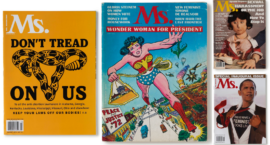
The International Olympic Committee recently announced it will again require genetic sex screening for women athletes and bar many transgender and intersex competitors from women’s events beginning with the 2028 Los Angeles Games—reviving a policy widely criticized for its scientific flaws and human cost, and underscoring the continued relevance of this Ms. article from the October 1988 issue: “Chromosome Count.”

“I am an athlete, and I am a woman—or at least I believe I am. Yet for women competing on the world stage, that identity has long been treated as suspect, subject to invasive ‘verification’ by chromosome testing that claims to define femininity through a lab result rather than lived reality.

“Since 1968, female athletes have been required to submit to these screenings, where something as complex as sex is reduced to XX or XY—despite the many natural variations that defy such rigid categories.

“But these tests have never been as objective or fair as they claim. Women with no competitive advantage have been singled out, humiliated and even disqualified, their identities questioned and their careers erased.

“The story of athletes like Ewa Kłobukowska reveals the human cost of this policy—one built not on sound science, but on fear, misconception and a narrow, deeply flawed definition of what it means to be a woman.”

Say Their Names: The Women Who Died After Being Denied Emergency Abortion Care

We know the names of nine women who have died after doctors denied them life-saving care because of fears they would be criminally prosecuted under abortion bans: Josseli Barnica, Yeniifer Alvarez-Estrada Glick, Amber Nicole Thurman, Candi Miller, Porsha Ngumezi, Taysha Wilkinson-Sobieski, Nevaeh Crain, Tierra Walker and Ciji Graham.

At least three least three more women—all unnamed at this time—died between October 2022 and July 2024 as a result of denied or delayed emergency abortion care, according to a March 2025 study released in academic journal CHEST.

In all, public health experts estimate that abortion bans have led to the deaths of at least 59 women—but we may never know their names.

In a lawsuit involving denial of emergency care to pregnant women, the National Women’s Law Center filed a brief documenting more than 100 cases of women almost dying when hospitals denied emergency medical care because of abortion bans—though “the true number [of cases] is likely significantly higher,” according to the brief.

Congress should move to pass two critical protections: The Women’s Health Protection Act, which would establish a statutory right for healthcare providers to offer abortion services and for patients to receive them; and the Equal Access to Abortion Coverage in Health Insurance (EACH) Act, which would ensure that every person who receives healthcare or insurance through the federal government will have coverage for abortion services.