Voices From Dilley: The Stolen Ordinary of Detained Children

In 2026, the “ordinary” lives of immigrant children are being systematically dismantled.

After family detention was largely phased out in 2021, the second Trump administration has revived the practice, resulting in a tenfold increase in the number of children held in ICE custody.

From the high-security gates of the South Texas Family Residential Center in Dilley, mothers and children report a harrowing reality of medical neglect, psychological trauma and the long confinement in these centers.

This is a look inside the “black box” of family immigration detention—and the brave voices breaking the silence.

****

“We have been here for nine months. I really miss playing with my toys and my watch. Please get us out of here.”

“I have friends, school and family here in the United States. … To this day, I don’t know what we did wrong to be detained. … I feel like I’ll never get out of here. I just ask that you don’t forget about us.”

“In one minute our entire lives were changed and our plans and dreams were destroyed … This place broke something in us. Something that I don’t know if we will ever be able to fix.”


I Want to Be Obsolete. Instead, I’m Afraid to Teach.

I want to be obsolete. I want to walk into a classroom full of students excited to learn feminist histories and begin by marveling at how far we’ve come—how unthinkable it now feels that a president once demeaned women, faced dozens of credible accusations of sexual violence, and still rose to the highest office in the country. I want that version of this story to feel distant, resolved, finished.

Instead, I walk into my gender, women and sexuality studies classes scanning for signs of hostility—wondering who might be recording, who might be there to report me, who might see my teaching not as scholarship but as something to punish.

Teaching about marginalized communities, especially through a feminist, anti-racist lens, now carries real risk: of being surveilled, doxxed, harassed or silenced. Books are banned, curricula are targeted, and the very act of naming systems of power is treated as a threat.

And yet, I keep teaching. I keep showing students that what they are experiencing is not individual failure but the result of structural forces—and that those forces can be challenged. I tell them their voices matter, their rage is justified, and their histories deserve to be known.

I would rather be obsolete. But as long as these attacks persist, our work is far from done.

New Ad Creates ‘Permission Structure’ for Men to Support Harris

Among the most memorable ads of the political season are a pair of 30-second spots with explicitly gendered themes featuring voiceovers from two of America’s most beloved movie stars. The ads each play on the idea of “permission structures,” the assumption that voters sometimes need to be given permission to vote for a candidate or party that is not popular with their social group.

During this election cycle, Democrats and Democratic-aligned groups seem finally to have figured out that they need to respond, in part by creating a special kind of permission structure for men to support them. Permission for men to vote for their values and conscience just might make a difference in what promises to be a very close election.

Fulton County DA Fani Willis Is Holding Trump Accountable

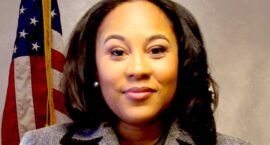
District Attorney Fani Willis of Fulton County, Ga.,

As the historic second impeachment trial of former President Donald Trump continues to unfold, District Attorney Fani Willis of Fulton County, Ga., is working to hold the former president accountable in her own jurisdiction.

“I’ve had to double my security. We’ve gotten a lot of comments. And they’re always racist. I don’t think it’s an insult to remind me I’m a Black woman. It’s a waste of their time.”