What Iran’s Crackdown Looks Like From Inside: A Q&A With Nasrin Sotoudeh and Reza Khandan

As mass protests and a deadly crackdown grip Iran, human rights lawyer Nasrin Sotoudeh speaks from Tehran while her husband, activist Reza Khandan, calls in from Evin Prison—offering a rare, firsthand account of repression, resistance and the stakes for democracy inside the country.

“My message has always been to use all non-violent means to persuade governments to uphold democracy and human rights. Small actions can have big impacts.”

“… You can’t bomb a country into democracy.”

Olympians on Olympians: Women Athletes Honor the Trailblazers Who Made Today’s Games Possible

Organizers of the 2026 Milano-Cortina Winter Olympics are touting “the most gender-balanced Olympic Winter Games in history,” reflecting years of pressure from athletes who have questioned why women and men do not always have the same number of events or chances to participate.

These gains did not happen on their own—they are the result of sustained advocacy by women athletes who have pushed the International Olympic Committee to expand women’s participation, add events, and commit to gender equity in both athlete quotas and medal opportunities. Even as parity edges closer, competitors and supporters continue to call out the remaining gaps—keeping the pressure on Olympic leadership to deliver full equality across all sports.

Serious Work Begins to Create a Treaty on Crimes Against Humanity

Afghanistan. Myanmar. Syria. The Democratic Republic of the Congo.

Over the last 80 years, there has rarely been a situation of atrocity that has not been marked by the commission of crimes against humanity. These crimes, defined by their widespread or systematic nature, target civilians and devastate societies.

Yet, while the international community has created legal regimes to address war crimes and genocide, we lack a global legal architecture for the prevention, suppression and punishment of crimes against humanity, leaving millions across the globe at risk and justice elusive for survivors.

The start of negotiations for such a treaty is not just overdue; it is of historic importance. Late last month, the United Nations General Assembly launched a four-year process to prepare for and negotiate a new global treaty to prevent and punish crimes against humanity by 2028. If it is crafted with ambition and resolve, it can be a game-changer for international accountability, strengthen the rules-based order and offer hope and justice to victims and survivors.

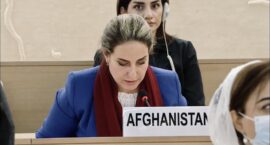
Why International Law Still Fails Afghan Women

Since the Taliban’s return to power in August 2021, Afghan women and girls have been progressively removed from almost every sphere of public life. Girls are banned from secondary and higher education. Women are excluded from most employment, face severe restrictions on movement and have been rendered legally invisible. Institutions responsible for protecting women’s rights have been dismantled.

In early December, the international Permanent Peoples’ Tribunal in The Hague presented its verdict on the situation of women and girls in Afghanistan. Two days later, on Dec. 13, the French Senate convened a high-level colloquium titled “No Peace Without Women: Their Representation in Diplomatic, Military and Political Bodies.”

Together, these two forums—one judicial-moral, the other parliamentary-political—converged on a stark conclusion: The exclusion of Afghan women is systematic, intentional and state-imposed. At the same time, they exposed a critical gap in international law, one with far-reaching implications for the United Nations system, international accountability mechanisms and the global women, peace and security agenda.

The Cruel and Unusual Killings of Renee Good and Alex Pretti

Barely two weeks apart, two American citizens have been slain in Minnesota by U.S. Immigration and Customs Enforcement (ICE) agents in the Twin Cities. Their deaths raise important questions—not just about the violation of First Amendment freedoms, but also the trampling of Eighth Amendment protections that bar the government from inflicting “cruel and unusual punishment.” 

Ms. Global: Iraq’s Child Marriage Surge, Hurricane Devastation in Jamaica, Historic EU Abortion Vote and More

The U.S. ranks as the 19th most dangerous country for women, 11th in maternal mortality, 30th in closing the gender pay gap, 75th in women’s political representation, and painfully lacks paid family leave and equal access to health care. But Ms. has always understood: Feminist movements around the world hold answers to some of the U.S.’s most intractable problems. Ms. Global is taking note of feminists worldwide.

This week: News from Iraq, Jamaica, the EU, Cambodia and Thailand, and more.

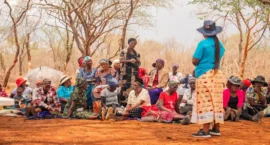
Breaking the Silence: Zimbabwe Initiative Reaches Survivors of Violence

For years, Tjedza endured sexual violence at the hands of her father. Clara, an elderly woman, experienced abuse at the hands of her son. And for most of Tabeth’s married life, she bore abuse at the hands of her husband. 

These abuses—and many more like them—went unseen for far too long. Yet in rural Zimbabwe, services to support survivors of gender-based violence are often out of reach. Survivors often must travel long distances to seek help, and when they do, they risk facing stigma and blame from the very responders who are meant to protect them.  

But today, for survivors like Tjedza, Clara and Tabeth, the years of fear and silence are over. 

An initiative in Zimbabwe’s Bubi District, known as Women at the Center, is improving access to essential protection and support services—and improving the quality and delivery of these services as well. Now, when one survivor receives respectful care and protection, others are emboldened to speak out too.

“I only got the confidence to report after seeing how other survivors had received care and were in a much better place,” Tjedza shared.

“This program didn’t just save my life; it gave me back my dignity,” said Clara.

The Ripple Effects of the U.S. Retreat from International Reproductive Care

The U.S. withdrawal of international reproductive health funding is already having devastating effects around the world. Clinics are closing, health workers go unpaid, and essential medications and contraceptives sit unused in warehouses while millions of women and families lose access to life-saving care.

These abrupt cuts are not just administrative—they are a direct attack on decades of global health progress, putting children, pregnant women and marginalized communities at heightened risk of preventable disease, unintended pregnancy and death.

Yet there is still a path forward. The infrastructure to deliver reproductive and public health services remains in place, and health workers are ready to act. If funding is restored, we can prevent the worst outcomes, safeguard global health, and ensure that the fundamental human rights to health, life and bodily autonomy are protected.

The global community must act urgently to reverse the harm and prevent a full-scale public health and human rights crisis.

Yearning to Breathe Free [Part 1 of 3]

In the matter of K-E-S-G-, a Salvadoran woman stalked and threatened by gang members was denied asylum by the U.S. Board of Immigration Appeals on July 18, even though her persecution stemmed from her gender in a country that treats women as property. Advocates warn that this ruling could make it much harder for women fleeing violence to prove gender-based claims and may embolden immigration judges to discount their stories.

“This isn’t the first time the Trump administration has singled out women seeking asylum, and we know where this path leads,” said Neela Chakravartula of the Center for Gender & Refugee Studies. “More judges denying protection to women who qualify for it. More refugees being deported to danger.”

The decision highlights the ongoing struggle to recognize gender as a protected basis for asylum. Afghan and Salvadoran women, among others, may now face even steeper barriers to protection—a chilling effect that experts say could deter survivors from seeking safety in the U.S.

This International Day of the Girl, ‘Doing Nothing Is Not an Acceptable Choice’

On Oct. 11, we celebrate International Day of the Girl, a global call to recognize girls’ rights and confront persistent inequality.

When hope wavers and progress stalls, I look for words that steady me. Recently, I found them in writer Roxane Gay’s powerful essay in The New York Times, “Civility Is a Fantasy,” where she writes: “As a writer, as a person, I do not know how to live and write and thrive in a world where working for decency and fairness and equality can be seen as incivility … I worry and I worry and I worry, and I feel helpless and angry and tired, but also recognize that doing nothing is not an acceptable choice.”

After reading Gay’s words, I reminded myself of the girl I am and the change I lead, and thought about the many girls who might be feeling that same helplessness right now—those watching rights roll back, hearing their worth debated or wondering if their voices still matter. So, on International Day of the Girl, this letter is for them. It’s a call for action.