The FIFA World Cup and the Art of Looking Away

When the Federation Internationale de Football Association (FIFA) unveiled the first wave of celebrity promotions for the 2026 FIFA World Cup, the messaging was familiar: unity, celebration and global connection through sport.

Held every four years, the world’s largest international soccer (also known as football) tournament brings together national teams from around the globe to compete for the championship title. The right to host the World Cup is awarded through a competitive FIFA bidding process, with the 2026 tournament being awarded to a joint bid from the United States, Canada and Mexico.

But beneath the glossy advertisement campaigns and official anthems lies an institution repeatedly tied to corruption scandals, labor exploitation and human rights controversies that cannot be danced away by celebrity performances and spectacle marketing.  

Loving the game should not require ignoring the systems surrounding it. Because behind every glittering opening ceremony is an uncomfortable question FIFA would rather audiences not ask: Who is paying the price for the spectacle?

Too often it is people whose labor, rights and well-being are treated as expendable.

A (Brief) History of Women’s Rights, 1600 to Present

From the Haudenosaunee women who successfully challenged warfare in the 17th century, to today’s feminist organizers defending democracy, reproductive freedom and civil rights, the struggle for women’s equality has never been a straight line. It is a story of persistence, resistance and collective action spanning centuries.

Compiled by editors at Ms. and researchers from the National Women’s History Alliance, this women’s history timeline traces the interconnected histories of feminism, abolition, labor organizing, civil rights, reproductive justice, LGBTQ+ liberation and democratic participation.

No timeline can fully capture more than 400 years of feminist history, let alone every movement, leader, victory and setback that has shaped the ongoing fight for equality. Rather than offering a comprehensive account, this chronology highlights pivotal moments and turning points that help tell the story of how women have expanded the boundaries of freedom, democracy and human rights in the United States and beyond.

The timeline is part of Ms. magazine’s FEMINIST 250: Founding Feminists project, a multimedia essay series marking the 250th anniversary of the Declaration of Independence by examining the women and feminist movements that have worked to make the nation’s founding promises more fully realized. Through reported features, essays, interviews and historical analysis, FEMINIST 250 explores not only where we have been, but where we must go next to achieve true equality.

FEMINIST 250’s Parts 2 and 3—Feminist Lessons and Feminist Futures—drop this month on MsMagazine.com.

Virginia Just Became the First Southern State With Both Paid Leave and Paid Sick Time

Advocates fought for paid leave in Virginia for more than eight years. The state’s former governor, Glenn Youngkin, vetoed paid leave bills two years in a row.

But the story changed when Gov. Abigail Spanberger (D) took office in January 2026.

She not only called on the Legislature to pass these policies, but campaigned on paid leave as a core part of her platform. She also included paid leave as part of her plan to build “an economy where every Virginian can earn a good living, afford to take care of their families, and know they’ll have a secure retirement.” With the support of a strong coalition, Virginia’s Legislature responded by once again passing paid sick time and paid family and medical leave legislation.

Each year, American families lose $22.5 billion in wages due to a lack of paid leave. At a time when families are already struggling with rising costs of gas, groceries and housing, this is money that they cannot afford to go without.

Symptoms, Hormones and the Fight for Better Care: What Every Woman Should Know About Menopause and Perimenopause

When it comes to the menopause and perimenopause landscape, many women are left navigating symptoms without clear, trustworthy information.

This conversation aims to change that—offering evidence-based insights, practical guidance and a broader look at the systemic reforms needed to improve menopause care.

Equal Pay Is Getting Pushed Further Away. We’re Pushing Back.

Amid the celebrations of Women’s History Month, it is a bitter irony Equal Pay Day—marking how far into the year women must work to earn what men did in the previous year—has been pushed back to March 26. The end of the month is shadowed by the knowledge that the gender pay gap still exists and is widening.

Black women, women with disabilities, moms and all women of color are paid significantly less than white men in comparable positions. Affordability is already a concern, with prices rising at the gas station and the grocery store. The pay gap is compounding these concerns to create further financial disparities for women of color.

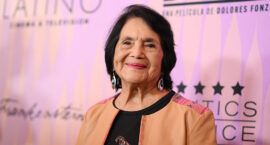
A Reckoning Long Overdue: Dolores Huerta’s Moment of Truth Must Also Be Ours

Civil rights icon Dolores Huerta has shared a devastating truth she carried alone for 60 years: that her closest colleague, mentor, boss and the internationally revered face of the farmworker movement, César Chávez, sexually abused her. As she approaches her 96th birthday, and in the wake of a New York Times investigation revealing that she was not alone—that Chávez also preyed upon other young women, including underage girls—Dolores made the painful, courageous decision that she could no longer keep this secret.

Across Latino, immigrant, labor, civil rights and farmworker communities—and far beyond—hearts broke and jaws dropped. César Chávez had ascended to the pinnacle of untouchable legend. And from that height, there was a long, painful fall.

There will be many debates about what comes next: what to do with the written history, the plazas, streets, schools, parks and holidays that bear Chávez’s name; how to reconcile the image so many of us learned with the disturbing portrait described by Dolores and the other survivors. I will leave the deeper historical reckoning to others.

But it feels both fitting and just that the holiday bearing his name be revised to Farmworkers Day—El Día del Campesino—and that every boulevard, park and street honor Dolores Huerta instead.

In Her Own Words: Dolores Huerta on Surviving Abuse, Speaking Out at 96 and Honoring the Movement Beyond One Man

In the wake of newly reported sexual abuse allegations against labor leader César Chávez, our hearts are with our long-time Ms. advisor, Feminist Majority Foundation (publisher of Ms.) board member, friend, and feminist and labor icon Dolores Huerta. The fact that she felt she had to bear this in silence speaks to the layers of harm that women who suffer sexual assault must bear.

In the wake of going public for the first time, Huerta writes, “I have never identified myself as a victim, but I now understand that I am a survivor—of violence, of sexual abuse, of domineering men who saw me, and other women, as property, or things to control.”

“The knowledge that he hurt young girls sickens me. My heart aches for everyone who suffered alone and in silence for years. There are no words strong enough to condemn those deplorable actions that he did. César’s actions do not reflect the values of our community and our movement.”

‘America’s Next Top Model’ Was a Microcosm of the Modeling Industry’s Power Problem

Modeling appears glamorous. Beautiful people, high end clothing and photo shoots in exotic locations. But the reality is far more bleak. 

I was ecstatic when I was selected to be on America’s Next Top Model. By the time I understood how little control I had, it felt too late to ask questions. Personal phones were gone. Contact with the outside world was restricted.

When Netflix released Reality Check: Inside America’s Next Top Model, my reaction was not shock. It was recognition.

The Heritage Foundation’s Plan to Keep Women Uneducated, Pregnant and Subservient

Since Trump’s re-ascendance to the White House, the reactionary conservative movement has become the most aggressive and unfettered it has been in my lifetime. And they are getting very, very clear on what they think an acceptable life looks like for women:

—Settle for any man who decides he wants you.
—Don’t go to college.
—Marry early.
—Have as many babies as possible.
—Quit your job (or don’t pursue one in the first place) to stay home full time and depend financially on your husband.
—Shoulder the blame if you wind up married to a jerk.
—Wind up impoverished if you divorce.
—Face social condemnation if you fail to follow the tradwife script.
—Contraception should be illegal or at least hard to get; same for IVF and other fertility treatments.

This isn’t hyperbole. It’s a plan they wrote down and published: Last month, the Heritage Foundation published “Saving America by Saving the Family: A Foundation for the Next 250 Years.” Think of it as Project 2275, a detailed plan that is mostly about how America can spend the next two and a half centuries undoing the feminist progress we’ve made.