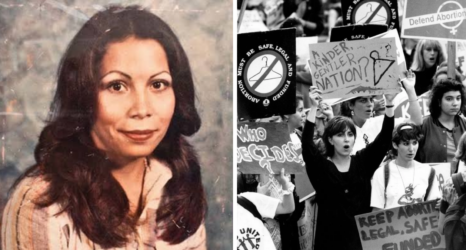
Smeal helped architect the movement to ratify the Equal Rights Amendment. In the final episode of Looking Back, Moving Forward, she shares stories from the frontlines and offers lessons—and optimism—for the fight ahead.

Eleanor “Ellie” Smeal has been shaping the movement for women’s rights for over five decades. Now the president of the Feminist Majority Foundation and publisher of Ms., Smeal became involved in feminist activism in the 1960s and joined the Pittsburgh chapter of the National Organization for Women in 1970. She went on to serve as president of national NOW for three terms, from 1977 to 1982 and again from 1985 to 1987.
During her time in NOW, Smeal helped win a historic battle to add an Equal Rights Amendment to Pennsylvania’s state constitution in 1971—making the commonwealth the first state to do so. As President of national NOW, she later architected the fight to ratify the federal ERA, building a movement across the country for constitution equality.
As part of the fifth and final episode of the Ms. Studios podcast Looking Back, Moving Forward, I talked to Smeal about the strategies that have shaped the grassroots movement to ratify the ERA, why she still believes feminists will win this more than one century-long fight, and how feminists can and must meet this moment—and foment a backlash of their own.
Smeal is joined in this episode by former Nevada state Senator and ERA champion Pat Spearman, trailblazing politician and diplomat Carol Moseley Braun, Ms. executive editor Kathy Spillar and ERA Project director Ting Ting Cheng.
Together, we reflected on more than 50 years of activism to ratify the ERA—and the power that would come from women’s constitutional equality to redefine our democracy, protect our fundamental rights and change the stories of women’s lives.
This interview has been edited and re-organized for clarity and length.
Carmen Rios: You were a lead architect of this movement to ratify the Equal Rights Amendment. How were feminists organizing in the ‘70s, in the ‘80s, for the ERA? What were the strategies you were leveraging?
Ellie Smeal: In the early ‘70s, everything was very, very grassroots. Where we were, if you can imagine, is—we’ll start right at the beginning of the decade of the ‘70s—we were fighting to get it out of the House, then out of the Senate.
We did a 24-hour vigil on the steps of the Senate. We were dead tired, and we stayed over the Women’s National Party, Alice Paul’s group. We go and knock on the door—but I was sort of embarrassed, because it was dark. I thought, ‘Maybe we should go to a motel.’ It was the middle of the night. ‘We’re waking up these people. They’re probably pretty old. We shouldn’t do it.’
The door opens a little bit, and she wanted to know who we were, and we said, we’re NOW, and she swings open the door, and she says, ‘They’re here! They’re here!’ She starts running up the stairs to tell the about seven or eight people staying that we had come. I was really embarrassed. We were waking up the whole household.
We were saying, ‘Well, we don’t have to disturb you.’ ‘Oh, no, no, no, let’s get some breakfast.’ She took the toaster out! She was so thrilled that we were doing this all-night vigil.
Anyway, that’s my opening to my work at the national level. Most of it was at the local level at this time.
Jean Witter, who was NOW’s legislative person, became the head of the ERA committee. She was really zeroing in: We have to get the House, and we definitely have to get the Senate, and then, basically, at the local level. I was in Pittsburgh NOW, the third chapter of NOW—and we were working not only on the notion of a national ERA, but Jean thought we should work on a state one as well.
And so, lo and behold, we get it through the Pennsylvania House and Senate, and then bang-o! We go right into a referendum for the ERA, which was to the public voting. We were so organized. All this was done with volunteers, people who wanted to change the world. We had people at voting booths, and we had our signs on ERA. We also had literature. We won, and we won big.
Rios: Amazing. When you think about this decade, the push to ratify before 1982—are other actions or moments like that vigil that stand out in your memory of that ERA fight?
Smeal: Alice Cohan, who became our march director and did it for so many years, she went to meet Alice [Paul] in a nursing home—time had passed, she was older—and asked her advice, and she said, ‘Go to Indiana. We can get Indiana.’
Before long enough, we’re in Indiana! Decisions were made fast. We went to Indiana. We had a huge crowd. We did a march, as did Phyllis Schlafly on the same day.
We were doing a first-rate campaign in all these places. We had done our homework. We knew who was up against who in the next election, we knew their whole history, the key votes, etcetera. And of course, we were working with the speaker and the leadership of the Democratic Party, which obviously was our strength.
Ellie Smeal
The difference, though, was we were pretty much in our home base. Although she was from Chicago, we were from cold weather. I was raised in Erie, Pa. It was cold that day, snowing like mad, but that was not going to deter us. We were going. Some people raised the question, ‘Should we postpone it?’
I said, ‘No, we’re here! We can’t get this all together again. Don’t worry about the weather.’ I didn’t know it was a blizzard, but we were going, and everybody held their ground. I will tell you, they slipped and slid, but we got there. And Schlafly had postponed it. The headline of the local paper was, essentially, ‘Schlafly Postpones the Anti March, Pro-ERA’ers March in a Blizzard.’ We always got a kick out of it—and we win in Indiana with one vote. By only one vote.
The coordinator, her husband was in the Indiana Senate. We needed every vote—and all of a sudden, we see that he’s asleep. There’s a person in the front row asleep! So, she says to her husband, ‘Go up there and shake him up.’ She did, and he ran down there and got the decisive vote.
Rios: You were also in Illinois, working with Carol Moseley Braun—I heard you were filling her apartment with maps and picking out the districts that you thought made sense.
Smeal: It was just terrific. She was a member of the legislature, and we all had become fast friends. It tells you that we were a lot younger, at least, that we’re sitting on the floor, designing how we engineer this whole thing.
We were doing a first-rate campaign in all these places. We had done our homework. We knew who was up against who in the next election. We knew their whole history of the key votes, etcetera, and of course, we were working with the speaker and the leadership of the Democratic Party, which, obviously, was our strength.

Carol Moseley Braun—we just got to meet her and work with her at a new level, right? Looking at maps and everything on the floor of her apartment. We were so impressed by her intelligence, dedication that we urged and urged her to run for Congress, and, as you know, she became the first Black woman to be elected to the United States Senate.
By the way, when she came in, there was a reception, and I think 2,000 people were there. Everybody was so thrilled. That was a mountain we had climbed. I think this should be in any history book: She’s the reason that women were allowed to wear pants in the Senate. They couldn’t wear pants—’Oh, terrible! They have to wear skirts.’ I called her on the way over, and she said, ‘You know what I did for the day?’
She walked on, and they said that she couldn’t walk on, because women couldn’t wear pants. So, she said, ‘Well, I am, and I paid a lot for this. I worked very hard for this, and you’re not going to stop me. You’re going to have to change your rule.’
We’d already done a study of how much more expensive it was to wear a skirt versus pants. It was not only sex discriminatory, it was also one of the reasons that, economically, it always cost us more. Our clothing was always priced higher.
Rios: To this day.
Smeal: Yes, to this day.
Rios: This is an era of organizing that is so different from what we have right now. When you were traveling to all these different states and convening these massive events and marches and protests—and lobbying, getting women to call and write letters—what did that look like? How was the word getting out? How were you finding the people in these different places?
Smeal: By the end of the ‘70s, we knew that we had to get an extension of time, because there was this deadline in there—but we also had to know if that deadline really meant anything, because it was in the preamble of the resolution. No one got to vote on it. We said it didn’t count. Two young lawyers—actually, law students—they had written a paper on why it doesn’t count.
It was our first nationwide struggle, because basically, up until then, it was state by state, vote by vote. Now, it was at the federal level.
By the end of the ‘70s, we had invented phone banking. We did it differently. We asked people if they would bank some messages that we could send out right at the right time from Western Union. At that time, they would bank your messages and then release them at the time you say.

We had a march. [The extension] was stuck in committee, and then it became stuck in the House for voting. And in those days, it was about 100,000, maybe a little more. That was a big march, that first one, but it had a specific goal: Out of committee. Onto the floor. Pass the Extension Act. ‘We can’t wait’ was part of the slogan.
So we banked all these things. First, I have to explain to the people, ‘No, we don’t want them released. We want to release while people who are marching, we give them a sign that we’re in every district, we’re in every grassroots, and we’re also at the national level.’ When we were marching down that street with tens of thousands, hundreds of thousands were being sent through. I think about 500,000 Western Union telegrams went in.
Someone ran back to me and said, ‘Ellie, Ellie, good lord, they’ve collapsed! They crashed the Western Union!’ Everybody was so happy, oh my god. It was the first time so many were sent.
We had about 35 people at the National Bank every night, especially school nights and things like that, and then we had teams doing it in every place you can think of, getting the messages out. Everybody had a goal of how many messages they were getting. It was really neat. We had over 800 teams doing this nationwide.
Our goal was that they would know, nationwide and with a lot of depth, people wanted full equality for women.
Rios: And the march you’re talking about, is that the 1978 march that, at that time, was the biggest feminist march in history?
Smeal: Yeah. We copied what the suffragists did, to some extent, the things we approved of. We created big signs like they had, the rectangle with cloth and that. Every major organization—American Association of University Women, League of Women, whatever they were—they would carry the sign, and they would try a minimum of 20 people for that.
We had, also, colleges doing it, all different kinds of people—so they couldn’t say that ‘They’re just the crazy ones.’ We were nationwide, women and men who were very dedicated, and that was just the beginning.
We worked those numbers up to having more than a million in 1994. It’s still massive and grassroots, the Women’s Movement.

Rios: There was a Ms. piece in 1976 on why big business was trying to defeat the ERA—and you’re quoted in it. You mention this idea of the deadline giving businesses and people in power this excuse to put it off—and then, when it’s over, they can just go back to doing whatever they want to do.
We hear a lot about Phyllis Schlafly. We hear a lot about Stop ERA. We don’t really hear about who was funding them, or who the real beneficiaries are of the fight to stop ERA. Could you talk a little bit about the opponents of the ERA? What were the forces behind those flashy stories and names, who proved to be such an obstacle in this fight, when we know that we had such popular support for the ERA?
Smeal: There’s no question in my mind that the insurance interests were very important, and in fact, started to take ads against us. Women were charged more and got fewer benefits. It affected not only insurance that you had to have—auto insurance, health insurance, etcetera—it affected, also, retirements, benefit packages. There’s no question that it made it so that we were underpaid, underrepresented, and it probably represents billions of dollars.
One of the things that we always said: It was definitely health insurance. They would tell people, ‘We have to pay women more because they have babies.’ First place, not all women have babies, but we’ll let that one go—but essentially, they didn’t give you maternity coverage. That was the one that killed you. They raised the price, but we didn’t have maternity coverage. So, what is this? Obviously, it’s for profit. It’s for no other reason.
We also heard, very early on, that the oil interests were opposed to us. They don’t write it down or anything, but the biggest backers of the environmental movement are women, and it reminded me of what happened to the women’s vote. The biggest opponents to them were the liquor interests. Women didn’t really approve of the guy getting paid, going into a bar and getting drunk. The women are for controls and worry very much about the environment. And they want no rules.
We do not argue enough of who’s behind holding women in an unequal status. We should be much more specific on it. When it comes down to it, it’s money.
Ellie Smeal
Rios: And that’s something that’s still true today, even now. We’ve had some insurance reform, and we have a little bit of regulation right now that we didn’t have then, but it’s still true today. You mentioned in the piece, too, the billions of dollars that are at stake here, because women with an ERA would have this constitutional backing to end wage inequality once and for all—but also because the payouts, the settlements, the lawsuits that would come from having an ERA, come from people having to be held accountable for these lopsided, economic structures.
In the age of Jeff Bezos and Elon Musk and all these men who we know are building their wealth on the backs of working people, and not paying them the money that they deserve, do you feel like the economic forces are still doing this pushback today?
Smeal: There’s no question. There’s just no question.
When Speaker Pelosi announced the Affordable Care Act, by then, people knew about the insurance opposition. We negotiated in the Affordable Care Act that, one, you could not charge different prices on the basis of race or sex; two, that not only can’t you do it that way, you can’t do it in the name of maternity or whatever. In other words, you can’t say that because of maternity, you’re going to charge more.
One of the things that surprised me, and I’ve been studying this for many, many years, the business side—it was much worse than we thought it was. The amount of the limits and everything, how much more, on the average, a woman was paying, it was significant. It was, I think, three times what a man at that age would be paid. It was significantly high, and the government got the numbers. In other words, it wasn’t our imagination.
I still think that we do not argue enough of who’s behind holding women in an unequal status. We should be much more specific on it. When it comes down to it, it’s money.
But there’s another thing. In sports and things like that, it was not just money. It was keeping an image that they were so much better. ‘Well, you know, girls won’t attract audiences.’ ‘They won’t come to see their daughters play.’ ‘They aren’t capable of playing first rate.’ Because of these untruthful statements and beliefs, girls were not really trained. They didn’t have the opportunity.
In the state of Pennsylvania, we took a case against the Pennsylvania International Interscholastic Association—of there being interscholastic sports for boys, but not for girls in the whole system. And we won, by the way, on the basis of the state ERA. One of the reasons you’re seeing so much more about women in sports is because we’re enforcing Title IX, and we’re enforcing what’s happening at the state level, too. Now everybody says, ‘What do you mean? Of course people go see girls.’ We’re filling audiences, and it’s staggering, and we’re in sports that they said that women would never play.
When I went to school, girls could not play full court. They could only play in half the court, because they said that if they ran back and forth the whole time, it would hurt their health and they wouldn’t get pregnant. It’s just maddening. It’s fun to see now the achievements made because of those early days. If we ever pass the Equal Rights Amendment, and I believe we will, it will have an impact so positive for American women and girls.
But the thing I learned, as time went on: It’s not just for Americans. If we change, the world changes. Thirty years ago, the U.N. passed a full rights agenda for women and girls, and on the basis, really, of the United States pushing for it. Something like 63 major countries adopted equal premises. Hillary Clinton said ‘Women’s rights are human rights, and human rights are women’s rights.’
Now we’ve lost the ‘Roe’ decision, and there’s a right-wing opposition to what we’re doing. I call it a war on women. But it’s not just us going backwards—the world is. The U.N. just did a study of how many countries are cutting back now. We have to move forward.
This is the backlash. We’re a part of this backlash that thinks that, somehow, they’re going to go back to some other era. I’m not quite sure how you do that, and if they could, they would make it tougher for women to go to school. We still haven’t passed the child care bill. We know if children have early childhood development programs, they learn faster and are better students. It’s better for their health and their learning.
They’re now attacking contraceptives. When we told them that it’s not just abortion they’re trying to get rid of, they’re trying to get rid of birth control, people didn’t believe us. Maybe they do today.

Rios: What do you feel is the promise of the ERA? Why is it so critical? I feel like this moment reminds us why it’s so important that we have this promise of constitutional equality, but what are the tangibles that you think would come from an Equal Rights Amendment? What are they so afraid of?
Smeal: First and foremost, women’s salaries and women’s benefits would go up. There’s no question about it.
They used to say that we come in and come out of the workplace. They now know that women will stay in the workplace. Today, the workforce is about even. This is not playing around. When you’re planning things, you’ve got to include half the population. It gives you different numbers and everything else.
I think the average person will see what we’re seeing already. That women are strong. Women are smart. They do more than have children. They have children. They do a good job, but they do more. They work. They write. They invent things. The COVID vaccine, it was developed by a husband-wife team.
You already see huge changes. In fact, you see them so much that I don’t think the young people notice them. When they try to say, this new Department of Defense, that women shouldn’t be in the military, the backlash was just absolutely immense—from the military itself. ‘We need them.’ It’s nice to be needed.
People think it’s either won, or we can’t ever do it. They’re both wrong. One, we’re gonna do it; and two, it will have a very positive effect.
Ellie Smeal
Rios: You can’t put the genie back in the bottle, right? They’re trying to almost pretend the last 50 years didn’t happen, but we were all there. We all saw what happened in the last 50 years.
Smeal: They used to chant at us, ‘Women don’t want to be doctors, they want to marry one.’ Right now, there are more women in medical school than there are men.
In one meeting, with education officials in Pennsylvania and our state president, the slogan was, ‘the best girl at sports is worse than the worst boy.’ You stand there in shock. She stood up and she said, ‘You’ll see how strong we are, and you will never say that again in the presence of women.’
It’s such an outrage. The whole premise was that we were a different species, that we had no ambitions, that we weren’t smart, that we were weak, and the door opening by a male for a woman is just a symbol of that weakness. I’ve sat in meetings like that. Today, you don’t, because that kind of reasoning is gone. People do not believe that anymore.

Rios: What is your journey to ERA activism? When you talk about how drastically different things were, what pushed you into championing this cause for a lifetime?
Smeal: I’m the kind of person that wants to make something happen and work very hard to do it. I thought it was the most important thing I could do. The reality is it affected half the population. It changed my life and my brothers’ lives. I could go on and on about how women have suffered. I’ve been very lucky. I haven’t had some of these experiences, but when we talk about violence, or something like that, we know who the victim is. It’s not right. It should stop, and so many things aren’t right. They say they love us, but it’s okay if you get half as much. No, sorry about that.
What keeps you going, in my opinion, is that you know you’re making a difference. I was very lucky. I had people all around me who supported it. When we did the march in Illinois, there were children there. We brought our kids. I’m very fortunate to have had a daughter and a son, and they were there, and they loved these things.
We rented four cars, filled them, on whatever the railroad was then, from New Jersey to Illinois, and the kids decided they were going to have their own car. They were going to establish all their own rules. They had a blast. They loved it. They went to a lot of the marches and rallies. I remember, once, we were really busy before one of the big rallies, and I asked my son Todd if he wanted to go for a walk with me, because I was feeling guilty. I had hardly talked to him, and he’d come all the way downtown—we lived in the suburb—to do this.
We were walking along, and he said, ‘You know, Mom, I think that you did this because you’re afraid I was missing something or something. I think we should go back there. Those people need us. Let’s go back.’ Before I knew it, he’s turning around. ‘Those people need us.’ So both of us went back to work. He was always a very strong supporter, as is, my daughter, Lori. The kids had a good time, and we included them. We still include children as much as we can, especially on these big things.
I don’t think we’re going to go backwards. But I know one thing: They try to push us back, the people who will move to the front will be overwhelmingly women.
Ellie Smeal
Rios: In this new era of ERA activism, what are the lessons from that 1970s and 1980s fight that are shaping how you approach this new frontier that we’re in?
Smeal: Don’t take anything for granted. It’s the reason why we called our group Feminist Majority, and we’re very, very close to NOW and all the other women’s groups. If there’s a story being told over and over again and it’s hurting, find out if the story’s even true. I still believe in the facts, the truth of the facts. I think that an activist must also be a student and learn things as you go. We’ve learned a lot, and it’s not the same movement. We certainly haven’t met all of our goals, but we’ve met some of them.
The education of women went faster than any one thing. Once the doors opened, they zoomed in. They kept on saying, ‘Well, we’ll admit them, but they won’t come to be a lawyer.’ Well, forget that one. They’re tearing down the doors. Don’t believe things that are said over and over again.
I believe the ERA has passed. It’s been ratified. We have passed through 38 states. I believe that the time limit doesn’t matter, and I also believe we have a right-wing court.
Timing is very important, but I hope we see it in my lifetime. The movement is getting bigger, but these are the serious times that we’ve got to face. It’s incredible to me, some of the things happening in our own country right now. You can’t talk about diversity, equity, and inclusion at all. They find that wrong. I don’t understand that. I personally think the figures should be given out to pay benefits, etcetera of the average working person or for a major corporation or whatever. They have the figures. They should release them so people will know.
I don’t think we’re going to go backwards, but I know one thing. They try to push us back, the people who will move to the front will be, overwhelmingly, women. I really feel they’ve had it. There’s no question. We’re the vast majority. We do poll after poll to find out the majority of American women are, without a doubt, supporters of feminism or call themselves feminists. They might not call themselves feminists, but they do believe in equality. The polls have been really very encouraging and also about young men, because those numbers are going up and up and up in our direction.

Rios: This podcast is focused on 50 years of Ms., 50 years of feminist activism, and I keep thinking, what about the next 50? How do we round out a feminist century?
Smeal: The first thing we’ve got to do is stop the backlash. We have got to start winning, and we have to figure out what we’ll do about fixing the districts. Look at what’s happening in Texas right now—they’re creating five districts so they can dominate the state. We have got to stop gerrymandering. We also, in my opinion, have got to stop paying for offices, buying the seat.
Especially those people who are contractors, their biggest business is the government’s business. The billions and billions and billions of dollars that we’re spending on weapons and making them better. We’re going to be experts in killing people. I mean, it’s terrible, and the more we invent those things, the more other countries it spreads to, and then who has the bigger gun?
The scary thing is how much it costs to run for office. There’s no limitations. An organization like NOW can only give $5,000 to an individual candidate, but a dark horse, an independent campaign, can give unlimited amounts. The laws on this have got to change. You can’t just say, okay, here’s 500,000, here’s one million, here’s two million. You’ve heard these numbers; to pretend that they don’t have an impact on decisions is crazy.
We have to all get much more active in politics and understand that this isn’t democracy. Why have an election if you’ve scheduled it in such a way that that district is going Democrat, this one’s going Republican?
We shouldn’t stop just at women’s issues. We should stop at the issues that keep people from literally giving up. ‘It’s beyond me. I’m sick of the whole thing.’ You can’t be sick of it. It’s going to affect everything. We need a backlash to what has happened in these last several years.The feminist movement should be involved in all of the issues, not just the issue of equality, but the issue of representation, of democracy, of what we do to control population growth or improve food growth.
Just like women voting helped the whole country, equality will help the whole country.
To have so many kids starving to death is a moral shame worldwide. It’s not just in one country, but it’s certainly here. There’s so much poverty. It has to stop. Why is somebody making billions and not paying any taxes? I don’t need to go into all that, but we shouldn’t close our eyes to anything.
I do believe we will win. We were just five votes away from passing a house resolution that recognized the ERA had passed on the Senate side. They’re threatening to filibuster, but we’ll figure that out. We’re very close to winning. People think it’s either won, or we can’t ever do it. They’re both wrong. One, we’re going to do it, and two, it will have a very positive effect.
We’re going to make it.
You can listen to every episode of Looking Back, Moving Forward on Spotify, Apple Podcasts, iHeart Radio or wherever you get your podcasts. If you like what you hear, please rate, review and share the show with your co-conspirators! You can also explore more bonus footage from every episode in the Ms. archives.