As CSW70 convenes world leaders in New York City, a reminder that no country on Earth has achieved full legal equality for women. The time for bold solutions is now.

Over 30 years ago, world leaders came together in Beijing and made a promise: Gender equality would be a global standard, not a distant aspiration.
As the United Nations convenes from March 9 to 19 for the 70th session of the Commission on the Status of Women—under the theme of strengthening access to justice and eliminating discriminatory laws—that promise remains not only unfinished, but increasingly under coordinated assault.
Since 1999, Equality Now’s “Words & Deeds” reports have tracked laws and policies that discriminate against women and girls, documenting progress when legal reform has been achieved and holding governments accountable when words fail to translate into action.
Our latest report, “Progress and Backlash: Accountability for the Rights of Women and Girls,” shows we are at a perilous moment of global regression in women’s rights. Across regions, protections once considered settled are being diluted, defunded and deliberately dismantled, as hard-won legal safeguards are targeted and eroded.
- The failure to effectively regulate digital spaces is enabling harmful gendered misinformation to spread online with minimal oversight or accountability.
- Budgets for gender equality are being cut, and in several countries, ministries dedicated to women’s empowerment and protection have been merged, marginalized or dismantled—a stark demonstration of how women’s rights are being deprioritized.
- Reproductive freedoms have been curtailed, while comprehensive sexuality education is being removed from classrooms in the name of “family values.”
From India to the United States, a Shared Crisis in Women’s Rights
This backlash isn’t just political, it’s personal.
I have spent my life working at the intersection of philanthropy, legal reform and gender justice, and I have seen firsthand how fragile progress can be.
In both India and the United States, the world’s largest democracies, we are witnessing an alarming pattern: Instead of treating women’s rights as fundamental human rights, they are increasingly being reframed as optional, negotiable and a threat to cultural and national sovereignty.
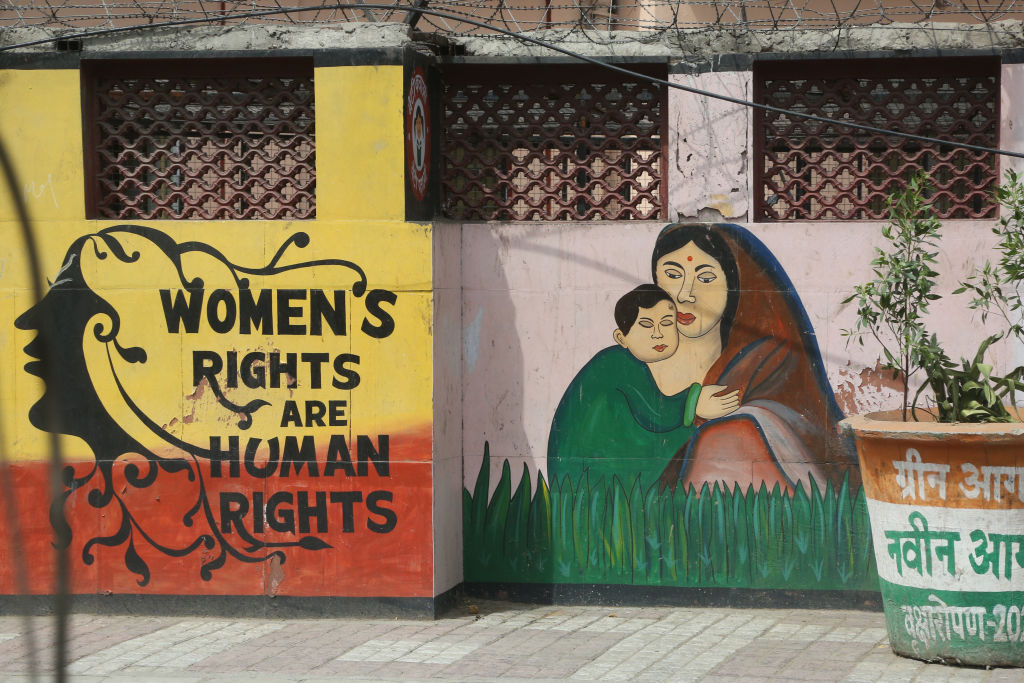
In India, where I was born, I have seen how the legal system has failed sexual violence survivors. I’ve heard many stories from Dalit women and girls who endured horrific abuse, only to face nearly insurmountable barriers to justice.
Equality Now’s research has evidenced how caste-based discrimination compounds gender-based violence, embedding inequality at every stage of the legal process:
- Police routinely refuse to register complaints.
- Investigations are mishandled, and cases stall or collapse.
- Victim-blaming and entrenched social hierarchies shield perpetrators and enable impunity.
I think about the young doctor in Kolkata, brutally raped and murdered while trying to rest after a grueling 36-hour work shift. Her story, like those of countless other women, was quickly consumed by headlines, then forgotten, while the cycle of violence continues and justice is delayed or denied.
Meanwhile, in the U.S., I have watched with heartbreak and fury as women’s rights, once thought to be untouchable, have been stripped away in real time. Roe v. Wade was overturned in 2022, and overnight, millions of women lost the right to make decisions about their own bodies.
I remember the young woman I met in Texas, terrified after being denied an abortion, forced to carry an unviable pregnancy that could threaten her own life. She has fewer rights than her grandmother had.
Two nations. Two democracies. One common thread: a systematic effort to push women back into silence and submission under the guise of tradition, morality or political expediency.
Legal Rollback on FGM Could Embolden Anti-Gender Rights Movements Worldwide
We are also working alongside women’s rights advocates to protect and strengthen The Gambia’s law banning female genital mutilation. In 2024, parliamentarians rejected a bill that sought to repeal the law, but it is now facing a constitutional challenge before the country’s Supreme Court.
If the judges vote to strike the law down, it would set a dangerous precedent by elevating culture or religion above the right of women and girls to live free from gender-based violence. Legal protections in The Gambia would be significantly weakened, and the decision could embolden anti-gender rights movements around the world to push for the rollback of legal safeguards against FGM and other harmful practices, including child marriage.
No Country Has Achieved Full Legal Equality for Women
Today, no country provides equal legal rights between men and women, a failure of political leadership that I find deeply dismaying. According to the World Bank Group’s Women, Business and the Law 2026 report, just 4 percent of women live in countries close to full legal equality, and not one of the world’s 190 economies has achieved equal economic participation for women. Even where laws exist on paper, considerable shortfalls remain in implementation and enforcement.
When so much more still needs to be done to advance the rights of women and girls, and with the world feeling increasingly divided, governments cannot afford to retreat from cooperation. Strong national, regional and international partnerships are essential to eliminating discrimination and advancing equality for all.
CSW70: When Women’s Rights Erode, Democracy Is at Risk
At CSW, world leaders will issue statements. They will reaffirm commitments. But what we need is action, not platitudes. We need coordinated strategies to counter the erosion of our democracies.
What happens at CSW isn’t just an ideological debate. The backlash against the gains that women and girls have rightfully earned is systemic and well-coordinated. Anti-rights groups are well-funded, globally networked and growing bolder. They aren’t just opposing progress; they are actively dismantling existing rights, blocking gender equality funding, and using legal systems to strip away protections.
This is not just about women—it’s is about the health of democracies. History tells us that when women’s rights erode, democracy itself is at risk. Authoritarian regimes don’t just empower themselves by jailing journalists or rigging elections—they start by controlling women. They know that suppressing half the population is the easiest way to tighten their grip on power.
This fight is ours, and it is now. At CSW, world leaders will issue statements. They will reaffirm commitments. But what we need is action, not platitudes. We need coordinated strategies to counter the erosion of our democracies.
Laws must be strengthened.
Governments must commit to legally binding protections for women’s rights, not just voluntary pledges. Strong, progressive laws are the foundation of a strong democracy where everyone can thrive.
We need to build coalitions.
By fostering national, regional and cross-regional collaboration, women’s rights advocates can share strategies, pool resources, and strengthen collective responses. In the face of transnational anti-rights movements, solidarity and shared learning across borders are more essential than ever.
Philanthropy must step up.
Gender equality funding makes up less than 2 percent of global philanthropy. That is unacceptable. Many donors are either strategizing or are frozen with inaction. Money needs to move to where it is most needed.
We must call out hypocrisy.
Nations cannot claim to champion democracy while enabling policies that strip women of their freedoms.
I refuse to accept a world where my nieces in India and my daughters in the U.S. grow up with fewer rights than I did.
The fight for gender equality is not a favor. It is the foundation of every functioning democracy. We have come too far to allow a small, regressive minority to drag us backward. The time to hold the line and push forward is now.
Because if women’s rights fall, democracy is next.