In This Edition:
Milestones: Nancy Mace became the first woman to graduate from the Citadel Military College (1999); Victoria Woodhull became the first woman to run for president, for the Equal Rights Party.
Birthdays: U.S. Rep. Becca Balint, whose election marked the first time all 50 states have elected at least one woman to Congress; Ana Gasteyer, comedian; Julia Tyler, former first lady (1820); Maureen Persson; Christine Pelosi, political strategist; Elizabeth Seaman, pen name Nellie Bly, an investigative journalist who uncovered conditions in mental asylums (1864); Gloria Richardson, civil rights activist in Maryland; Natalia Duncan Macker, co-founder of the Wyoming Women’s Action Network and Cowgirl Run Fund; Dorothy Sunrise Lorentino, Comanche teacher, first Native person included in the National Teacher’s Hall of Fame; Emma Davidson Tribbs, co-founder of Harrison Clark and National Women’s Defense League; Rosario Dawson, actor and activist; Harriet Lane, niece and first lady to President James Buchanan (1830); Andrea Dew Steele, founder of Emerge America and strategic giving advisor; and Ella Grasso, first woman elected governor of Connecticut.
“Why Not You?” What Rachel Entrekin’s Historic Ultramarathon Win Says About Women and Leadership
For as long as I have known her, I have watched my sister-in-law, Marina Richie, run. And I mean, run—she wasn’t like me, simply jogging for fun or fitness—she competed and won races regularly. Every time I’d watch her cross the finish line, it never once crossed my mind that there was anything she couldn’t do because she was a woman. Her gender didn’t cross my mind at all, in fact. To me, all I recognized was that she was simply the fastest person in the race.

So when I came across The Female Quotient’s #LikeAGirl campaign a few weeks ago, it hit me in a way that I didn’t expect.
In it, they ask people to “run like a girl,” and the older participants did exactly what you’d imagine. Intentionally flailing arms, exaggerated stumbling, and eye rolls paired with quips of, “Oh, my hair.” It was a performance of inadequacy so automatic it was almost reflective, depicting the stereotypes projected on them. It was meant to be funny, but to me it was heartbreaking, because those performances weren’t invented; they were learned.
But then the camera panned to the younger girls, who exhibited an entirely different set of automatic behaviors. They ran hard and fast, pumping their arms and leaning forward, never looking back. It made my heart joyful to see that for them, “like a girl” wasn’t a punchline … it was just running. Because no one had yet told them it should be anything less.
Marina knows that kind of running. My daughter, Becca, a high school track runner, knows it too. And this week, so did Rachel Entrekin.
On Wednesday, Entrekin made history at 34 years of age by becoming the first woman to win the Cocodona 250 ultramarathon outright, beating the entire field of men competing in the race. As she broke the tape at the end of the 250-mile race, the timer showed 56 hours 9 minutes and 48 seconds—a new course record.
When asked about her victory in a post-race interview, Entrekin shared a powerful mantra that I hope every woman repeats. The phrase that helped propel her to this historic win was simple, yet profoundly powerful: “Why not you?”
This was the line that she reminded herself of often and fiercely, because it wasn’t always quiet in her head. At mile 50, alone and out front, the voice that so many women all too well started whispering, “What are you doing? You are going to blow up. You’re going out too fast or too hard.” That all-too-familiar sense of imposter syndrome that so many women face had started to creep in for her, as it had for the young women captured in the #LikeAGirl video.
But for Entrekin, she consciously chose to push it aside, grounded herself in her history—two previous wins in the women’s division—and reframed the question: Why not you, though? And she won.

What strikes me most is how universal that moment of doubt is, and how much courage it takes to move through it anyway. In fact, Entrekin spoke to this exact feeling herself following the race:
“Especially women—we tend to talk ourselves out of even trying to do things because we think we’re not qualified, or we don’t have the experience, or whatever. But why not? Why not try?”
That question is at the heart of everything we do at RepresentWomen. Because the barriers keeping women from the finish line of political leadership aren’t about ability or readiness. They never were. They’re all about the systems, rules, and the voices—internal and external—that have told women for generations to hold back, to wait, and to wonder if they’re really qualified enough. Our job is to change those systems and to keep asking women—“Why not you?”—whenever leadership opportunities arise.
Pre-order Marina Richie’s second book, Feathered Forest: A Loft with Birds in Ancient Trees.
Amy Acton Could Be Elected as Ohio’s First Woman Governor

Dr. Amy Acton easily secured the Democratic nomination for Ohio governor Tuesday, setting up a November matchup against Vivek Ramaswamy (R), a biotech entrepreneur aligned with the Trump administration. Acton built her public profile as the former state health director alongside Gov. Mike DeWine in the early months of the COVID-19 pandemic, as a physician and Ohio State professor who helped translate complex information into understandable terms to Ohioans. The winner would make history either way, where Acton would be the first woman elected to govern Ohio, and Ramaswamy would be the first South Asian.
She described herself Tuesday night as a “scrappy kid from Youngstown” who overcame childhood homelessness and abuse to build a career in public health. In her statements to supporters on Tuesday, the Ohio Capitol Journal reports:
She drew comparisons between her own struggles as a child facing homelessness and the challenges Ohioans today face in making ends meet.
“I am running for governor because people in this state are struggling,” Acton said. “They are doing everything right. They’re working harder than they ever have, but there is no more breathing room. They’re struggling with the cost of everyday life, and I refuse to look the other way.”
And Acton needled her opponent for criss-crossing the state in a private jet.
“When you are looking at a state from 30,000 feet, my opponent cannot possibly see the struggles and the stories that I’m hearing on the road,” Acton said. “Vivek Ramaswamy isn’t just out of touch. He is out for himself. That is what is happening here.”
Nonetheless, the terrain moving forward is steep. As The 19th writes:
“Acton will have a tougher road ahead in her incumbent-free race than some of her contemporaries will in states like Minnesota or Tennessee. There are nearly twice as many registered Republican voters in Ohio than registered Democratic voters, though voters unaffiliated with either party make up the bulk of the state’s electorate. President Donald Trump won the state with more than 55 percent of the vote in 2024.
Still, the gubernatorial race is shaping up to be surprisingly competitive given the state’s recent voting history: the Cook Political Report recently upgraded its competitiveness to “leans” Republican.”
The broader stakes extend beyond Ohio. There are a record 14 women governors currently serving, but six are leaving office this year due to term limits or retirement. According to CAWP’s Kelly Dittmar, holding that number, let alone growing it, will require women candidates to win in challenging open-seat races; Ohio is one of the biggest tests.
At 96, Labor Icon Dolores Huerta Continues to Fight for Democracy

Dolores Huerta coined the phrase Sí se puede (“Yes we can”) and spent more than six decades as one of the most visible and tireless advocates for farmworkers, immigrants and women in American public life. She co-founded the National Farm Workers Association alongside César Chávez in 1962, organized strikes, led boycotts and negotiated contracts that transformed the lives of some of the most exploited workers in the country.
She received the Presidential Medal of Freedom in 2012, and her name appears on schools, streets and murals across the American Southwest. For generations of Latina women and progressive organizers, she has been a model of what it means to keep fighting regardless of the personal cost. That cost, it turns out, was far higher than anyone knew.
In a new profile for Elle magazine, Alice Driver writes:
“Huerta, who turned 96 on April 10, the day before our interview, is a mother of 13, a feminist, a civil rights activist—and a survivor. In 1962, she cofounded the National Farm Workers Association (which later became United Farm Workers) with Cesar Chavez, and their decades of committed work resulted in better working conditions and pay for millions across the US. Chavez, who died in 1993, the more famous of the two, saw his name given to streets, buildings, and schools, during his lifetime.
But earlier this year, when reporters at The New York Times called Huerta for comment on an investigation about allegations of Chavez’s abuse of girls and women, she revealed a secret she had held for nearly 60 years—that he had raped her. The article has spurred a recentering of women in social movements who worked diligently alongside men like Chavez but let them take the credit. But now, with this reckoning, deserving women like Huerta are getting their flowers.
“The achievements won for farm workers and others are still there and cannot be erased,” Huerta says when asked how it feels to get so much appreciation at this point in her life. “The support and love that I have received in this difficult moment has given me the strength and inspiration to continue working and seeking answers to end violence against women, girls, and boys.” …
… Now, as she looks at the current political moment, she hopes to spur a similar call to action. “We know that what we’re going through in the United States of America right now is something that we’ve never seen to this extent before. It’s never been as challenging as it is right now,” she says. “And especially for young people, when they think about what their future is going to look like. When so many benefits that have been fought for, for so many years that were finally won, and now are being taken away from us, it’s do or die.”
In the lead-up to the midterms this fall, Huerta wants to work with young people to get out the vote, knocking on doors at age 96. “I love the idea of registering people to vote,” she says. “Because you’re talking to strangers, and you’re trying to convince them to do something that is not only good for them, but good for the country.”
Three Republican Women Are Forcing Congress to Reckon With Sexual Misconduct—With Caveats
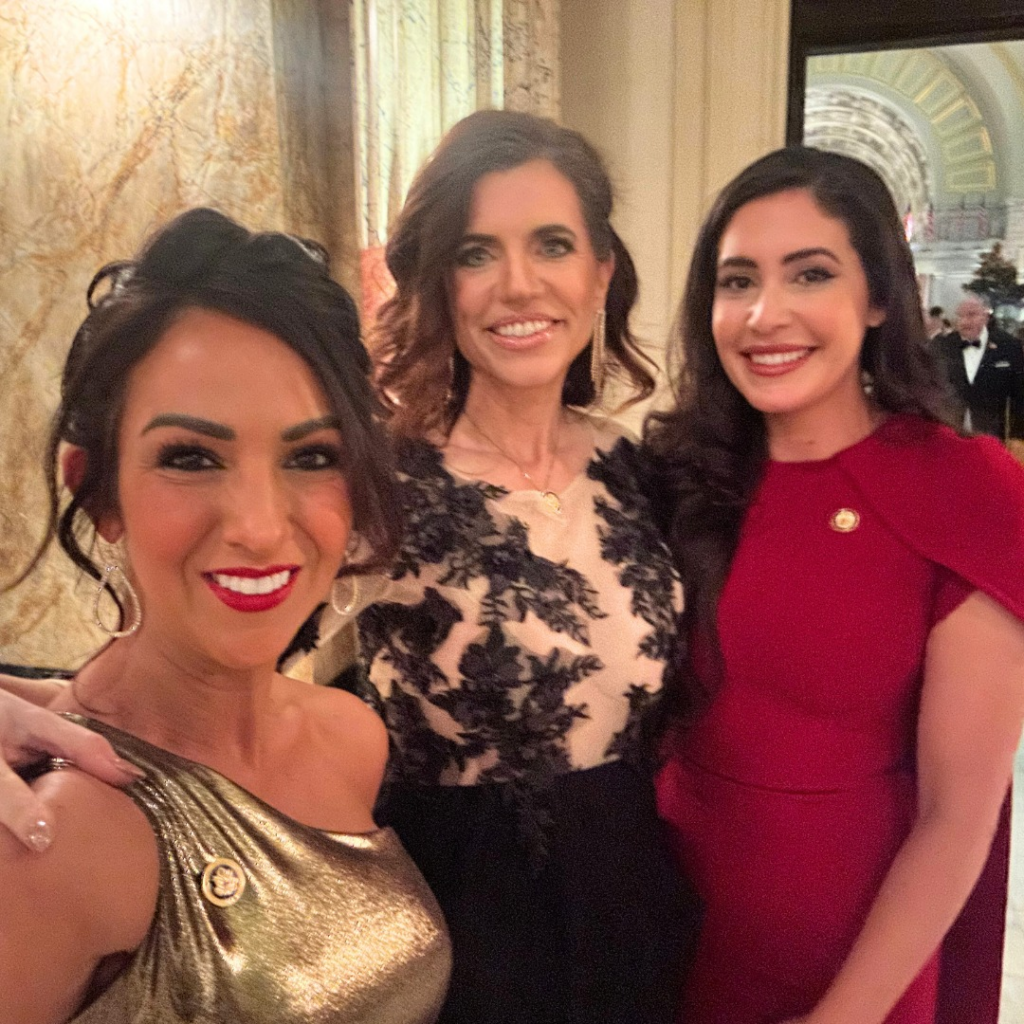
Reps. Nancy Mace (R-S.C.), Anna Paulina Luna (R-Fla.) and Lauren Boebert (R-Colo.) have emerged as an unlikely force for accountability on Capitol Hill, helping push out two members of Congress accused of sexual misconduct and vowing to name more. The trio, all hard-right MAGA Republicans, coordinated to force the resignations of both Rep. Tony Gonzales, whose affair with a staffer who later died by suicide became public in March, and Rep. Eric Swalwell, who faced sexual assault allegations from a former aide.
They have demanded the public release of congressional sexual harassment settlement records, pushed for an inquiry into the Justice Department’s handling of the Epstein investigation, and set their sights on Rep. Cory Mills of Florida, who is under ethics investigation for alleged misconduct with a woman.
Their motivations are both personal and political. All three said their experiences as women in male-dominated institutions shaped their commitment to the issue. However, contradictions are real and worth naming. All three said they don’t believe the sexual misconduct allegations against President Trump. Anni Karni for The NYT writes:
“The three lawmakers, all of whom have notably said they do not believe the allegations of sexual abuse and misconduct against Mr. Trump, added that they were bent on naming and shaming predators in Congress in both parties.
“This place only operates on pressure and pain,” said Ms. Luna, who led the charge to push out Mr. Gonzales. “The best way to change it is with pressure and pain.”…
… Ms. Mace and Ms. Boebert, along with former Representative Marjorie Taylor Greene of Georgia, also withstood immense pressure earlier this year from Mr. Trump when they signed on to a petition that forced the release of the files related to Jeffrey Epstein, the disgraced financier and convicted sex offender. “It’s not easy having the president come down on you,” Ms. Boebert said.
Still, they said that they saw nothing wrong with the behavior of the president — who was found liable of sexual abuse in 2023 and was caught on tape boasting about pushing himself on women — and dismissed the accusations of sexual misconduct against him. “I’ve only ever gotten grandfather vibes,” Ms. Boebert said of Mr. Trump.
They are far less forgiving of their colleagues on Capitol Hill. All three have demanded the release of documents detailing any sexual harassment settlements reached by members of Congress.
On the Oversight Committee, Ms. Mace crossed party lines last summer to force an inquiry into the Justice Department’s handling of its investigation into Mr. Epstein. Ms. Mace and Ms. Boebert voted with Democrats earlier this year to force a subpoena in that inquiry for Pam Bondi, then the attorney general, to testify.”
Women forcing accountability for sexual misconduct in Congress, regardless of party, is a structural good. What isn’t totally clear is whether this represents a lasting commitment to institutional change or just a temporary pressure that might fade away.
Key partners Emma Davidson Tribbs and Sarah Jane Higginbotham are leading groundbreaking research on sexual harassment in state government through their work at the National Women’s Defense League—find their hard-hitting reports here.
Reform UK Wants to Scrap the Law Protecting Pregnant Women at Work
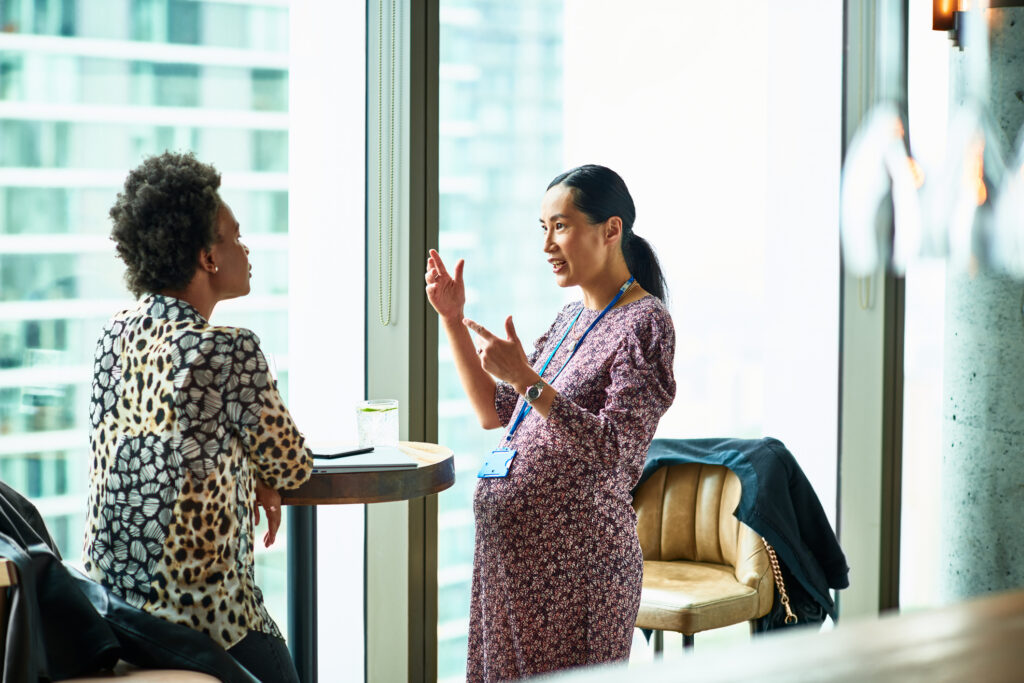
As Nigel Farage’s Reform UK makes gains in British polls ahead of the next general election, a new analysis is putting a number on what its agenda would mean for women. The Independent reports that up to half a million pregnant women could lose workplace protections every year. Reform UK has pledged to repeal the Equality Act 2010, the groundbreaking legislation that prohibits the dismissal, harassment, or unfair treatment of women due to pregnancy, related medical conditions or their status on maternity leave.
The findings have been described as “catastrophic,” and those who argue that removing these protections would reverse decades of progress in maternity rights. As The Independent writes:
“Meanwhile, research from the Women’s Budget Group, conducted in 2023, found that pregnancy and maternity discrimination was the single most common employment law issue for which women sought advice and support.
The think tank warned that weakening equality protections “would take us backwards”, arguing that “too many women are still pushed out, sidelined or treated unfairly during pregnancy, maternity leave or when returning to work”.
It comes after analysis conducted by the Labour Party estimated that as many as half a million pregnant women could be left without protection each year if the act was scrapped, analysis based on statistics on the number of live births in 2024 (640,000) and the percentage of women in employment (72 per cent).
Responding to the figures, Rachel Grocott, CEO of Pregnant Then Screwed, told The Independent: “Scrapping the Equality Act is an unthinkable proposal. This is not some meaningless piece of bureaucracy; it is the means by which everyone is supported to work and participate in society on an equal and fair basis. Removing protections for women to work, and to return to work after having children, would wipe out decades of progress – leaving half a million pregnant women without workplace protections is simply shocking. It should be made crystal clear to voters that this would have catastrophic effects for everyone. We need to be building on the foundations of the Equality Act and providing more support for mothers and parents – not going seriously backwards by removing the basic protections afforded to us by the Equality Act.”
Mother’s Day Was Always About Women’s Political Power

Although the National Retail Federation projects that U.S. consumers will spend approximately $34 billion on Mother’s Day in 2026, the holiday’s origins have a far deeper meaning than the modern commercial focus on flowers and gifts. It serves as an important occasion to reflect on celebrating women’s roles as active community leaders and political advocates.
Anna Jarvis started Mother’s Day in 1908 to honor her mother, Ann Jarvis, a Civil War-era activist who founded Mother’s Day Work Clubs in West Virginia. These community associations of local mothers provided education and assistance to families, and pivoted during the Civil War to promote peace and offer food and medical assistance to both Union and Confederate soldiers.
Marie-Claire Beaulieu, a professor of Classical studies at Tufts, extends the story in a new article in The Conversation titled “From ancient goddesses to modern peace activists: Mother’s Day celebrates women’s political power.” As a scholar of ancient Greece and Rome, she traces this tradition of mothers as political actors back much further than the U.S. Civil War.
For example, in the Greek comedy Lysistrata, written in the fifth century BCE, the story dramatizes the women of Athens uniting to end the Peloponnesian War, arguing that women suffer twice as much as men in war, bearing children only to send them off to die as soldiers. Regarding religion, ancient goddesses Hera and Juno were venerated not only as protectors of marriage and childbirth but also as divine guardians of their cities. According to ancient accounts, the Romans were saved from a 390 BCE Gallic invasion by the sacred geese of Goddess Juno Lucina, the divine guardian of motherhood, who alerted the city to the enemy’s approach. Throughout all these examples, the domestic and the political were never actually separate.
That thread runs to the present. As Beaulieu writes in her piece:
“The tremendous power of women as peace advocates and protectors of communities continues today.
As journalist Margot Adler has shown, some neo-pagans believe that ancient societies that worshipped mother deities were more peaceful than cultures with patriarchal religious traditions. Today, these worshippers seek to revive the cults of mother deities in order to return to this harmonious way of life. They invoke mother goddesses to promote the political power of women, demilitarization and harmony with the natural world, as well as world peace.
Similarly, “Lysistrata” continues to inspire women’s advocacy for peace worldwide. In 2003, for instance, peace activists Kathryn Blume and Sharron Bower advocated against the Iraq War by coordinating over 1,000 readings of “Lysistrata” worldwide in a single day.
Admittedly, the play presents female characters in ridiculous ways and, as classical scholar Mary Beard has pointed out, the ending of the play makes it clear that women’s political power is only a fantasy. Yet the play acknowledges that women suffered disproportionately from the consequences of war in ancient times, just as they do today.
The play also acknowledges, albeit in a humorous way, that women wield tremendous power for peace, which is borne out today as well. In fact, according to a study by King’s College London, “states where women hold more political power are less likely to go to war and less likely to commit human rights abuses.”
Anna Jarvis originally conceived of Mother’s Day as a broader celebration than the commercialized holiday we know today. This year, we have the opportunity to recognize women as significant moral and political figures, particularly in their roles as peace advocates. It serves as a poignant reflection on the vast scope and impact of women’s political influence.


I also want to extend a huge congratulations to our incredible international research manager, Fatma Tawfik, for receiving an A+ on her thesis! Fatma brings invaluable expertise to our international research, and we are grateful to have her on our team!
Do you know someone who would be interested in this weekly roundup of news stories on women’s representation and democracy? Forward them this email and have them click this link to subscribe to RepresentWomen’s Weekend Reading.