For more than four years, Ms.’ Front and Center series has created space for Black mothers living in extreme poverty—women too often ignored in our politics, policymaking and media—to tell their own stories in their own words. What began as a platform to document the realities facing mothers participating in the Magnolia Mother’s Trust, has grown into something much larger: an ongoing chronicle of survival, caregiving, joy, exhaustion, resilience and hope amid systems that too often fail women and families.
Over the years, readers have followed these women as they navigated impossible choices around housing, healthcare, childcare, work, education, mental health and family stability. Their stories have illuminated not just the daily realities of poverty, but also the broader structures shaping their lives—and the extraordinary strength required to keep going anyway.
Presented in partnership with Mississippi-based nonprofit Springboard to Opportunities, Front and Center has always sought to build empathy through lived experience, allowing women to author their own narratives rather than be reduced to statistics or political talking points.
This Mother’s Day weekend, we are honored to expand that conversation through a special three-part Front and Center mini-series—The Kids of Magnolia Mother’s Trust—featuring the children of mothers whose stories readers have come to know over the years. Published Friday, Saturday and Sunday ahead of Mother’s Day, these essays offer a deeply personal look at how children experience their mothers’ sacrifices, struggles and love, and how they understand the world around them because of those experiences.
In these stories, we see young people grappling with questions of equity, safety, community and possibility. We see what children notice when their mothers are carrying enormous burdens, and what changes when families are given even a little more stability or support. Most of all, we see the profound impact mothers have on shaping the values, dreams and sense of justice their children carry forward.
The series also arrives as the Magnolia Mother’s Trust launches its seventh cohort—marking a new phase for the nation’s longest-running guaranteed income program, with approximately 100 Black mothers set to begin receiving $1,000 monthly payments alongside expanded peer-led community support initiatives ahead of Mother’s Day.
The lives of mothers ripple outward. And so do the systems that support them—or fail them.
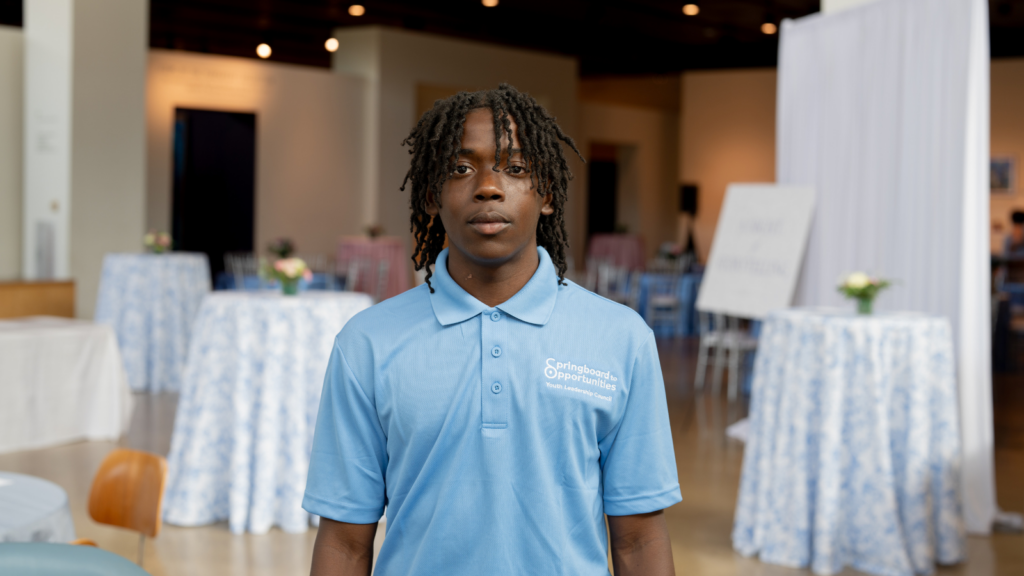
In the first installment of The Kids of Magnolia Mother’s Trust, Kentavius reflects on what he has learned about equity, community and advocacy through his experiences growing up in Jackson, Miss., and participating in Springboard’s Youth Advocacy Fellowship. He writes candidly about race, policing, education and the difference it made to watch his mother experience a year with a little less financial stress—and a little more room to simply be present as a parent.
Following Kentavius’ essay, his mother Kim—whose own stories readers first encountered through Front and Center several years ago (here and here)—responds to her son’s reflections and shares what it means to watch him grow into a thoughtful young man committed to justice, compassion and community.
Kentavius: ‘Giving Moms Like Mine the Extra Resources They Deserve to Take Care of Their Families Is an Example of Equity’
My name is Kentavius, and I am currently a sophomore in high school. Last summer, I had the opportunity to participate in Springboard’s Youth Advocacy Fellowship, and I am now a member of Springboard’s Youth Leadership Council. These opportunities have shaped my own thinking and changed how I view the world.
The most significant lesson I have taken away from these experiences is learning the difference between equality and equity. We spent a lot of time learning that equality might be important, but it really isn’t good enough.
When civil rights leaders were fighting for our right to vote, they were fighting for equality—one vote for each person, regardless of your race. Or when they were fighting to end segregation, they wanted us all to have equal access to spaces and opportunities. But just because we have the right to vote now and there aren’t signs that say which buildings or bathrooms or drinking fountains Black people can use, it hasn’t been enough. We still experience inequitable treatment all the time.
We watched one particular video about police brutality and the killing of Trayvon Martin, and that really stuck with me. Even though this happened during my lifetime, I had never heard the story before. All he was doing was wearing a hoodie, and apparently they thought that made him suspicious. There was no justification.
This story hit really close to home because I know people who have been profiled for the way that they look. Some of my friends were near Walmart just selling candy, but they got reported for being suspicious and people assumed they were doing something illegal. They weren’t doing anything illegal. They just happened to be young Black boys in America.
This is why I think it’s so important that everyone begins to understand the difference between equality and equity. While equality means that everyone gets the exact same resources, rights and opportunities, no matter who they are or what they have been through, equity focuses on fairness and justice and recognizes that different people and groups need different resources to reach the same outcomes.
Equality might mean that everyone can go into Walmart, but equity would mean that all of us can go into Walmart together, and my friends and I won’t be immediately looked at as suspicious just because we are Black.
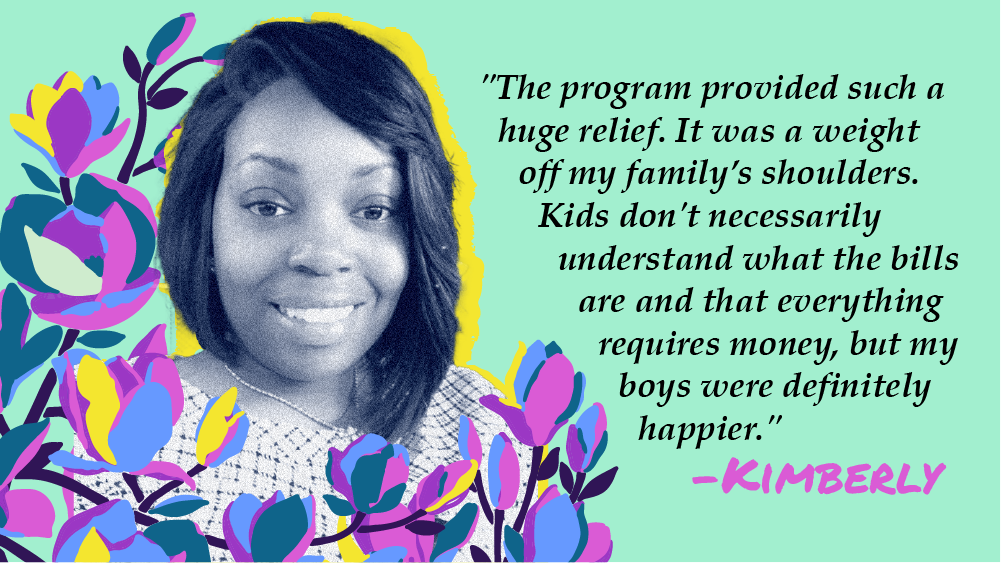
Equity also looks like the year that my mom was a part of the Magnolia Mother’s Trust. With the additional funds and support that she got during that year, I could tell that she was a lot more relaxed. We had more food in the house. She was able to buy us new clothes and pay my football fees without the extra worry. My mom had the chance to just be a mom without so much stress. She has always worked so hard to take care of me and my brother and be the best mom that she can be. Getting to watch her spend that year still getting to be our mom, but without so much worry about money, was really special. Giving moms like mine the extra resources they deserve to take care of their families is another example of equity.
This is why I think learning our history is so important. Even though we haven’t achieved real equity in this country, a lot of people have been fighting for a long time for the freedoms we do have, and we have to know what those are or we are at risk of going backward. It is our job to continue that fight. But in order to do that, we have to know what happened first and where we came from.
It is also part of what made my time in the fellowship and now on the youth leadership council feel so important. Before joining, I really only knew other kids in my apartment complex and at school. But I have now met a lot of other kids from all over the city who have learned the same things about our history that I have and want to be a part of advocating for more equity in our world. It is really cool to know that I have friends and a community advocating for the things we want together.
I’m still figuring out some of my own dreams for my life. I love football, and I do hope to get to play Division 1 football in college in a few years. But I am also really interested in animals and have thought about becoming a veterinarian. Ever since I was a kid, I’ve loved animals, and I would especially want to work with wild animals that are starting to go extinct. I think it is amazing that God has given us all these different types of animals on earth, and every generation after us should get the chance to experience them.
What I know for sure is that I want to keep being in communities like the one I have here where people want to grow, learn and advocate together. Because I think together, we can fight not just for equality, but for real equity.
Kim: ‘It Is an Honor as a Mother to Get to See Her Child Grow’
I am so proud of Kentavius and what he has shared. It is an honor as a mother to get to see her child grow into such a thoughtful and knowledgeable young man. Each day, I watch him learn a little bit more about the world, and I admire the way he has found his place within it. I know how much he is capable of, and I have no doubt he will be able to achieve all his dreams.
As he continues to find his way, my hope and prayer for Kentavius is that he will continue to dream big, work toward his goals and use his voice to advocate for himself and his whole community. Hearing Kentavius’ story helps me believe we can achieve the equitable world he speaks so beautifully about.