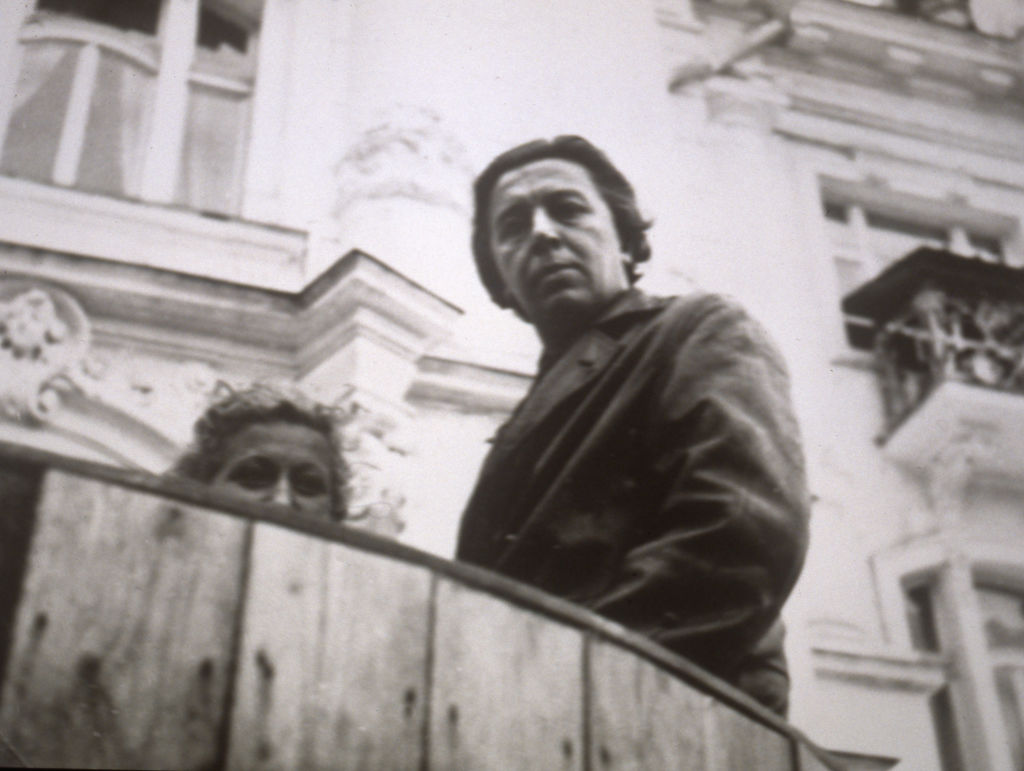
A note from Ms. editors: Jacqueline Lamba lived in the shadow of her French poet husband and was essentially erased from modern art history. A new groundbreaking biography Jacqueline Lamba: The Forgotten Surrealist (published April 7, 2026, by Merrell Publishers) from art historian and author Salomon Grimberg, repositions Lamba as a major creative force in her own right, while uncovering a previously unknown love affair between Lamba and Frida Kahlo.
Jacqueline Lamba: The Forgotten Surrealist is the story of a woman who, refused to live for others to stay true to herself. Born to parents who wanted a boy, she was named Jacqueline but called “Jacquot,” dressed in boys’ clothing and treated as an “incomplete son.”
Growing up beautiful only brought new pressures. She hoped external praise would heal her childhood wounds and silence her inner turmoil. Seeking poetic awe, she married André Breton and joined the surrealists. When her youth faded, that validation vanished, and her old shadows returned. By finally facing them, she used painting to find the light and transform.
The following is excerpted from Jacqueline Lamba: The Forgotten Surrealist by Salomon Grimberg, lightly edited for length and style.
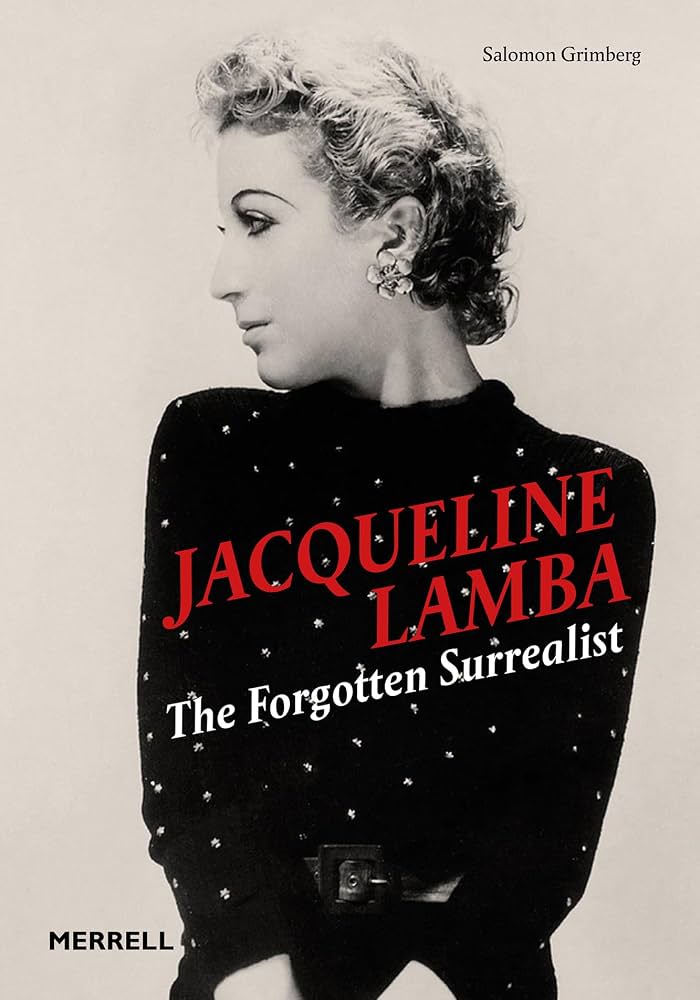
To an American friend, Jacqueline Lamba wrote a one-line letter in English on Wednesday, June 12, 1954. He had asked, ‘Why the long silence? … Are you angry?’
‘Absolutely not,’ she replied, ‘I am simply empty and insatiable.’
Having split from her second husband David Hare two years previously, Lamba had returned to France from the United States, and their separation was taking its toll. Light, the emotional source in her painting, had started to fade.
In quiet moments, Lamba’s thoughts would often turn to the memory of her father. As her older sister, Huguette, explained: ‘She used to say that the only thing she recalled about my father was that one day, when she was enraged, he took her in his arms, walked to a balcony, where there were many flowers, picked one and gave it to her. That calmed her anger.’
Their father died when Lamba was only 3 and a half years old, and her continued yearning for more time with him gave rise to her belief that her life would have been different had he lived. This early memory became the cornerstone of her emotional life.
A friend remembered: ‘Right before her death, Jacqueline spoke about his [her father’s] death as the great tragedy of her life because he really had loved her.’
To the outside observer, the life of Jacqueline Lamba may seem simply extraordinary, but her belief that it was tragic suggests that, in spite of appearances, she lived in pain. To soothe herself, she often tried building lives with others that might fill the void left by the loss of her father at such a young age.
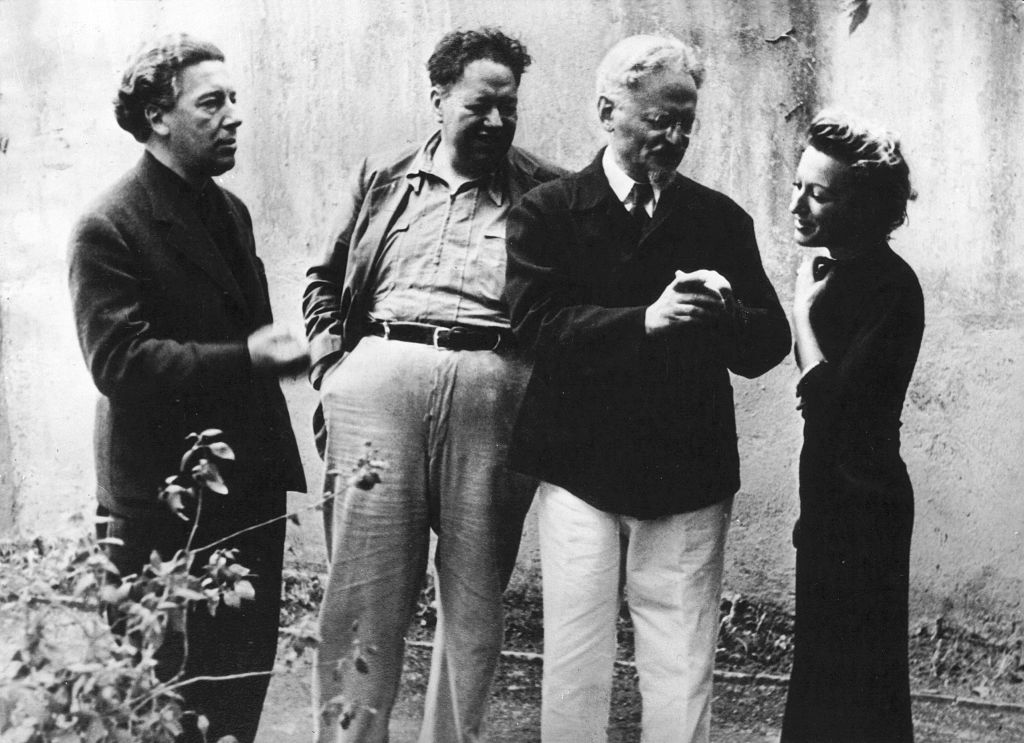
She had been certain that a life of poetry with André Breton would do it.
When that failed, she turned to David Hare’s unbridled passion.
On both accounts, she was mistaken.
Another friend would later summarize: ‘André wrote Mad Love for her. David showed her it [mad love].’
But neither man could demonstrate his love for her as convincingly as her father had with the gift of the flower that quelled her rage.
Walking on the street with Huguette one summer afternoon, Lamba suddenly asked her: ‘What do you want? I really don’t want to get with a third man. Two are enough. Men want women for only one thing—they just want us to sew their buttons. I am done.’
Days later, the doorbell rang. Lamba was living on 46 rue Gay-Lussac, Paris, in a sixth-floor walk-up. When she opened her door, Alberto Giacometti was climbing the stairs, muttering, ‘Ah! I’m fed up! This is going to fall.’ He was holding his abdomen with both hands. Lamba had known him since her early twenties, when he and Pablo Picasso adopted her as their little sister.
‘Are you ill?’ she asked him.
‘No, the top button popped off my pants, and the string I was using has broken. Will you sew a button for me?’
Sewing Giacometti’s button felt natural to Lamba; he was not like other men. He knew who he was, and did not need encouragement or approval.
…
In her aloneness, Lamba reconnected to the Divine and relived the experience of being one with the universe.
In Biot, France, she began painting her signature works—intense greens, bright reds, translucent pinks, yellows and blues—but few were privileged to see them firsthand. She entered a visual dimension overlooked by less intuitive painters. Until then, she had painted freely, but in Biot she took her time applying translucent glazes, allowing the bright white canvas to shine through the landscape.
Thereafter, for the rest of Lamba’s productive life, the sense of wonderment experienced in Biot was reproduced in her work.
The following year, she painted the ruins of a 10th-century castle perched on the jagged peak above the village the of Sainte-Agnès, from the flank of the mountain perched high above Menton.
Beginning in 1963, then off and on for some 17 years, Lamba painted in the countryside, working on studies and canvases. Henri Laugier, her old friend from the Recherche Scientifique, with whom she was having an affair, owned the 16th-century manor where she stayed in Simiane-la-Rotonde, a 12th-century village on a rocky hill in Provence. It overlooked a squared plain she described as ‘angled by rays of sunlight, with blossoming flowers of all colors: valerians, stocks, Spanish lilac bushes, hollyhocks bursting into bloom in the sun and cats sleeping under the moonlight.’
Visitors discovered her monastic schedule was best not disturbed. Pouring herself into her work, Lamba became increasingly attuned to the rhythm of nature and found herself creating images shaped by apperceptions of the landscape.
As Lamba suspected, by surrendering to solitude, wholeness found her. Focused attention meant discovering each moment has a life of its own and, when observed, it teaches about life’s richness. Day after day, Lamba followed the same ritual—she woke up early, painted past midday, took long walks and in the evenings prepared dinner mindfully. These walks gave rise to moments trapped in miniature watercolors copied into small notebooks. In obsessive detail, she transformed sumi-e ink calligraphy drawings and asemic texts into mountains or streams. Any of these she might use at a later date and turn into paintings. To bind the writing, white paper became light source and medium.
Excerpted from Jacqueline Lamba: The Forgotten Surrealist by Salomon Grimberg. Copyright (c) 2026 by Salomon Grimberg. Used with permission of the publisher, Merrell Publishers.
*
A note from Ms. editors: We want to hear from you for The Majority, a new campaign collecting stories about how reproductive freedom has enabled readers to build the lives they want and need.

Poll after poll shows a majority of Americans support reproductive healthcare access. Yet public debate overlooks the lives shaped by abortion access, contraception, IVF, miscarriage care, maternal healthcare or comprehensive sex education—countless women who chose to pursue an education, have children, not have children, protect their health and chart their own future. What’s your reproductive freedom story? Add your voice. Together, these stories will help show not only why reproductive freedom remains a majority value, but also what it makes possible.