FAQs About the SAVE America Act and Its Impact on Voters

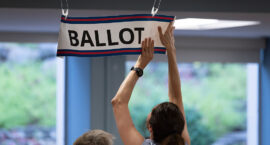
As the SAVE America Act heads toward a Senate showdown, Republican leaders are preparing marathon debate sessions that could stretch late into the night. The legislation, backed by Trump, would require Americans to present documentary proof of citizenship, such as a passport or birth certificate, in order to register to vote in federal elections.

As the political fight intensifies, confusion about what the bill would actually require has spread widely online and across social media. Supporters describe the measure as a simple election-integrity policy, while critics warn it could create sweeping new barriers for millions of eligible voters who do not have ready access to the required documents—including many women whose current legal names may not match the names on their birth certificates after marriage.

To cut through the noise, Ms. has put together this guide to the SAVE America Act, answering common questions about what it would do and how it could affect your right to vote, including: Does a Real ID count? What if I can’t find my passport? And why are Trump and Republicans pushing so hard for this bill?

There Is Power in the Word ‘Patriarchy.’ We Need to Start Using It.

News commentators still overlook the obvious when they speculate about why the majority of white female voters in the last three presidential elections cast their ballots for a dishonest, fraudulent, racist, misogynistic sexual predator or why people who call themselves Christians support someone who embodies in virtually every way the opposite of “what would Jesus do?”

I’m tired of snapping at the talking heads on the TV or computer screen, “Come on, say the P word! It’s the patriarchy, stupid!”

We can trace harmful sex binaries, reproductive control and white Christian nationalism back to the same root system: patriarchy. Naming it is the first step toward dismantling its power. 

Another Casualty of Trump’s New Foreign Policy: Women

For decades, policymakers across political parties understood that political, economic and social progress cannot be achieved by leaving half the population behind. Advancing women’s opportunities, leadership and rights through foreign policy and programs was seen not only as the morally right course, but as an effective strategy for promoting peace and prosperity around the globe.

The first Trump administration, in recognition of these facts, took actions that seemed to belie support for women’s economic empowerment—for example, President Trump signed the bipartisan Women, Peace and Security Act into law in 2017 to advance women’s leadership and protect women in times of conflict.

But Trump’s second administration has taken a sharply different approach, mounting a sustained assault on women’s rights and reversing bipartisan policies his own administration once championed.

Democracy Is Not Self-Executing: How We Shape a Better Government Through Laws, Institutions and Culture

Weekend Reading on Women’s Representation is a compilation of stories about women’s representation in politics, on boards, in sports and entertainment, in judicial offices and in the private sector in the U.S. and around the world—with a little gardening and goodwill mixed in for refreshment!

This week:
—The SAVE Act would block women, young people and low-income people from voting.
—Crowded Illinois primaries call for ranked-choice voting.
—The American women’s hockey team wins gold at the Winter Olympics in Milan.
—An election in Denmark could extend women’s leadership

… and more.

War on Women Report: Kentucky Woman Arrested for Miscarriage; Kansas Anti-Trans Bill Takes Effect; Polls Show Most U.S. Women Disapprove of Trump

MAGA Republicans are back in the White House, and Project 2025 is their guide—the right-wing plan to turn back the clock on women’s rights, remove abortion access, and force women into roles as wives and mothers in the “ideal, natural family structure.” We know an empowered female electorate is essential to democracy. That’s why day after day, we stay vigilant in our goals to dismantle patriarchy at every turn. We are watching, and we refuse to go back. This is the War on Women Report.

Since our last report:
—Texas Attorney General Ken Paxton is suing Delaware abortion provider Debra Lynch, who operates the organization Her Safe Harbor, for allegedly mailing abortion pills into Texas.
—More than a year after seeking medical help for a miscarriage, Deann and Charles Bennett, a young couple in Booneville, Ky., have been arrested for alleged “reckless homicide.”
—Trump’s Department of Justice used the Freedom of Access to Clinic Entrances (FACE) Act, intended to protect abortion clinics from harassment, to prosecute journalist Don Lemon for attending an anti-ICE protest.
—The Trump administration withdrew a Biden-era rule that required pharmacies receiving federal funding to carry and dispense mifepristone, misoprostol and methotrexate.
—Arkansas’ near-total abortion ban is facing its first legal challenge since Dobbs
—Some good news from Cleveland: The Cleveland City Council passed Tanisha’s Law, creating a Community Crisis Response department to respond to non-violent mental health emergencies with trained, unarmed crisis teams.
—In a landmark victory for survivor accountability, an Arizona jury in Phoenix has ordered Uber to pay $8.5 million to Jaylynn Dean.
—Also in Arizona: Judge Gregory Como struck down several abortion restrictions, ruling them unconstitutional.

… and more.

Immigration Detention Is Failing Women and Children—By Design

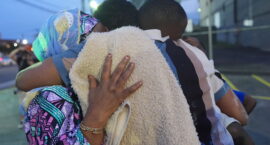
The South Texas Family Residential Center in Dilley has been the subject of an onslaught of headlines in recent weeks, but the truth is, it’s been routinely criticized for inhumane conditions for years. But what we are seeing now, as Trudy Taylor Smith put it to me, is horror “on a shocking scale.” Children describe being served worm-infested food and dirty water, getting little or no classroom time and being perpetually sick. A toddler nearly dies because of medical neglect. A teenage boy with symptoms consistent with appendicitis is turned away by a nurse. There is no better way to describe it than state-sponsored child abuse.

If this isn’t stomach-churning enough, consider what is happening a few hours south, where girls’ reproductive healthcare and freedom is also in grave crisis. Pregnant and unaccompanied migrant children are being sent to San Benito, Texas.

Why Texas? Why else? … Because it is a place where abortion is illegal and high-risk pregnancy care is unavailable.

“Putting pregnant kids in San Benito is not a decision you make when you care about children’s safety,” one source said plainly.

This is entirely by design, pulled straight from the Project 2025 playbook. The constant split-screen scene in Texas is representative of the nation MAGA wants us to be, “where the cruelty is the point” and where the anti-immigrant, anti-woman, anti-freedom banner is flown.

We have to keep these stories—and all the women and girls in this state, willingly or not—front and center in the democracy movement. Their humanity is at the heart of all of ours.

Keeping Score: Voters Disapprove of Kristi Noem and ICE; Winter Olympics Nears Gender Parity; Challenges to State Abortion Bans Continue

In every issue of Ms., we track research on our progress in the fight for equality, catalogue can’t-miss quotes from feminist voices and keep tabs on the feminist movement’s many milestones. We’re Keeping Score online, too—in this biweekly roundup.

This week:
—“Kristi Noem sees immigrants like me as subhuman,” says Santiago Mayer, executive director of Voters of Tomorrow.
—A majority of U.S. voters think DHS Secretary Kristi Noem should be removed, and disagree with how ICE is operating.
—Women are 47 percent of athletes at the Winter Olympics in Milan.
—California Gov. Gavin Newsom fired back at threats from Louisiana over abortion protections.
—President Trump appointed no women of color to federal judgeships in his first year in office.
—A new Kansas law introduces a “bounty hunter” aspect to transphobic bathroom bills.
—Some ICE detention facilities and prisons refuse to provide appropriate menstrual products.
—A Kentucky couple was arrested over a year after seeking care for a miscarriage.
—A wave of “common sense” candidates, more than half women, recently won competitive school board races in swing states. Sixty-two percent of “extremist” candidates lost their elections, showing that culture war tactics like book bans may no longer resonate with local voters.

… and more.

Trump Touts a ‘Roaring Economy.’ Families Say Otherwise.

In his State of the Union address, President Trump opened by boasting about a roaring economy, falling inflation and a richer and stronger nation. But those claims ring hollow for many Americans who feel economic security slipping further out of reach, a reality made worse by the policies he and his Republican Congress have championed.

In Tucson, Ariz., Angelica Garcia begins most mornings waiting for her Lyft app to ping. She’s a driver raising three children in a two-bedroom apartment that costs $1,400 a month. Her summer electric bills hover around $300. At the grocery store, it costs her over $100 just to cover basic essentials. Angelica and her children rely on Medicaid and SNAP. Medicaid covered her daughter’s broken arm and her son’s tonsil surgery. “It’s been a blessing. A godsend,” she says.

But her representative in Congress, Juan Ciscomani (R), voted to cut Medicaid and SNAP and to impose new work requirements.

Meanwhile, in Iowa, a retired woman named Jill is enrolled in a Marketplace healthcare plan that once cost her $75 a month thanks to enhanced Affordable Care Act subsidies. But when Republicans voted against extending those subsidies, her premium jumped to nearly $800 a month.

Her representative in Congress, Marianette Miller-Meeks (R), voted to let those subsidies expire.

In Eau Claire, Wis., Erin Klaus has spent 17 years building up and running her small business. Erin’s representative in Congress, Derrick Van Orden (R), voted to protect Trump’s tariffs—tariffs that made small businesses like hers pay upfront, even as multinational corporations are better positioned to shift supply chains or pass along costs.

A White House Invite, a Punchline—and a Choice for the Men of Team USA

Both the U.S. women’s and men’s ice hockey teams won gold at the 2026 Milan-Cortina Winter Olympics. Yet, within hours of defeating Canada, only the U.S. men’s hockey team received a congratulatory call from President Donald Trump and an invitation to the White House.

What should have been a routine celebration of athletic excellence instead became a revealing cultural moment. 

After extending the invitation, the president joked, “I must tell you, we’re going to have to bring the women’s team,” adding that he would “probably be impeached” if they were not invited. Laughter followed.

Some have dismissed the comment as harmless—just a joke, just locker room talk, boys being boys. But humor has long been one of the ways inequalities sustains itself. Framed as harmless, softened by laughter and repeated often enough, it teaches audiences what is acceptable and what feels risky to challenge.

When women’s inclusion becomes a punchline, the triumph no longer belongs equally to everyone it represents.

Texas A&M’s Women’s and Gender Studies Closure Signals a Wider Crackdown on Academic Freedom

Texas A&M University’s decision to eliminate its women’s and gender studies program is not happening in a vacuum. For years, the university has steadily rolled back programs, courses and resources tied to gender and LGBTQ+ studies, leaving students and faculty with fewer spaces to learn, teach and engage with these subjects.

Now, with the program gone and new classroom restrictions in place, the impact is being felt directly by the people who rely on these courses to study, teach and understand the world around them.

For many students and educators, this moment feels like part of a much larger shift unfolding across the country. As universities scale back programs and limit discussions around race, gender and sexuality, what can be taught—and who feels supported in the classroom—is rapidly changing. The closure at Texas A&M reflects a growing national pattern: one that raises urgent questions about the future of academic freedom in public higher education.