Serious Work Begins to Create a Treaty on Crimes Against Humanity

Afghanistan. Myanmar. Syria. The Democratic Republic of the Congo.

Over the last 80 years, there has rarely been a situation of atrocity that has not been marked by the commission of crimes against humanity. These crimes, defined by their widespread or systematic nature, target civilians and devastate societies.

Yet, while the international community has created legal regimes to address war crimes and genocide, we lack a global legal architecture for the prevention, suppression and punishment of crimes against humanity, leaving millions across the globe at risk and justice elusive for survivors.

The start of negotiations for such a treaty is not just overdue; it is of historic importance. Late last month, the United Nations General Assembly launched a four-year process to prepare for and negotiate a new global treaty to prevent and punish crimes against humanity by 2028. If it is crafted with ambition and resolve, it can be a game-changer for international accountability, strengthen the rules-based order and offer hope and justice to victims and survivors.
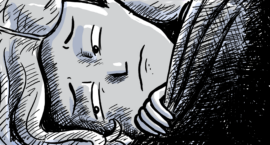
‘I Needed to Know I Was Not the Only One’: Talking Honestly About Pregnancy Loss and Reproductive Grief

Award-winning cartoonist Chari Pere and award-winning author and psychologist Dr. Jessica Zucker are on a mission to normalize talking about the complexities of reproductive grief in order to help people feel less alone.

Reproductive grief encompasses the range of emotional, psychological and even physical responses that can follow experiences like miscarriage, stillbirth, infertility, termination for medical reasons or other disruptions in a person’s reproductive journey. It is a kind of loss that is often invisible to others but deeply felt—an ache shaped not only by what happened, but by what could have been. Despite how common it is, reproductive grief remains largely unspoken, shrouded in silence and shame.

‘She Rubbed Me the Wrong Way’: Why Trump Punished a Woman Head of State for Saying No

Under the Jan. 21 headline “‘She Just Rubbed Me the Wrong Way’: Trump Suggests Swiss Tariffs Were Personal,’” The New York Times quotes Trump quoted as saying, she was “’so aggressive.”

Seeking to make sense of the existential anomie that flooded me after reading the article, it quickly became apparent that that much more was at play here than a clash of personalities, as suggested by Times’ headline. Accordingly, as I began envisioning the article I would write, my initial aim was to locate Trump’s remarks within the broader context of his administration’s attacks on women and the LGBTQ+ community. 

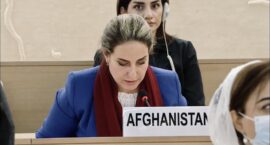
Why International Law Still Fails Afghan Women

Since the Taliban’s return to power in August 2021, Afghan women and girls have been progressively removed from almost every sphere of public life. Girls are banned from secondary and higher education. Women are excluded from most employment, face severe restrictions on movement and have been rendered legally invisible. Institutions responsible for protecting women’s rights have been dismantled.

In early December, the international Permanent Peoples’ Tribunal in The Hague presented its verdict on the situation of women and girls in Afghanistan. Two days later, on Dec. 13, the French Senate convened a high-level colloquium titled “No Peace Without Women: Their Representation in Diplomatic, Military and Political Bodies.”

Together, these two forums—one judicial-moral, the other parliamentary-political—converged on a stark conclusion: The exclusion of Afghan women is systematic, intentional and state-imposed. At the same time, they exposed a critical gap in international law, one with far-reaching implications for the United Nations system, international accountability mechanisms and the global women, peace and security agenda.

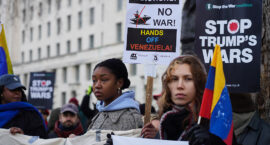
Trump, Venezuela and the High-Stakes Fight Over the U.S. Dollar

You and I survived New Year’s Eve and tried to look ahead to a better 2026. Then came the invasion of Venezuela—along with a giant serving of lies.

Trump is not the president of Venezuela. The United States is not “running” the country. He never deserved the Nobel Peace Prize, and he never spoke to oil executives about fentanyl or democracy before invading. When reporters asked what the U.S. planned to do with seized Venezuelan oil, Trump answered with stunning casualness: “Well, we keep it, I guess.” And who exactly is “we”?

Behind the bluster lies something far more dangerous than incompetence: a high-stakes effort to seize oil, prop up the U.S. dollar and maintain global economic dominance as rival powers work aggressively to move beyond it.

U.S. Turns Its Back on Global Efforts for Women and Children Terrorized by Violence and Conflict

The Trump administration’s recent announcement that it is withdrawing from 66 international organizations and treaties is another blow to the global system where all countries unite to share concerns, agree on rules of conduct and determine agendas for collective action.

With the White House already defunding the foreign assistance that supported many of these organizations and the U.N. system, regardless of congressional appropriations, this stated withdrawal is unlikely to alter much for these organizations in the short term.

The loss is likely greater for America.

Foreign policy experts assert that leaving the U.S. seat empty at the table will result in an increasingly isolated America and enable its adversaries, such as China, to fill the void.

U.S. withdrawal from these organizations also risks undercutting lasting peace and human rights accountability, especially for women and children terrorized by violence and conflict.

What One Year of Trump’s Second Term Has Cost Women, at Home and Worldwide

Trying to take stock of what’s happened in the year since Donald Trump took office for the second time is a daunting task—from the barrage of executive orders, to the appointment of unqualified Cabinet members, restructuring and elimination of federal agencies, mass firings of federal employees, attacks on universities and women’s studies programs to elimination of diversity programs, and more.

It’s not just women in the U.S. who are being impacted: the dismantling of USAID funding last year, and most recently Trump’s radically expanded global gag rule, announced Friday, threaten the lives and well-being of women worldwide.

Each move is a blow to our fundamental rights, and we can’t let any action go unnoticed.

How We Build a Better System: Celebrating Ranked-Choice Voting Day

Weekend Reading for Women’s Representation is a compilation of stories about women’s representation in politics, sports and entertainment, judicial offices and the private sector—with a little gardening mixed in!

This week:
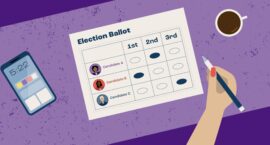
—Friday marks is Ranked-Choice Voting Day, an annual event held every Jan. 23 (1-2-3) to celebrate a proven, people-powered reform that strengthens democracy by giving voters more choice and candidates a fairer path to office. 
—Steven Hill and Paul Haughey call a 2023 study from the University of Minnesota repeatedly cited by opponents of ranked-choice voting “one of the most error-prone” they encountered—relying heavily on cherry-picked citations, simulated elections and surveys disconnected from how voters actually behave in real contests. 
—We honor the life and legacy of Claudette Colvin, an icon of the Civil Rights Movement.
—The Vermont Voting Rights Act seeks to codify key federal voting protections in the state.
—Portland reaches an important compromise in their City Council elections.

… and more.

‘Every Vote Counts’: What Women Leaders Know About Fixing Broken Political Systems, From Iceland to Washington

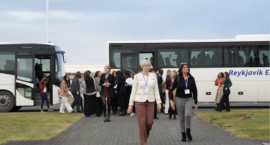
At the Reykjavík Global Forum on Women Leaders in Iceland, women political leaders gathered with warmth and purpose to confront the most pressing challenges of our time.

We talked about democracy, leadership, activism and power-building. We talked about fear. About childcare. About boys who aren’t sure where they fit in this “new” world. About deadlines and death threats, ranked-choice voting—and the deeper reasons why they keep doing this work despite the challenges.

Amid those conversations, three interviews in particular stayed with me: Liz Berry, a Washington state representative who campaigned with a 6-week-old baby; Eliza Reid, Iceland’s former first lady and author of Secrets of the Sprakkar: Iceland’s Extraordinary Women and How They Are Changing the World; and Alison Comyn, an Irish journalist-turned-senator from a country that’s used proportional representation—a form of ranked-choice voting—for generations.

Taken together, their stories sketch a kind of roadmap: how we change the rules, how we change ourselves and how we do this work together. They also leave us with a question: Could my city, state or party pilot a system where “every vote counts,” and more than two parties can breathe? And, if so, how can I help make that change a reality?

Who Controls Mifepristone? The Politics Blocking a New Era of Contraception

Mifepristone “works against endometriosis. It works against myoma [fibroids]. We are now involved in a study group that looks at whether it can prevent breast cancer,” says pioneering reproductive-health advocate Dr. Rebecca Gomperts. “It has so many potential uses, and it hasn’t been [developed].

“If we as women don’t make sure that it becomes available to meet our needs … then it won’t happen.”

This is the final installment of a new series, “The Moral Property of Women: How Antiabortion Politics Are Withholding Medical Care,” a serialized version of the Winter 2026 print feature article.