Rolling Up Our Sleeves, Part 1: Fighting the New Trump Administration’s Wave of Extremist Actions

After a narrow political victory in November, a second Trump administration is now threatening to reverse decades of hard-fought gains for women and girls. Luckily, a fierce feminist resistance is ready to defend women’s rights at the federal level—and creatively expand equality protections in the states.

This is the first in a four-part series on the steps activists are taking to fight for our rights amid Trump’s attacks on democracy.

This Is the Power-Grab Moment

Trump is not a small-government conservative because he read Ayn Rand in college. He’s a government-of-one conservative: an authoritarian.

What Trump has done here is not just a funding pause. It is a test: Will members of Congress comply with increasingly extreme acts—acts that strip their power, publicly humiliate them and anger their constituents? Will Congress and the public agree that in order to receive federal funding that Congress has already allocated, every single agency and organization that receives such funding has to demonstrate their loyalty to far-right Trumpian ideology? Will the people who make up the federal government decide that the foundation of American democracy—the separation of powers, put into place in part to ensure that the nation would be governed by representatives of people and not a singular king—is worth preserving?

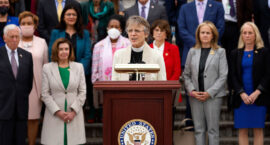
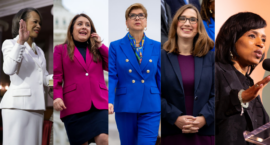
Meet the New Feminists in Congress Who Are Fighting Back

The progressive women newly elected and sworn into office—including three non-incumbent senators and 16 representatives—offer a glimmer of “bright hope” as the country enters a second Trump administration.

All of these women know that they’re entering a complicated political landscape, one that’s heavily partisan and disheartening to many of their constituents. They’re also experienced and driven, ready to work across the aisle as necessary while remaining dedicated to important causes, from protecting abortion rights and supporting the LGBTQ+ community to advocating for gun control, judicial reform, affordable healthcare and public education. These women come from all walks of life, sectors of the workforce and backgrounds. Some worked retail or food service jobs to pay their way through school. Others have been lifelong public servants or dedicated themselves to volunteering. They’ve been working physicians, engineers, attorneys, climate change activists, CIA analysts, mayors, state representatives and senators, education advocates, executive directors of nonprofits and small-business owners. They are Black, white, Latina and Middle Eastern. Some are proud members of the LGBTQ+ community. Many are from working-class backgrounds. Some are mothers and even grandmothers. Several are first-generation college graduates or the children of immigrants.


Why Raising the Minimum Wage Beats Tax Breaks for Tipped Workers Every Time

It’s a brand new administration, and the new prez is determined to fight for the underdog—if his past pronouncements can be taken seriously. Case in point? Trump’s campaign declared last June, “When I am president, we will continue our fight for working families of America, including to raise the minimum wage and eliminate taxes on tips for service and hospitality workers.”

If the new Congress passes the bill, it should be a real boost for low wage workers who depend on tips to make ends meet—right? Well, not exactly. Cutting taxes on tipped wages sounds great, until you get under the hood and learn that most tipped workers don’t earn enough to pay taxes in the first place. It’s what you might call a phantom benefit, but it sounds good when politicians propose getting rid taxes on tips.

Burnout Is Real. The Remedy Is Pro-Democracy Work.

If experienced democracy activists and funders are feeling burned out, imagine how high school students are feeling.

You may find it hard to consider high school voter registration important when federal health agencies are ordered to cease external communications, when nondiscrimination efforts are stopped in their tracks, when security details are being ominously removed from public servants who face threats to their lives, or when Senate-confirmed inspectors general are fired late at night.

In the face of all this, though, high school voter registration remains important—because democracy is important. Because the power to press back against authoritarianism is in our hands. Because genuine progress is possible and individual and collective effort can make a real difference.

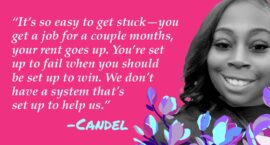
‘Set Up to Fail’: A Mississippi Mother on What the U.S. Gets Wrong About Poverty

A 38-year-old single mother in Jackson shares her struggles with poverty, systemic barriers and the daily sacrifices she makes to create a better future for her children—and why real change begins with investing in Black women like her.

Front & Center began as first-person accounts of Black mothers living in Jackson, Miss., receiving a guaranteed income. Moving into the fourth year and next phase of this series, we’re expanding our focus beyond a single policy intervention to include a broader examination of systemic issues impacting Black women experiencing poverty. This means diving deeper into the interconnected challenges they face—including navigating the existing safety net; healthcare, childcare and elder care; and the importance of mental, physical and spiritual well-being.

The Dangers of Weaponizing Health and Science: The Ms. Q&A with Dr. Michele Goodwin

Within the first few days of his second term, Donald Trump’s threat to the country’s health was evident. The Trump administration has already ordered federal health agencies to cease public communications, directed agencies to cancel meetings to review biomedical research, and pardoned 23 individuals who violently interfered with patients’ care at reproductive health clinics—all without a confirmed secretary for Health and Human Services (HHS). Trump has promised to let his HHS secretary nominee, Robert F. Kennedy Jr., “Go wild.” RFK Jr. faces his first of two confirmation hearings this week, on January 29, and a vote will follow sometime in the coming weeks.

Ms. spoke with Dr. Michele Goodwin, the co-faculty director of the O’Neill Institute for National and Global Health Law at Georgetown University and executive producer of Ms. Studios, to understand the devastating health consequences of a Trump-RFK Jr. team, where we can focus our energy in response, and how to hold on to hope over the next four years.

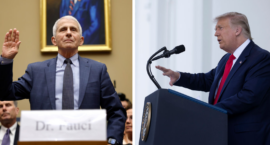
Reflecting on Trump’s Immunity Win Before the Supreme Court as He Strips Security Details From Former Government Officials Under Threat

Mere years after the Civil War, in United States v. Lee, the Court recognized that “[n]o man in this country is so high that he is above the law. No officer of the law may set that law at defiance with impunity. All the officers of the government, from the highest to the lowest, are creatures of the law, and are bound to obey it.” 

One week into the Trump administration, this wisdom rings hollow.