Rest in Power, Dolly Parton: Feminist Country Icon, Advocate for Women and Children, Philanthropist and Gifted Songwriter

Dolly Parton understood the power of being underestimated. Beneath the rhinestones, towering blond hair and self-deprecating jokes was a gifted songwriter, a shrewd businesswoman and a philanthropist whose work transformed the lives of millions of children and families.

Parton left behind a body of work that stretches far beyond the songs and films that made her one of the most beloved performers in American life. She sang about the dignity of working women. She placed hundreds of millions of books in the hands of children. She supported healthcare, disaster relief and lifesaving medical research. And she repeatedly used her enormous cultural influence to affirm the humanity of people who were too often marginalized, including Black and LGBTQ+ Americans.

Parton’s concern for women and children was expressed not only through her art, but in what she did with the wealth and influence her art created. We heard her legacy in the songs that made working women feel seen. We saw it in the books delivered to children, the families supported after disaster and the medical research that saved lives.

May Dolly Parton rest in power. May her legacy live on in every child who discovers a new world inside a book, every woman who demands dignity in the workplace and every person who chooses compassion when indifference would be easier.

Care Is Becoming America’s Strongest Form of Resistance

This midterm season, as courts and legislatures chip away at who gets to have a voice in our elections and governance, shoring up our democratic infrastructure is more important than ever. An unlikely tool in the arsenal of democracy? Care.

When Immigration and Customs Enforcement (ICE) raids intensified in Minnesota this year, fear spread through neighborhoods almost overnight. Families stopped going to work. Parents kept children home. Immigrant-owned businesses lost customers. Communities began retreating from public life.

Organizers responded quickly with a clear request. They asked people to care for one another.

Moms especially jumped in, providing rides to school, groceries delivered to families afraid to leave home, emergency rent assistance, childcare and meals. Neighbors checked in on each other. They created secure networks to communicate needs and organize responses.

They also reveal something much bigger. Minnesota is becoming a case study in what communities across the country are confronting as federal policies reshape daily life.

While federal policy creates these structural hurdles, the Minnesota model proves they are not insurmountable. But Minnesota offers another lesson. The same networks of care that help families survive also help communities organize. When people know one another through acts of mutual support, they build relationships that make collective action possible. They become more likely to solve problems together, advocate together and defend one another when public institutions fall short.

Skye Perryman on How We Turn ‘Anger and Sorrow’ Into ‘Action’

“I know how you feel—because I’ve been there there too. On a bad day, and there are many bad days, our nation’s backslide from democracy into autocracy accelerates … Untrained, masked federal agents are running roughshod in our streets, terrorizing communities. Peaceful protesters have been killed. The government has been weaponized, and the Supreme Court feels stacked … It’s almost impossible to keep up; even harder to know what to do.”

So begins Skye Perryman’s sobering but hopeful and practical new book, Ordinary People, Extraordinary Times. Though this handbook for hard times is elevated by a we’re-all-in-it-together spirit, Perryman, an attorney and president and CEO of Democracy Forward, doesn’t sugarcoat what we’re all facing.

“We have to acknowledge that there is no cavalry coming to protect us,” she writes. “No knight in shining armor to save us from the situation we are in. It’s up to us. We are the people who decide what happens next.” And while daunting, she says “it can also be empowering to know how essential we are in the fight for freedom and our democracy.”

Perryman fervently believes that action is antidote. By “reclaiming our collective power,” and by using the “tools that ordinary people have used in extraordinary times before us,” she insists that together we can “fight for freedom today, build for a better tomorrow.”

New Kentucky Media Campaign Fights Back Against Abortion Ban After Criminal Prosecutions

Across Kentucky, pregnant women are facing growing surveillance and the threat of criminalization for pregnancy outcomes that are often beyond their control. Recent prosecutions have underscored how miscarriage, stillbirth and other complications can be treated not simply as medical events, but as potential crimes. At the same time, proposed legislation could expand that legal risk even further, deepening an atmosphere of fear and uncertainty in a state where abortion access is already nearly eliminated.

But people across Kentucky are continuing to organize, speak out and fight back. The Kentucky Reproductive Freedom Fund has launched a statewide and national video campaign amplifying the voices of physicians, medical students, faith leaders and patients living with the consequences of the ban. Their stories show that the harm is not abstract: The ban endangers lives, restricts medical training and undermines providers’ ability to deliver standard care—while making clear that healthcare decisions should be made by patients and their providers, not politicians.

How Can We Get More Young People to Vote? Start Registering Them in High School

This year, about 4 million Americans will turn 18, just in time to vote in November’s midterms. However, fewer than 30 percent of newly eligible young voters are currently registered to vote—half the number of students who go to college—and that percentage is only going down. In 2024, by comparison, 44 percent of U.S. 18-year-olds were registered, compared to approximately 75 percent over voters aged 45 and up.

For midterm elections in particular, not much more than a quarter of eligible 18-year-olds vote—meaning about 2 million young people are missing the chance to let their voices be heard.

A common refrain from some is that the younger half of Gen Z isn’t interested in voting or politics, but the data doesn’t back this up. According to research from The Civics Center, among 18-year-olds who are registered, voter turnout is high. More than 75 percent of registered young voters 18 through 24 have turned out to vote in every presidential election going back to 2004—suggesting the issue isn’t with young voters themselves but how they’re (not) being registered.

“Young people are told so frequently, ‘Your vote doesn’t matter, what you say doesn’t matter,’” Laura Brill, The Civics Center’s founder and CEO, told Ms. “And these things have a negative impact, because actually young people probably do know that they matter, and we don’t want to have a future where people are just feeling cynical and as if they’re intentionally being left out of the process.”

From Selma to Todd Blanche, U.S. Democracy Is Being Tested

Sixty-one years ago, President Lyndon B. Johnson signed the Voting Rights Act of 1965 into law—one of the most consequential victories of the Civil Rights Movement and a landmark affirmation of the principle that democracy belongs to all of us.

But the Voting Rights Act was not simply handed down from Washington. It was won through years of organizing, resistance and extraordinary courage—by people who marched, registered voters and risked their lives demanding that the federal government enforce a right already promised by the Constitution.

The lesson of Selma is not that the fight was won. It is that our rights survive only when people are willing to defend them.

We are seeing another test of that principle right now in the Senate.

Trump’s nominee for attorney general, Todd Blanche—his former personal defense attorney and now acting attorney general—has spent weeks struggling to secure enough Republican support for confirmation. The Senate Judiciary Committee advanced his nomination this week on a party-line 12-10 vote, only after Blanche made (non-binding) concessions to Republican senators concerned about a proposed $1.8 billion “anti-weaponization” fund connected to a settlement of Trump’s lawsuit against the IRS.

At Ms., we have been following Blanche’s record closely—from his role in the Justice Department’s horrific mishandling of the Jeffrey Epstein files, to his threats involving medication abortion and the Comstock Act, to larger concerns about whether as the nation’s top law enforcement officer he will ensure the independence of the Justice Department and defend the Constitution or the political interests of the president who appointed him.

Blanche’s confirmation is all but assured, with Senate GOP leadership planning to take up his nomination before leaving Washington for its August recess. His confirmation does not resolve the serious questions surrounding his independence—it makes vigilance and accountability all the more important.

Accountability is also at the center of another troubling story unfolding in Washington. Rep. Max Miller (R-Ohio) is facing allegations of domestic violence and child abuse from his former wife. His former father-in-law, Republican Sen. Bernie Moreno, has gone so far as to say Miller should not serve in Congress, while lawmakers and advocates have called for investigation and accountability. The standards we demand from our leaders—and whether institutions are willing to enforce them—tell us something fundamental about whose safety and dignity we value.

These stories may appear very different: the Voting Rights Act, the nomination of a corrupt attorney general, allegations involving a member of Congress. But they are connected by a basic question: What does democracy require? And what does it require of us?


‘To Be Forgotten Is to Die Twice’: The Fight to Protect the Graves at Ireland’s Bessborough Mother and Baby Home

Survivors and advocates in Ireland are fighting to stop the construction of luxury apartments on the grounds of the former Bessborough Mother and Baby Institute, where hundreds of infants who died in state- and church-run custody are believed to remain buried in unmarked graves. 

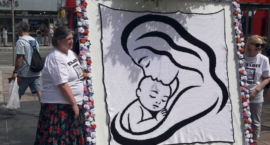
At a national rally on July 18 outside the Cork City Library—the site of the former Bessborough Mother and Baby Institute—survivors and their families warned building over the site would erase one of Ireland’s darkest chapters. There, survivors and their families spoke about their experiences. Advocates held a banner with the names of infants who died at Bessborough and others marched with signs reading “to be forgotten is to die twice.”

Bessborough is part of a system of containment institutes first founded back in the 1760s as places to help sex workers pursue more “moral” forms of employment. 

By the 1800s, these institutions—called the Magdalene laundries, or mother and baby homes—effectively became prisons for “fallen” or “immoral” women who deviated from strict social norms. Run by Christian religious orders and institutions, mother and baby institutes kept unmarried pregnant women hidden from public view in a Catholic country where unmarried pregnant women and girls were and are deeply stigmatized.

Inside mother and baby institutes—which received public funding and were run by religious orders—unmarried pregnant women and girls were hidden away and faced intense violence. According to the Irish Mother and Baby Homes Commission of Investigation, 11.4 percent of the people incarcerated in these institutions were minors. After their children were born and babies at least partially weaned, these women were forcibly separated from their children who would be taken for adoption. But many children died in these institutes because of systemic neglect and abuse.

On the Voting Rights Act’s Anniversary, Short Film ‘Selma Sisters March On’ Captures 1965’s Fight for the Right to Vote

Aug. 6, 2026, marks the 61st anniversary of the Voting Rights Act. Signed into law by President Lyndon B. Johnson in 1965, the VRA sought to end Jim Crow-era voter disenfranchisement. Particularly in Southern states, voting officials routinely required Black voters to jump through hoops such as “literacy tests” or arbitrary rules such as having to name every county in the state before voting. Even if a Black voter managed to make it this far, election administrators sometimes intentionally sent them to the wrong location to vote, ensuring their vote never actually got counted.

The Voting Rights Act made it illegal for states to discriminate against voters by race, color or language-minority status, thereby reaffirming all U.S. citizens’ constitutional right to vote. The VRA also introduced additional changes to make voting more widely accessible, such as ballots in languages other than English and protections for blind, disabled and illiterate voters.

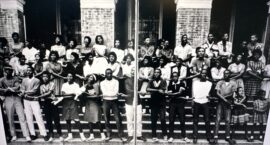
However, the VRA only became law after decades of struggle and widespread civil rights protests, including the famous marches from Selma to Montgomery, Ala., in March 1965. Protesters, many of whom were young students, faced violent attacks from law enforcement, from tear gas to imprisonment, as they fought for their right to vote.

Sisters Alice and Denise Thomas were only 16 and 14 when they joined the Selma to Montgomery marches and other protests in their home state of Alabama before the VRA became law. In the new short documentary Selma Sisters March On, the Thomas sisters describe in their own words the fateful events of 1965 as they experienced them as high school-aged civil-rights activists.

Never Surrender: Empowered Wives Were Never the Problem

Over the past year, several women-focused articles in the New York Times declared feminism has gone too far, and put the onus on women to fix what is broken.

An article asking if liberal feminism “ruined the workplace” broke the internet late last year.

An article last month featured a conversation with influential, right-wing columnist Louise Perry, about how women need to change, in order to close the growing gap between men and women. Perry’s position justifies re‑inscribing patriarchal control over women’s bodies and sexuality in the name of “protecting” us.

I feel a familiar sense of disappointment in the recent feature, “Women Are Too Controlling, She Wrote. Her Message Still Resonates,” about Laura Doyle, author of The Surrendered Wife, a 2001 self‑help book and the basis for a relationship “movement” that teaches women to relinquish control in their marriages, defer to their husbands’ decisions (including finances), and focus on their own “self‑care” and gratitude to restore intimacy and harmony.

Each article asks a version of the same question: How should women change?

Doyle’s message and the broader “surrendered wife” ideology, is troubling.

What struck me even more was that one of the country’s most influential newspapers presented it as a growing cultural trend, without examining the cultural forces and gender expectations that have long reinforced this ideology.

Women and feminism don’t need to surrender. They were never the problem.    

The People’s Bill of Rights 250 Invites Americans to Reimagine the Constitution

A new online public platform—The People’s Bill of Rights 250—invites Americans to propose, discuss and vote on ideas they believe belong in the Constitution. As the U.S. marks 250 years, the bold, interactive project asks Americans not only to reflect on the nation’s founding, but to help shape its future.

The nonpartisan organization The People and executive director Katie Fahey, alongside a coalition of civic, advocacy and cultural leaders, spearheaded the People’s Bill of Rights 250. It invites Americans to answer a simple question: What freedoms, rights and protections should every person in the country be guaranteed over the next 250 years?  

From now until Friday, July 31, Americans are encouraged to vote and share their own ideas at the People’s Bill of Rights 250’s website.