‘Sharing Our Stories Loosens the Grip they Have on Us’: Watching Students Claim Voice to Power

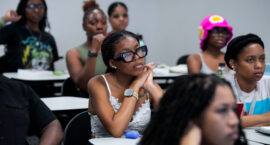
I have been a professor for almost 25 years and can’t imagine any other job. One of the most gratifying parts is being there for my students, but by June of every year, I’m tired. Especially after teaching The Power of Feminist Writing.

Misogyny induced pain and trauma shouldn’t only be acknowledged and validated in a gender studies classroom. The students and I should feel confident that *anyone* would believe our trauma is real. But we all know that is not the case, which is why many of us were sad to see the class end. 

Invest in Black and Latina Early Childhood Educators. Our Students Deserve It.

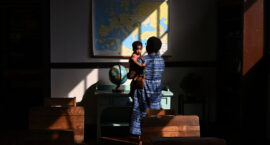
The latest Head Start reauthorization bill and President Biden’s 2025 fiscal budget include much-needed funding increases to raise educator wages. However, these gains are fragile, as evidenced by a recent Washington, D.C., budget proposal that would eliminate the Early Childhood Educator Pay Equity Fund, a program created in 2021 to achieve pay parity between early childhood educators and their K-12 counterparts.

As at-large Councilmember Christina Henderson pointed out, “It feels like we’re balancing the budget on the backs of Black and brown women in the childcare sector.”

A Georgia Law Restricts What Educators Say in the Classroom—But I Refuse to Be Silent

Reading may be fundamental to students’ education, but according to Georgia lawmakers, this is only the case if the ideas students read do not reflect “divisive concepts.” On such matters, educators are supposed to remain silent. 

Georgia’s so-called divisive concepts law does not expressly define the term. Therefore, even those who may wish to comply with the regulation can have trouble understanding what is prohibited.

As both a mother and a college department chair, I am concerned about these and other legislative actions, which aim to silence certain ideas. My perspective as a racialized minority matters.

If Sex Ed Isn’t Critical, Can We Really Call It Comprehensive?

“Comprehensive sex education” has become a lightning rod for controversy, igniting moral panic around young people learning about gender theory, sexuality, safe sex, abortion care and more. But my experience designing sex education programs has taught me that “comprehensive” sex education isn’t comprehensive enough. What’s missing is a critical approach to sexual education that examines the political, cultural and economic factors shaping sexual decisions and health. 

How ‘Dobbs’ Threatens the Future of Feminist Education

Dobbs hasn’t just restricted reproductive rights; it’s impacted the classroom. In some ways, this impact has been very direct. In 2022, the University of Idaho released a memo warning all faculty and staff to avoid counseling or referring anyone to abortion services while on the job to comply with a broad, unclear law preventing any state resources going toward abortion access.

This lack of clarity impedes feminist theorizing in women’s studies classrooms, especially, since women’s studies departments often serve as a locus for discussions of gender-based oppression on campuses.

The Arizona Abortion Fight Is a Reminder That Progress Is Not Linear

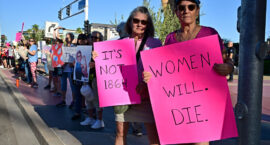
April’s U.S. political news admittedly brought many horrors—from Alabama legislators advancing a bill to define sex based on “reproductive systems,” not gender identity; to the U.S. Supreme Court ruling allowing an Idaho ban on gender-affirming care for minors to take effect; to the Arizona Supreme Court upholding an abortion ban from 1864, which opens the door to criminalizing health providers with up to five years of prison time if they provide abortion services. Tucson Mayor Regina Romero called the ruling “a huge step backwards.”

Legal changes in the present may appear to be reversing earlier advancements, as Romero said. But advocates of equity need a better grasp of history so they are realistic about the intermittent successes of movements for social change. The fight for full gender equality is a long game.

Education Is Under Attack. Here’s 13 Feminist Educators on How to Fight Back

Educators advance the spirit of teaching by encouraging inquiry, engagement, and investigation of diverse perspectives. Many carry the torch forward by addressing critical issues affecting our lives and communities. Education challenges entrenched thinking, not by telling students what to think, but by offering lessons on how to think critically. That is why education is under attack. 

Here’s an inspiring sample (in alphabetical order) of wise women cultural critics, philosophers, theorists, scholars and professors from among many who inspire social justice education.

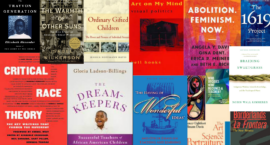
Painted Windows, Distorted Mirrors: How Banning Books ‘Sterilizes’ Curriculums

To meet the demand of a modern world, we need to be expanding our students’ perspectives and engaging them in rich dialogue, critical thinking and global perspectives. Our children need opportunities to share potent books in community with peers and to learn to discuss challenging topics. If we parents are empowered, we ought to use our power to enable our children, not to narrow their perspectives.

In Ron DeSantis’ Florida we hear echoes of George Orwell’s 1984: ‘Do you know that Florida’s school libraries get smaller every year? Don’t you see that the whole aim is to narrow the range of thought?’