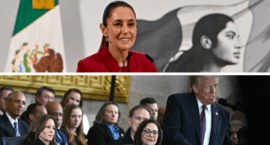
Social Services Cuts Will Mean More Women Stop Working—and Maybe That’s the Point

The current federal administration is very pro-family—they tell us that all the time. One of JD Vance’s first public appearances as vice president was his speech at the antiabortion March for Life rally in January 2025, where he called for more births in the U.S. and framed his agenda as both “pro-life” and “pro-family.” Trump reaffirmed that position in March, where he reiterated that this was a pro-family administration.

But at the start of this year, on Jan. 6, 2026, alleging concerns about fraud in state-run social services programs (even though the only concerns that have been raised—not proven—are in Minnesota), the Trump-Vance administration’s U.S. Department of Health and Human Services suspended three programs that provide support to children—not only in Minnesota, but also in California, Colorado, New York and Illinois. Those states, all led by Democrats, will lose access to billions in funding through the Temporary Assistance for Needy Families (TANF) program, the Child Care and Development Fund, and the Social Services Block Grant program. To be clear, these funds are the backbone of services-provision for families living in poverty in most communities, Republicans and Democrats alike.

This announcement comes days after the administration moved to eliminate a rule that had capped childcare copayments for low‑income families at 7 percent of their income.

It also comes after last year’s efforts to eliminate support for Head Start, quality and affordable education and other services for young children living in poverty.

All this from the pro-family party.

Keeping Score: 137 Women Are Killed by Partners or Family Per Day; Bipartisan Push for Epstein Files; Trans Day of Remembrance and Native Women’s Equal Pay Day

In every issue of Ms., we track research on our progress in the fight for equality, catalogue can’t-miss quotes from feminist voices and keep tabs on the feminist movement’s many milestones. We’re Keeping Score online, too—in this biweekly roundup.

This week:
—137 women and girls are killed by intimate partners or family members every day.
—Congress votes overhwlemingly to force the Justice Department to release their Epstein files.
—Donald Trump snaps at women journalists: “Quiet, piggy” and “you are an obnoxious—a terrible, actually a terrible reporter.”
—Violence against trans women remains high.
—DACA recipients are being targeted and detained under the Trump administration.
—Higher-income college students often receive more financial support than they need, while low-income students struggle.
—Tierra Walker died from preeclampsia in Texas after being repeatedly denied an abortion.
—Viola Ford Fletcher died at age 111. She was the oldest living survivor of the 1921 Tulsa Race Massacre. 
—North Dakota’s total abortion ban was reinstated after the state’s Supreme Court reversed a temporary injunction from a lower court. There are now 13 states with total bans.

… and more.

Calling Foul: Breaking Down WNBA Pay and Why It Matters

There’s a long history of women in sport fighting for equal pay, and what’s happening with the WNBA today is less of a mirror of the current gender pay gap and more of a throwback to a time when women’s efforts were even more deeply devalued. The WNBA is a visible legacy of Title IX, and an indication of how far there is left to go. 

These are women at a pinnacle of professional achievement, who are still beholden to structural barriers. This is not a sports issue. It is a feminist issue.

Why Big Business Is Trying to Defeat the ERA: The Economic Implications of Equality (May 1976)

On Nov. 7, 1975—more than half a year ago as you read this—the voters of New York and New Jersey defeated amendments to their state constitutions which said that men and women should be treated equally before the law. It was one of those old-fashioned political events that the rise of the pollster is supposed to have leeched from our body politic—namely, a surprise. It set off a period both of private introspection on the part of individual women who had previously taken ratification of the federal Equal Rights Amendment for granted, and public reconsideration on the part of the organizations and politicians to whom stewardship of the ratification movement had fallen.

Listen to the latest episode of Looking Back, Moving Forward, “The Feminist Fight For The Equal Rights Amendment Is Far From Over—and More Urgent Than Ever (with Pat Spearman, Ellie Smeal, Carol Moseley Braun, Kathy Spillar, and Ting Ting Cheng)” on Spotify, Apple Podcasts or wherever you get your podcasts.

How Rising Prices and Policy Cuts Are Squeezing Moms and Families

Articles on tariffs, the labor market, and economic growth or decline often neglect to report how these policies are affecting real people’s ability to keep a roof over their head or put food on the table for their families each night.

When U.S. companies face higher costs for importing goods, those costs get passed directly to consumers, which means everyday goods—from diapers to carrots—become more expensive. Women, in particular, shoulder the brunt of these increased costs.

When we make sure moms and babies have what they need to thrive, we’re not just addressing today’s crises … we’re building tomorrow’s prosperity.

Will the SCORE Act Sideline Women Athletes? Title IX Advocates Push for NIL Protections

Members of the Democratic Women’s Caucus are pushing Congress for explicit Title IX protections for women student-athletes in a proposed national law related to name, image and likeness (NIL)—and long-time gender equity advocates hope they succeed.  

Four years into student-athletes being able to capitalize on their NIL, 32 states have enacted their own laws. Now, there is a proposed bill before Congress, the Student Compensation and Opportunity Through Rights and Endorsements (SCORE) Act, which is designed to establish a national framework for collegiate athlete compensation, particularly as it pertains to NIL.

Something the SCORE Act doesn’t take into consideration is Title IX and gender equity. Earlier this year, the Department of Education Office of Civil Rights rescinded guidance put in place by the Biden administration, noting it was “overly burdensome” and effectively stating that Title IX, an educational statute that prohibits discrimination based on gender at any institution receiving federal funds, is inapplicable to NIL.

Poverty Is a Policy Choice—and Women Deserve More 

In the third episode of the Ms. Studios podcast Looking Back, Moving Forward, economists and advocates break down how our economy is leaving women behind and lay out strategies for advancing a feminist economic future.

“Poverty is the result of systems that have been intentionally put in place that the majority of us benefit from,” said Aisha Nyandoro, founding CEO of Springboard to Opportunities, home to the Magnolia Mother’s Trust guaranteed income program.

“So much of the conversation among economists and among policy people about infrastructure has always been about male-dominated infrastructure,” Lenore Palladino said. “We cannot rebuild our economy or build back better, as it were, with male-dominated sectors and not female-dominated sectors.”

“We have to continually ask: In whose interests are we fighting? Who will benefit from the work that I’m doing right now? Who should we put at the center of our organizing campaigns?” said Premilla Nadasen, labor and women’s historian.

The newest Ms. podcast, Looking Back, Moving Forward is out now on Spotify, Apple Podcasts or wherever you get your podcasts.

Investing in Inclusion: How DEI Initiatives Uplift Both Companies and Consumers

In mid-May, Verizon followed the course of over a dozen major U.S. companies in rolling back their diversity, equity and inclusion practices—eliminating DEI from key tenets of their operations, including erasing DEI references from training material, ending bonuses and goals related to increasing the percentage of women and minority workers, and downsizing their human resources department.

However, companies like Verizon are part of the private sector—executive orders do not directly apply to them, meaning, they have no obligation to roll back on DEI. 

Now Streaming: New Film ‘Lilly’ Tells Transformative Story of Equal-Pay Hero Lilly Ledbetter

It’s tempting these dark days to dismiss the idea that any one person can make a difference. And yet, every day ordinary people fight injustice. And some days, those people persist long enough, resist long enough, that their fights rise to national prominence.

One such fight is chronicled in the new film Lilly, released in theaters this May and now available for rent. The brainchild of director Rachel Feldman, Lilly tells the story of Lilly Ledbetter, “an ordinary woman who became extraordinary,” in the words of Patricia Clarkson, who portrays her in the film.

Americans Want a Feminist Future—But in Order to Make it Happen, We Have to Rethink Our Entire Political System  

Donald Trump has insisted that he has a “mandate” from voters to peddle his wildly unpopular policies—and, apparently, to stop at nothing to enforce them. But in reality, Americans by and large want a feminist future.

I talked to experts in gender and politics about the promise of a truly representative democracy—and what it will take for feminists to build one. The first episode of the brand-new Ms. podcast Looking Back, Moving Forward digs into the history and future of the feminist fight for both political representation and political power. The experts I spoke to for the episode reminded me that feminists have the power to redefine our democracy—and that rumors of our defeat have been greatly exaggerated.

Listen to the newest Ms. podcast Looking Back, Moving Forward—available on Spotify, Apple Podcasts or wherever you get your podcasts.