U.S. Plays Spoiler at Annual Gathering on Women’s Rights

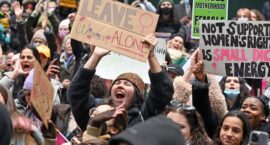
Activists and civil society groups considered the political declaration recently adopted at the Commission on the Status of Women (CSW) gathering as a victory against strong opposition from the United States. However, women’s rights groups remain deeply concerned that despite 30 years of advocacy, the declaration reflects minimal progress in advancing gender equality as politics disrupt gains and funding continues to lag.

The document, focusing on women’s global rights, was significantly watered down to accommodate opposition from some member states, particularly the U.S., during the months-long negotiations preceding the approval.

Women’s History Month Is a Time for Optimism

Dispatches from Week 2 of Women’s History Month:

It’s Week 2 of Women’s History Month, and just knowing the federal government might well ban those three words in sequence—along with “gender,” “female,” “feminism” and about 250 others—you can bet I’m feeling extra rebellious as I write this column.

I am back from celebrating International Women’s Day (March 8) at South by Southwest. Among the festival keynotes, Chelsea Clinton urged that optimism is fundamentally a moral and political choice. Remaining optimistic, she remarked, is like “saying we do not have to accept the status quo. … We do accept that we may not be able to do everything all at once, but we can always do something.”

Women’s History Month is a solemn reminder that our reaction—and our commitment to action—also requires that we hold tight to the optimism our foremothers possessed.

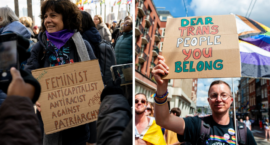
Keeping Score: Executive Orders Attack Trans Community; Americans Need Paid Leave and Childcare Policies; Unvaccinated Measles Cases Soar

In every issue of Ms., we track research on our progress in the fight for equality, catalogue can’t-miss quotes from feminist voices and keep tabs on the feminist movement’s many milestones. We’re Keeping Score online, too—in this biweekly roundup.

This week: Trump’s executive orders continue to threaten trans people’s safety, jobs and rights; policies like paid family leave and universal preschool are incredibly popular; measles spreads among unvaccinated populations; Congress signals their plan to cut SNAP and Medicaid; women’s college basketball teams will be paid for March Madness games; almost a quarter of Gen Z adults are part of the LGBTQ community; and more.

Keeping Score: More Attacks on Trans Rights; Sexual Assault Should Disqualify Cabinet Nominees, Americans Say; Female Professors Win Lawsuit and Backpay for Pay Disparity

In every issue of Ms., we track research on our progress in the fight for equality, catalogue can’t-miss quotes from feminist voices and keep tabs on the feminist movement’s many milestones. We’re Keeping Score online, too—in this biweekly roundup.

This week: The Supreme Court considers a ban on gender-affirming healthcare for trans teens; data shows crimes in public restrooms and changing rooms are extremely rare, and are not decreased by laws preventing trans people from using public bathrooms; analyzing Trump’s cabinet nominees; midwives say climate change is harming their communities; Nevada maintains a majority woman legislature; criminal justice reform for probation, parole and bail is critical; Arizona moves to end 15-week abortion ban; Sens. Elizabeth Warren and Richard Blumenthal have asked the Biden administration to limit the federal government from deploying troops domestically; and more.

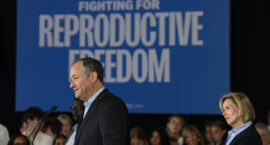
The First, First Gentleman: Breaking More Than One Glass Ceiling

First ladies, while unofficial in title, have been unofficially tasked with hosting state dinners, advocating for social and philanthropic causes, and managing the White House’s image, without ever getting paid or recognized the way they should be. It’s a microcosm of the way our society still places these expectations on women in domestic spaces. Even though this labor is essential, it is often taken for granted.

Now, imagine a man stepping into this role. If a first gentleman were to perform these duties, it might force the country to rethink why these responsibilities were so heavily feminized in the first place. And even more so, it might make people question why this type of labor—whether done in the White House or in everyday homes—has been undervalued for so long.

Keeping Score: Federal Judge to DeSantis, ‘It’s the First Amendment, Stupid’; N.Y. Woman Investigated for Pregnancy Loss; Abortion Is #1 Issue for Women Voters Under 30

In every issue of Ms., we track research on our progress in the fight for equality, catalogue can’t-miss quotes from feminist voices and keep tabs on the feminist movement’s many milestones. We’re Keeping Score online, too—in this biweekly roundup.

This week: Abortion is the number one election issue for women under 30; a record-breaking 300,000 Georgians cast their ballots on the first day; equal pay trailblazer Lilly Ledbetter died at age 86; X (Twitter) fails to quickly remove revenge porn; less than 1 percent of U.S. abortions happen after 21 weeks; and more.

Greedflation: Corporate Profits Are the Driver of High Prices

Depending on who’s doing the talking, inflation can be blamed on President Joe Biden or on his predecessor, Donald Trump. But one—and perhaps the greatest—driver of higher prices lies under the radar: corporate profits.

Women are the majority of the population, the majority of registered voters and the majority of those who actually show up at the polls. Let’s hope they do their homework and remember in November which candidates are coziest with the profit-mongering corporations picking their pocketbooks.

(This article originally appears in the Fall 2024 issue of Ms. Join the Ms. community today and you’ll get issues delivered straight to your mailbox! )

Rest in Power: Lilly Ledbetter, Trailblazing Icon for Women’s Equal Pay

Lilly Ledbetter, an equal pay activist whose legal fight against her employer led to the Lilly Ledbetter Fair Pay Act, died this weekend. She was 86. 

“One of the next steps in reaching pay equity is the Paycheck Fairness Act—a bill that would amend the Equal Pay Act of 1963 to give workers stronger enforcement tools and remedies to help close the pay gap between men and women once and for all,” wrote Ledbetter in an op-ed for Ms. in January. “But things have been frustratingly stagnant in Congress.”

Keeping Score: Liz Cheney Calls Trump and Vance ‘Misogynistic Pigs’; Women Break Barriers at Paralympics and Emmys; Taylor Swift Endorses Harris

In every issue of Ms., we track research on our progress in the fight for equality, catalogue can’t-miss quotes from feminist voices and keep tabs on the feminist movement’s many milestones. We’re Keeping Score online, too—in this biweekly roundup.

This week: Ohio Secretary of State Frank LaRose admits anti-abortion groups helped him write abortion rights ballot language; Kamala Harris and Donald Trump spar over abortion, Project 2025 and immigration at the presidential debate; Paralympics athletes and Emmy winners break records; Taylor Swift endorses Harris and Walz; Montana Supreme Court protects minors seeking abortion care; attacks on women journalists and LGBTQ people; new pay gap data is worse than last year; and more.

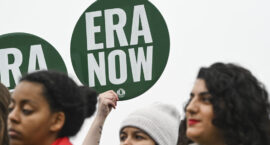
The Feminist Fight for Gender Equity: Lisa Ann Walter and Advocates Renew Push for ERA Ahead of 2024 Elections

Since the Supreme Court overturned Roe, the battle to restore abortion rights has been front and center. Less visible are efforts to enshrine women’s equality into the Constitution—the continuation of a campaign that conservatives thought they killed more than 40 years ago. Not true.

Champions of the ERA have been working tirelessly to get Congress to publish the 101-year-old measure that would ban gender-based discrimination. Although women have made considerable strides over the last century, a constitutional right is the only guarantee they will make further gains and keep them in perpetuity.