A State of the State for Women: Taking Stock of the Fight for Democracy at Home and Abroad

March’s Women’s History Month arrives at a moment when our rights, and democracy itself, feel newly precarious.

From feminist perspectives on the war in Iran, where women and girls remain at the forefront of resistance, to the troubling parallels between authoritarian crackdowns abroad and the rollback of reproductive rights here in the United States, the throughline is hard to ignore: Democracy rises and falls with women’s movements and mobilization.

Taking stock of the moment, I’m highlighting reporting and analysis that help make sense of where we are now—from the criminalization of pregnancy outcomes in places like El Salvador, to new data revealing stark disparities in women’s well-being across U.S. states.

At the same time, as the country approaches its 250th anniversary, initiatives like Ms.’ FEMINIST 250: Founding Feminists remind us that women’s ideas, resistance and organizing have always been central to the project of democracy—and remain essential to its future.

Another Casualty of Trump’s New Foreign Policy: Women

For decades, policymakers across political parties understood that political, economic and social progress cannot be achieved by leaving half the population behind. Advancing women’s opportunities, leadership and rights through foreign policy and programs was seen not only as the morally right course, but as an effective strategy for promoting peace and prosperity around the globe.

The first Trump administration, in recognition of these facts, took actions that seemed to belie support for women’s economic empowerment—for example, President Trump signed the bipartisan Women, Peace and Security Act into law in 2017 to advance women’s leadership and protect women in times of conflict.

But Trump’s second administration has taken a sharply different approach, mounting a sustained assault on women’s rights and reversing bipartisan policies his own administration once championed.

‘A Deliberate Attempt to Terrorize’: Former FBI Agent Asha Rangappa on What Real Law Enforcement Looks Like—and What ICE Is Not

ICE is the highest-funded federal law enforcement agency in American history—its budget larger than the FBI, ATF, DEA, U.S. Marshals Service and Bureau of Prisons combined. Its agents wear masks, drive unmarked vehicles and operate with an impunity that has drawn comparisons to secret police forces around the world. Multiple federal courts have refused to trust the agency’s own statements of fact. And in Minneapolis, ICE agents shot and killed Renee Macklin Good and Alex Pretti in front of their neighbors’ cameras.

Asha Rangappa has seen this movie before—just never in America.

A former FBI special agent who spent years in the bureau’s New York division, specializing in counterintelligence, Rangappa was trained to monitor threats to America. Her job required surgical precision, behavioral psychology, extraordinary patience and, above all, trust.

“The bread and butter of your work as a law enforcement agent is that you need the community’s help,” she told me. “You actually can’t do your job without it.”

The Strange Hopefulness of Growing a Human While the World Burns

As I write this, I’m in my third trimester, anxious and excited for my daughter’s arrival, which feels imminent.

Yes, it’s an extremely dark time, but that’s not exactly a historical outlier. People have been making babies throughout the worst of them. And nothing motivates me more to build a better future for all of us than this little girl—who, like every child, deserves safety, stability, love and care, and a world equipped to give it to her.

I can’t wait for her to see it.

‘She Rubbed Me the Wrong Way’: Why Trump Punished a Woman Head of State for Saying No

Under the Jan. 21 headline “‘She Just Rubbed Me the Wrong Way’: Trump Suggests Swiss Tariffs Were Personal,’” The New York Times quotes Trump quoted as saying, she was “’so aggressive.”

Seeking to make sense of the existential anomie that flooded me after reading the article, it quickly became apparent that that much more was at play here than a clash of personalities, as suggested by Times’ headline. Accordingly, as I began envisioning the article I would write, my initial aim was to locate Trump’s remarks within the broader context of his administration’s attacks on women and the LGBTQ+ community. 

At Home and Abroad, MAGA’s Politics of Force Try to Reassert White Male Power

The connective tissue of Donald Trump’s takeover of Venezuela, his threats to invade Greenland, the killings of Renee Good and Alex Pretti by masked federal agents in Minneapolis, and the EEOC’s encouragement of white men to bring claims of discrimination against them is this: All represent increasingly desperate efforts by Trump and MAGA to forcefully put white men back in charge.

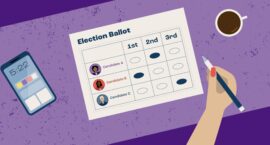
How We Build a Better System: Celebrating Ranked-Choice Voting Day

Weekend Reading for Women’s Representation is a compilation of stories about women’s representation in politics, sports and entertainment, judicial offices and the private sector—with a little gardening mixed in!

This week:
—Friday marks is Ranked-Choice Voting Day, an annual event held every Jan. 23 (1-2-3) to celebrate a proven, people-powered reform that strengthens democracy by giving voters more choice and candidates a fairer path to office. 
—Steven Hill and Paul Haughey call a 2023 study from the University of Minnesota repeatedly cited by opponents of ranked-choice voting “one of the most error-prone” they encountered—relying heavily on cherry-picked citations, simulated elections and surveys disconnected from how voters actually behave in real contests. 
—We honor the life and legacy of Claudette Colvin, an icon of the Civil Rights Movement.
—The Vermont Voting Rights Act seeks to codify key federal voting protections in the state.
—Portland reaches an important compromise in their City Council elections.

… and more.

Keeping Score: 137 Women Are Killed by Partners or Family Per Day; Bipartisan Push for Epstein Files; Trans Day of Remembrance and Native Women’s Equal Pay Day

In every issue of Ms., we track research on our progress in the fight for equality, catalogue can’t-miss quotes from feminist voices and keep tabs on the feminist movement’s many milestones. We’re Keeping Score online, too—in this biweekly roundup.

This week:
—137 women and girls are killed by intimate partners or family members every day.
—Congress votes overhwlemingly to force the Justice Department to release their Epstein files.
—Donald Trump snaps at women journalists: “Quiet, piggy” and “you are an obnoxious—a terrible, actually a terrible reporter.”
—Violence against trans women remains high.
—DACA recipients are being targeted and detained under the Trump administration.
—Higher-income college students often receive more financial support than they need, while low-income students struggle.
—Tierra Walker died from preeclampsia in Texas after being repeatedly denied an abortion.
—Viola Ford Fletcher died at age 111. She was the oldest living survivor of the 1921 Tulsa Race Massacre. 
—North Dakota’s total abortion ban was reinstated after the state’s Supreme Court reversed a temporary injunction from a lower court. There are now 13 states with total bans.

… and more.

The Ripple Effects of the U.S. Retreat from International Reproductive Care

The U.S. withdrawal of international reproductive health funding is already having devastating effects around the world. Clinics are closing, health workers go unpaid, and essential medications and contraceptives sit unused in warehouses while millions of women and families lose access to life-saving care.

These abrupt cuts are not just administrative—they are a direct attack on decades of global health progress, putting children, pregnant women and marginalized communities at heightened risk of preventable disease, unintended pregnancy and death.

Yet there is still a path forward. The infrastructure to deliver reproductive and public health services remains in place, and health workers are ready to act. If funding is restored, we can prevent the worst outcomes, safeguard global health, and ensure that the fundamental human rights to health, life and bodily autonomy are protected.

The global community must act urgently to reverse the harm and prevent a full-scale public health and human rights crisis.