Weekend Reading on Women’s Representation is a compilation of stories about women’s representation in politics, on boards, in sports and entertainment, in judicial offices and in the private sector in the U.S. and around the world—with a little gardening and goodwill mixed in for refreshment!
Milestones for notable women this week includes the anniversary of Katherine Graham becoming the first woman publisher of major U.S. newspaper in 1963, and birthdays of: actress Lily Tomlin, first woman White House press secretary Dee Dee Myers, CEO of DoSomething DeNora Getachew, Beyonce Giselle Knowles-Carter, philanthropist Mavis Leno, former mayor of Minneapolis Betsy Hodges, CEO of VoteProChoice Heidi Sieck, Vote Mama’s Sarah Hague, NYC councilwoman Gale Brewer, founder of the White House Project & the Ms. Foundation & board member emeritus of RepresentWomen Marie C Wilson, and suffragist Jane Addams about whom I wrote my college essay.
Back to School: Celebrating the Women Who Defend Public Education

Back-to-school season always brings a mix of excitement and reflection, especially in my family this year, as both of my daughters have just stepped into their own classrooms following in the footsteps of my father, who was a college professor, and my mother, who was a nursery school teacher.
One of my daughters teaches sixth and seventh grade in the Bronx, and the other is a librarian at Sidwell Friends School in Washington, D.C. Watching them prepare over the past few weeks has reminded me just how much teachers give of themselves. They are more than educators: They are mentors, advocates, problem-solvers and steady presences in the lives of young people. In many ways, they are also first responders for democracy—cultivating the next generation of citizens with the tools to think critically, engage openly and participate fully in civic life.
As Franklin D. Roosevelt once said in his remarks to the teachers and patrons of American schools in September 1938:
“Democracy cannot succeed unless those who express their choices are prepared to choose wisely. The real safeguard of democracy, therefore, is education. It has been well said that no system of government gives so much to the individual or exacts so much as a democracy. Upon our educational system must largely depend the perpetuity of those institutions upon which our freedom and our security rest. To prepare each citizen to choose wisely and to enable him to choose freely are paramount functions of the schools in a democracy.”
The words of FDR couldn’t have been more accurate, as teachers have indeed always been the cornerstone of thriving communities and a healthy democracy. They are often the first leaders we encounter, showing us how to think critically, how to work with others, and how to find our voices.
It’s no accident that so many powerful women leaders began their journeys in classrooms.
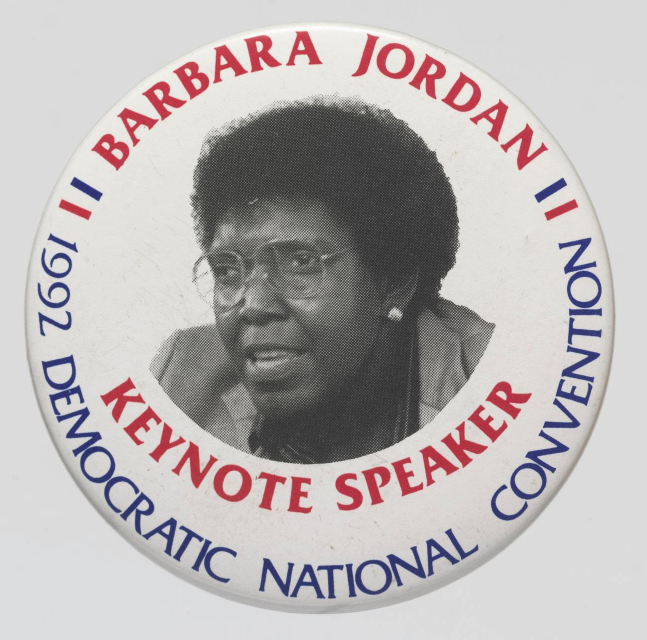
- Barbara Jordan taught political science at the LBJ School of Public Affairs at the University of Texas before becoming the first African American elected to the Texas Senate since Reconstruction, and later the first Southern Black woman elected to the U.S. House of Representatives.
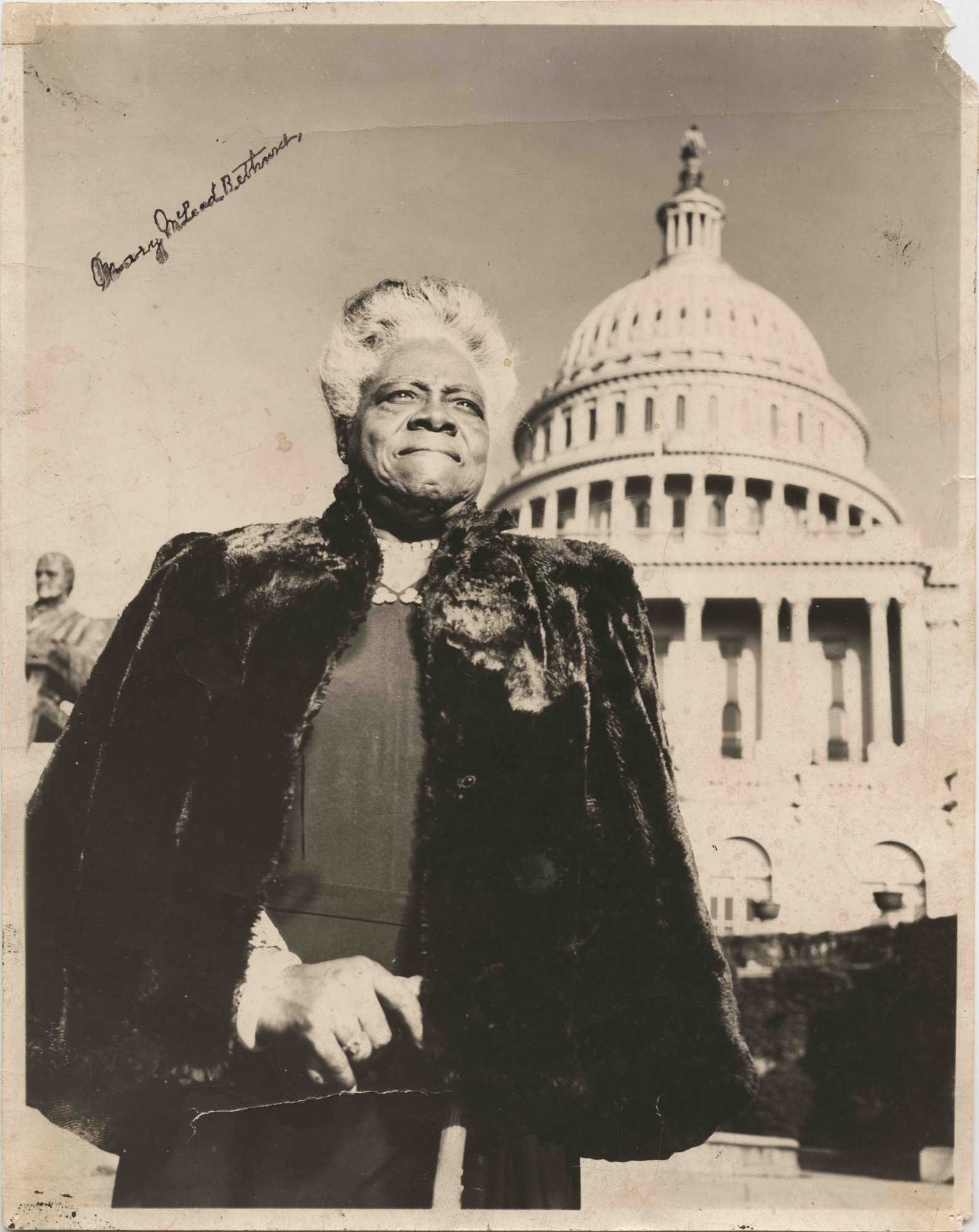
- Mary McLeod Bethune—the daughter of formerly enslaved parents—became one of the most important Black educators, civil rights and women’s rights leaders, and government officials of the twentieth century. The college she founded set educational standards for today’s Black colleges, and her role as an advisor to President Franklin Delano Roosevelt gave African Americans an advocate in government at the highest levels.
Time and again, women educators have shaped not only their students but the future of entire nations. And yet, while women dominate the teaching profession, they remain underrepresented in our political institutions. The leadership pipeline is there—every classroom brims with women who would bring their talents to public service—but too often, systemic barriers prevent them from running, winning, serving and leading. That’s why at RepresentWomen, we focus on building the structural reforms to open doors: ranked-choice voting, proportional representation and institutional supports that make it possible for women, including teachers, to step fully into leadership.
As we celebrate the start of another school year, let’s remember the invaluable lessons teachers give us: that leadership is about service, that democracy requires patience and care. The future of our democracy depends on those willing to nurture it. It’s time to ensure our political systems reflect those same values, so that the women guiding our children today can just as easily guide our democracy tomorrow.
A Wave of Female Gubernatorial Contenders Signals a Shift in Power

A growing number of women from both major parties are entering the race for governor in 2025 and 2026, marking a significant moment in the push for gender equity in executive offices.
In Virginia, voters could soon send two trailblazers to the governor’s mansion: Democrat Abigail Spanberger and Republican Lt. Gov. Winsome Earle-Sears, both poised to become the state’s first female governor. Independent candidate Donna Charles is also running for governor in Virginia. If she or Winsome Earle-Sears are elected, they would make history as the first Black woman governor in U.S. history.
In Tennessee, Sen. Marsha Blackburn is mounting a high-profile bid to become the state’s first female governor.
This building momentum extends beyond descriptive representation. Center for American Women in Politics director Debbie Walsh notes:
“We will absolutely see an additional woman governor in the state of Virginia and a strong possibility of a woman governor in New Jersey, which would make us reach a real record,” said Debbie Walsh, the director of the Center for American Women and Politics (CAWP) at Rutgers University… According to CAWP, 40 women, including incumbents, have announced or filed their candidacies for governor ahead of the 2026 cycle.
Though women have held executive power, for instance, in state legislatures and as mayors, we’ve rarely seen them holding the governor’s office. Increasing numbers of women running for and winning these roles shift the political norms about who can lead. Diverse leadership brings more inclusive policy-making, particularly on issues like reproductive rights, care infrastructure, and equitable governance.
Debra Shigley Advances to Runoff in Georgia State Senate Race

Georgia voters are heading back to the polls later this month, where attorney, small business owner, and mom of five Debra Shigley has secured a top spot in the Sept. 23 runoff election for an open state Senate seat. Since no candidate cleared 50 percent of the vote in last week’s special election, Shigley will face off again in a contest that could help reshape the balance of power in the state.
Shigley, a Milton mom whose five children attend public school, has centered her campaign on issues that strike at the heart of women’s leadership: making it more affordable to raise a family, strengthening Georgia’s public school systems and expanding access to healthcare. Her platform reflects both her personal experience as a PTA mom and School Governance Council member, as well as her professional background as a Harvard-educated attorney, former reporter, and co-founder of a startup that created jobs for women of color.
As Shigley told reporters for The Atlanta Voice:
“We need leadership that knows what it takes to actually run something. I know what it’s like to stretch every dollar, plan every week, make tough calls, not just in theory, but in real life… That’s the voice I’ll bring to the State Senate: a voice that knows what it’s like to juggle diaper changes with Zoom calls and soccer practice. A voice that understands struggle, believes in solutions and refuses to give up on Georgia families.”
Her campaign has emphasized priorities over partisanship. “This campaign isn’t about party lines, it’s about priorities,” she said. “I believe in lifting up every member of our community, not just the ones who can afford to be heard. That starts with education, yes, but it also means lowering costs, better healthcare, safer communities, and good paying jobs that don’t require a four-year degree.”
In many ways, Shigley’s candidacy reflects the heart of this week’s Weekend Reading. One of her core priorities is protecting and strengthening Georgia’s public schools. “Public dollars should go to public schools, period,” she emphasizes—pledging to keep kids safe, expand learning opportunities and invest in educators so that every student can succeed, regardless of their zip code. By centering education alongside affordability and healthcare, Shigley’s run underscores why women’s voices are essential in policymaking: they bring firsthand knowledge of how families live, learn, and thrive, and a commitment to ensuring systems work for every community.
As Shigley put it herself:
“I may not have started my career in politics, but I have always believed in service, and that’s what this campaign is about. It’s about our future, not just for this election, but for the kind of Georgia we want our kids to grow up in. Because if we don’t fight for it, who will?”
As RepresentWomen’s research shows, structural reforms are essential to ensure that more women, like Debra Shigley, can run, win, serve and lead. Her runoff election on Tuesday, Sept. 23, will be one to watch as women’s leadership in Georgia, and across the country, continues to grow.
Yet her path to the runoff is also a reminder of the high costs baked into Georgia’s election system. Additional elections not only place new demands on candidates—especially women who are balancing family, careers and community responsibilities—but also on taxpayers. According to Axios Atlanta, more than $75 million in taxpayer dollars were spent on Georgia’s 2021 U.S. Senate runoffs alone. Just one year later, voters were sent back to the polls again in 2022, at an additional cost of tens of millions. Combined, the back-to-back Senate runoffs cost Georgia taxpayers in the neighborhood of $150 million.
Fortunately, there is a proven alternative. Georgia already uses ranked-choice voting—sometimes called “instant runoffs”—for military and overseas voters. Expanding this system statewide would guarantee majority winners in a single election, saving millions of dollars while strengthening representation.
Ontario Women Reflect: Running Isn’t Simple, but They’re Committed

In a TVO analysis titled “How Did Women Feel About Running in the 2025 Election?” Ontario women politicians find that the path to political office is uneven. Former and aspiring candidates, many with experience in municipal and party politics, shared stories of navigating female-coded expectations, enduring scrutiny that their male counterparts often escape, and confronting the emotional toll of compromise and premature exit from the political arena.
Despite the challenges, women continue to show up. They’re re-entering campaigns, stepping into mentorship roles, and building networks that resist the isolation often seen in female political journeys.
As one speaker noted, the tournament isn’t ending, but rather evolving:
As much as they all loved the experience, some candidates were also blunt about their party’s shortcomings. Despite endless rumours of an early election call by Ford, the Liberals seemed to be caught flatfooted when the call finally came. Some complained of the party’s slow candidate approval process, which prevented them from raising money and delayed their ability to raise their profile at community events.
Crombie assured her audience that would change. She said the party will henceforth have two nomination commissioners and begin nominating candidates in January 2026, fully three years before the next scheduled election (if Ford lets this term run the full four years).
If all you knew about politics was what you read, saw, and heard in legacy and social media, you’d think anybody going into this game needed their head examined. What was, dare I say it, inspiring about this confab was how much even those who lost felt running for office was worth doing. Although bloody hard.
“I asked myself whether I’d be brave enough to run,” admitted April Engelberg, who ran in Spadina-Fort York. “But when you just decide to go for it, it’s a huge weight off your shoulders. And it’s incredibly rewarding.”
Scholar Earns 2025 Charles E. Merriam Award for Advancing Women’s Political Representation

Honoring both intellect and impact, the American Political Science Association has awarded professor Mona Lena Krook the 2025 Charles E. Merriam Award, highlighting her work at the intersection of research and real-world change. Known for her comparative scholarship on gender quotas, women’s representation, and the pervasive violence women face in politics, Krook is among the most influential voices in global democracy studies.
Her landmark book, Quotas for Women in Politics: Gender and Candidate Selection Reform Worldwide (2009), not only earned her the prestigious Victoria Schuck Award but also the George H. Hallett Award, recognition for its lasting influence on how we understand electoral systems.
More recently, her 2020 work Violence Against Women in Politics explores an often overlooked threat to democracy: the violence, harassment and intimidation designed to drive women out of political life.
Beyond academia, Krook’s scholarship has been a catalyst for policy reform. As a global consultant for governments and international institutions, she has shaped parity-building through advising on gender quotas, gender-responsive election design, and international frameworks, such as the U.N.’s General Recommendation No. 40 and the IPU’s outcomes on women’s rights. Her collaboration on the #NotTheCost campaign has also brought her research to the attention of civil society and election stakeholders worldwide.
U.K. Women Call out Misogyny Dressed as Immigration Policy
In the U.K., a powerful open letter led by a coalition of women artists, politicians and activists, including Paloma Faith, Diane Abbott, and Ellie Chowns, pushes back against dangerous narratives that weaponize sexual violence against women to scapegoat asylum seekers. Coordinated by Stand Up to Racism under the banner “Women Against the Far Right”, the letter denounces far-right rhetoric by figures like Nigel Farage and Robert Jenrick for using selective crimes to stoke public fear and division. There is no evidence that asylum seekers are more prone to sexual violence, and blaming them distracts from the systemic failings that allow all forms of abuse to persist.
The Guardian denotes the letter and what it stands for:
“We reject the far right’s racist lies about ‘protecting’ women and girls. They are not defenders of women – they exploit violence against women to fuel hate and division,” the letter says.
The open letter, titled Women Against the Far Right, follows a surge in protests outside accommodation housing asylum seekers and far-right attempts to exploit a number of cases of alleged sexual crimes involving asylum seekers.
Nigel Farage, the leader of Reform UK, has sought to link government immigration policies to a rise in sexual offences. Robert Jenrick, the shadow justice secretary, who joined protesters outside asylum accommodation in Epping, Essex, said last month that asylum seekers with “medieval attitudes” coming to Britain meant he was afraid for the safety of his three young daughters.
The letter, which has been coordinated by Stand up to Racism, adds: “Violence against women and girls is a serious and urgent issue. But it will never be solved by the likes of Nigel Farage and Robert Jenrick targeting refugees, Muslims and migrants.
“There is no evidence that people seeking refuge are more likely to commit acts of sexual violence. Many are themselves survivors of violence, war, and persecution. Blaming them distracts from tackling the deep-rooted causes of abuse and from holding those truly responsible to account.”
The letter accuses the far right of seizing on lies and spreading misinformation to mobilise protests outside hotels housing refugees – including women and children – in a move which, the letter says, does nothing to make women safer.
This campaign stands for democratic integrity beyond correcting misinformation. By centering evidence, empathy and solidarity, the letter reframes violence as a systemic failure and not a cultural assault by marginalized communities.
Federal Workforce Cuts and the Disproportionate Impact on Black Women

Ofronama Biu warned in Ms. in April,
The sweeping federal job cuts taking place under the Trump administration are not just an attack on government effectiveness—they represent a direct threat to the economic stability of Black women, who have long utilized public sector employment as a pathway to financial security and upward mobility.
Now, as layoffs accelerate, Black women face a dual crisis: the loss of stable employment and the dismantling of one of the few sectors that has consistently countered private-sector inequities. These cuts risk unraveling decades of progress in building economic resilience for Black families and communities.
And just as feminists feared: The New York Times reports that President Trump’s recent federal workforce reductions have disproportionately harmed Black women, who are long overrepresented in civil service relative to the private sector. Federal employment has historically provided Black women with equitable pay, stability and leadership opportunities, thereby offsetting private-sector discrimination.
These cuts threaten not only individual livelihoods but also community-level economic health, with roughly 300,000 Black women exiting the workforce in recent months. The dismantling of DEI programs and targeted layoffs exacerbate systemic inequities, eroding one of the few reliable routes to middle-class security. The NYT notes:
While tens of thousands of employees have lost their jobs in Mr. Trump’s slash-and-burn approach to shrinking the federal work force, experts say the cuts disproportionately affect Black employees — and Black women in particular. Black women make up 12 percent of the federal work force, nearly double their share of the labor force overall.
For generations, the federal government has served as a ladder to the middle class for Black Americans who were shut out of jobs because of discrimination. The federal government has historically offered the population more job stability, pay equity and career advancement than the private sector. Following the passage of the Civil Rights Act of 1964, the federal government aggressively enforced affirmative action in hiring and anti-discrimination rules that Mr. Trump has sought to roll back.
The White House has defended Mr. Trump’s overhaul of the federal government as an effort to right-size the work force and to restore a merit-based approach to advancement. In July, the Supreme Court ruled that Mr. Trump could continue with mass firings across the federal government.
In a statement, Harrison Fields, a White House spokesman, said that Mr. Trump was “ushering in an economy that will empower all Americans, just as it did during his first term.” He added that “the obsession with divisive D.E.I. initiatives reverses years of strides toward genuine equality.” …
But economists say that Black women are being hit especially hard by Mr. Trump’s policies, which are also rippling through the private sector as corporations have abandoned their diversity, equity and inclusion practices and related jobs, many of which were held by Black women. …
“Black women are the canaries in the coal mine, the exclusion happens to them first,” Ms. Roy said. “And if any other cohort thinks it’s not coming for them, they’re wrong. This is a warning, and it’s a stark one.”
Reducing Black women’s presence in government service weakens institutional inclusivity and undermines public trust, which has democratic and economic consequences. This development marks a significant setback for racial and gender equity in U.S. governance.
Building the Pipeline: Elect Women NJ Announces Record Endorsement Class

While RepresentWomen does not endorse candidates, we celebrate when more women step forward to lead. This week, Elect Women NJ — a political action committee founded in 2020 to support women running for local office — announced its largest endorsement class yet: 66 women candidates across all 21 counties of New Jersey, running for offices from sheriff and county commissioner to mayor, council, and school board.
This year’s class is also the youngest and most diverse to date: nearly half of the candidates are women of color, and 12 are under 40 (including two under 25). As Elect Women NJ Vice Chair Cara Parmigiani noted, “The future of leadership in New Jersey is bold, diverse, and deeply committed to public service.”
This growth is a powerful reminder that expanding women’s political representation starts locally. Building strong pipelines of women candidates—equipped with training, resources, and community support—is essential if we want to see more women not only run, but win, serve and lead at every level of government.
Italian Women Fight Digital Violence and Demand Consent Online

A recent scandal in Italy highlights the manner in which misogyny now functions with digital ease, while also demonstrating the resilience of women in safeguarding their dignity.
An internet forum operating for nearly two decades, named after a vulgar Italian slang term, featured thousands of manipulated and non-consensual images of women, including figures like Prime Minister Giorgia Meloni and MEP Alessandra Moretti. The site objectified its victims, often pairing images with explicit, violent commentary, and amassed between 200,000 to 700,000 users before public outcry forced its shutdown.
Activist groups, along with women across social strata, condemned the site as an extension of gender-based violence. Experts referred to it as digital control and humiliation by other means. Consequently, strong legal and political attention followed. Meloni herself expressed solidarity with the victims, labeling the abuse “disgusting,” while members of both major parties filed complaints and demanded legislative action. The AP notes:
Italian women, from ordinary workers and housewives to top politicians, are fighting back against a proliferation of websites displaying their photos without their consent, often accompanied by obscene language.
Their efforts gained national prominence when activists earlier this summer denounced a Facebook page dubbed “Mia Moglie” (“My Wife”), where men posted unauthorized photos of their spouses and succeeded in getting it taken down.
Some men said their wives had agreed to their images being posted, but no female comments were visible on the site.
Experts said websites that display images of women without their consent were “the other face” of physical and sexual violence.
“Digital tools became not only a way for men to exercise control over women, but are increasingly used to offend, humiliate and attack them,” Sabrina Frasca, activist with anti-violence group Differenza Donna, told The Associated Press.
“Mia Moglie,” had around 32,000 members before it was shut down last week by Facebook -owner Meta, which said it acted against the site “for violating our adult sexual exploitation policies.”
Italy has been struggling with how to prevent and address gender-based violence, as femicides — the killing of women because of their gender — has emerged as a systemic problem deeply rooted in Italy’s patriarchal culture. A series of violent incidents has reignited national debate over how to confront these crimes.
Women have always been the arena on which men challenge each other and measure their virility,” said feminist author and activist Carolina Capria. “It’s a game in which women are merely a commodity that adds value to the man who possesses them.”
Italy’s government approved a draft law in March that for the first time introduces the legal definition of femicide into the country’s criminal law and punishes it with life imprisonment. The bill still needs final approval in the lower house to become law.
Abusive platforms are the virtual front lines of gender-based violence. However, Italy’s response offers a powerful example of reclaiming power and privacy in the digital sphere. Long-term solutions must address not only evolving laws like Italy’s draft defining femicide but also the cultural norms that allow digital violence to persist.
My late summer garden is in full bloom and has been drawing hummingbirds, goldfinches and even the occasional hawk that swoops in to hunt!