Afghan Women’s Refugee Football Team Officially Recognized by FIFA in Landmark Victory

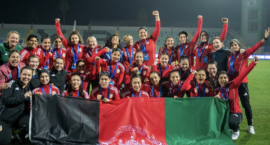
For the first time since the Taliban’s return to power in 2021 that forced Afghan women athletes into exile, Afghanistan’s women’s refugee football team has officially been granted recognition to compete in international tournaments under FIFA. This decision marks a rare and meaningful victory for Afghan women, whose rights, education and participation in public life have been systematically erased under Taliban rule for the past five years.

The FIFA Council announced the team formerly known as Afghan Women United will now be recognized as the Afghanistan women’s football team, allowing the players to compete in international competitions despite the Taliban-controlled Afghan Football Federation refusing to acknowledge women’s sports.

The players are now expected to participate in future international competitions and could potentially enter qualification for the 2028 Olympic Games in Los Angeles.

For many Afghan women, the moment carries meaning far beyond World Cup football. It serves as a reminder that despite years of repression, Afghan girls and women have not abandoned their ambitions, talents or dreams. Even after being pushed out of schools, workplaces, stadiums and public life, they continue to fight for spaces where they can exist freely and represent themselves on the world stage.

Nazia Ali, an Australia-based player on the team, reflected on the emotional significance of once again being able to represent Afghanistan officially. “For the last few years, we have played under many names—as refugees, as Afghan Women United, and as guests of other clubs—but in our hearts, we were always the national team.”

A Reparations Blueprint for a New Era of Civil Rights Rollbacks

For more than a century, the survivors and descendants of the Tulsa Race Massacre have carried not only the trauma of racial violence, but the burden of fighting to prove that what was stolen from Greenwood was never fully repaired.

Civil rights attorney Damario Solomon-Simmons reflects on the organizing, coalition-building and collective determination behind the modern reparations movement in Tulsa—and why local movements rooted in community power may offer the clearest path toward justice.

Solomon-Simmons introduces “ThinkGreenwood,” a framework for reparatory justice grounded in self-determination, collective economics, mutual care and resilience.

“ThinkGreenwood is my gift to every Black town, neighborhood and community in this country where people seek to repair past harms and give themselves and their children a fair chance at a better life. It’s a blueprint for Black Power in the modern era that any group can use to build the same indomitable foundation that’s enabled Tulsa’s community to stay strong and united through decades of setbacks and disappointments.”

(Excerpted from Redeem a Nation: The Century-Long Battle to Restore the Soul of America by Damario Solomon-Simmons, out May 12, 2026.)

Civil Rights Groups Launch Southern Voting Rights Mobilization Following Supreme Court’s Callais Decision

Civil and voting rights organizations across the South are launching a wave of rallies, trainings and grassroots mobilizations in response to the Supreme Court’s recent decision in Louisiana v. Callais, which decimated one of the last meaningful protections against racially discriminatory voting maps.

Over the next two months in Missouri, Alabama, Mississippi and Louisiana, as well as online, organizers will mobilize against the top-down national assault on Black political representation and multiracial democracy itself.

The actions come amid growing fears that the Court’s ruling will make it dramatically harder for Black voters and other voters of color to challenge discriminatory district maps in federal court.

Civil rights groups are calling for mass organizing and voter engagement, laying a groundwork for rebuilding the country through “sustained effort over time.” They also urge states to adopt their own Voting Rights Acts to help fill the vacuum left by the weakening of federal protections.

Upcoming actions include rallies at the Missouri Supreme Court, a National Day of Action in Alabama featuring events at the Edmund Pettus Bridge and the Alabama State Capitol, and the nationwide “John Lewis Good Trouble Lives On” mobilization planned for July.

Yes, You Can Still Get Abortion Pills by Mail—Here’s What to Know

On May 1, the Fifth Circuit Court of Appeals issued a sweeping ruling seeking to prohibit telehealth prescribing of mifepristone, forcing women to see a provider in-person to acquire the first pill in the standard two-drug medication abortion regimen. The decision would have blocked U.S. clinicians from mailing abortion pills after telehealth consultations nationwide.

On May 4, however, the U.S. Supreme Court temporarily paused that ruling, preserving current telehealth and mail access while the justices consider next steps. The Court’s temporary ruling was set to last until 5 p.m. ET on Monday, May 11, giving the justices time to decide whether to extend the pause or let the lower-court ruling take effect.

Then, on Monday afternoon, the U.S. Supreme Court briefly extended its temporary order preserving telehealth and mail access to mifepristone while the justices continue deliberating over the emergency appeal. Justice Samuel Alito extended the Court’s administrative stay through Thursday, May 14, at 5 p.m. ET, keeping on hold the Fifth Circuit’s May 1 ruling that would have required patients nationwide to obtain the medication through in-person visits. The order means that, for now, people can still access mifepristone through telehealth consultations and mail delivery under the current FDA rules.

National Institute for Reproductive Health president Christian LoBue said the Supreme Court’s decision “preserves telehealth access to mifepristone for now,” but warned it also “prolongs an untenable state of uncertainty for patients and providers nationwide.” Antiabortion forces are “focused on creating chaos and fear, not improving health outcomes,” she said, urging states to instead focus on strengthening protections for providers, patient privacy and access to medication abortion.

Regardless of what the courts ultimately decide, abortion access advocates, international telehealth providers and community networks say they are prepared to continue helping people access abortion pills.

Either way, the infrastructure for medication abortion access already exists—and it is not disappearing.

The Kids of Magnolia Mother’s Trust: John on Competition, Confidence and Why Every Kid Deserves Opportunity

This Mother’s Day weekend, we are honored to present a special three-part Front and Center mini-series—The Kids of Magnolia Mother’s Trust—featuring the children of mothers whose stories readers have come to know over the years. Published Friday, Saturday and Sunday ahead of Mother’s Day, these essays offer a deeply personal look at how children experience their mothers’ sacrifices, struggles and love, and how they understand the world around them because of those experiences.

In the third and final installment of The Kids of Magnolia Mother’s Trust, John reflects on how sports, community programs and his mother’s encouragement helped shape his confidence, motivation and sense of leadership growing up in Jackson, Miss. He writes about participating in Springboard to Opportunities programs since childhood, discovering a love of competition through sports and math, and why he believes young people need more opportunities and support systems in their communities:

“We have seen way too much violence and crime in our neighborhoods in recent years. While I think part of the problem is that kids have too easy access to weapons, I think it is also because there are not enough programs and opportunities for youth to get involved in and stay occupied. I can see how all these years with Springboard and having the extra support to participate in more youth sports helped grow my confidence, motivation and interests and has pushed me to stay active in other activities that are helping me continue to grow toward my best self. I want these same opportunities to be available for every kid in Jackson and my community.”

Following John’s essay, his mother Ebony—whose own story readers first encountered through Front and Center several years ago—responds to her son’s reflections and shares what it means to watch him grow into a young leader committed to his community, despite the adversity he has faced along the way.

The Kids of Magnolia Mother’s Trust: What a Daughter Learned About Leadership Watching Her Mom Hold Everything Together

“I know that sometimes it was a struggle for my mom to support me all the time in my dance classes,” Tamya writes in the second installment of the Ms. miniseries, The Kids of Magnolia Mother’s Trust. “Uniforms, traveling fees, parade fees—these all add up.”

A high school senior in Jackson, Miss., Tamya reflects on how dance became not only her greatest passion, but also the place where she learned leadership, self-confidence and self-advocacy. She writes candidly about the pride of becoming captain of her dance team, the heartbreak of eventually walking away after feeling undermined by a new coach, and the lessons she carried forward anyway about knowing her worth.

Tamya also reflects on how participating in Springboard to Opportunities’ Youth Fellowship deepened her understanding of Black history, leadership and community.

“It’s important to remember that there is so much more to the world than what I just see around me. And since I know my worth, my skills and my leadership, I can’t wait to go explore it.”

Following Tamya’s essay, her mother Tamara shares what it means to hear her daughter speak so confidently about her future after years spent trying to shield her children from financial stress and instability.

“I wanted to put a dream in them and allow them to believe that they can be anything that they want to be and their lives are not going to be determined by where they live or their circumstances,” she writes. “That’s why I am so proud hearing Tamya talk about the leader she already is and all the dreams she has for her life moving forward.”

From the Halls of Congress to Out on the Trail, Women Beg the Question: Why Not You?

Weekend Reading on Women’s Representation is a compilation of stories about women’s representation in politics, on boards, in sports and entertainment, in judicial offices and in the private sector in the U.S. and around the world—with a little gardening and goodwill mixed in for refreshment!

This week:
—Rachel Entrekin makes history by setting a new course record at the Cocodona 250 ultramarathon, becoming the first woman to win the race outright.
—Amy Acton could become Ohio’s first woman governor.
—Mother’s Day has always been about women’s political power.

… and more.

Imagining a World Where No Mothers Die

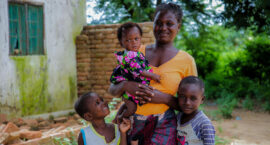
More than 700 women die each day, on average, from causes linked to pregnancy or childbirth. Almost all of these deaths are preventable. 

To honor the world’s mothers, we asked midwives about their memories of helping women survive the journey to motherhood. And we asked how the world would be different if no woman died in the act of creating life.

The First Mother’s Day Was a Protest

Far from mimosa brunches and hallmark greetings, the first Mother’s Day in the United States occurred against the scourge of war. In 1870, abolitionist and suffragist Julie Ward Howe who still had the horrors of the Civil War on her mind and was disturbed by the plight of war abroad called for an international movement of mothers as a way to call for peace and to protest the devastation of war.

History doesn’t repeat itself but it often rhymes. Mother’s Day comes this year as our nation and those across the globe are living with the dire consequences of a war with Iran Congress never authorized. The war has cost American lives as well as the lives of innocent children–including nearly 100 schoolgirls—in Iran. Former U.S. military officials have criticized the Pentagon’s strike and the lack of transparency around it. The president continues to threaten many of our global allies, as the rate of autocracies across the globe rise while democracies decline. All the while, costs continue to rise, making it harder and harder for working people to make ends meet. 

The only way this crisis will become a catalyst for change is if we commit not just to rebuilding our nation, but to reimagining it as a nation that can hold all of us and to demand that our leaders drive bold change to achieve true democracy and true change for the next generation. A nation where it is unacceptable for children to go hungry while others enjoy nation-building wealth. A nation where it is unacceptable to detain children and infants based on their skin color or who their parents are or where they are from. A nation where every person finds the courage to call out the cruelty. 

On this Mother’s Day, may we all be the mothers—and the fighters—our children need. If we don’t, who will?