
Andor lays new groundwork for navigating political infighting and moral gray areas regarding violence in rebellion through historical parallels and the sharpest dialogue in any Star Wars project to date.


More Than A Magazine, A Movement

Activism is action for a political or social purpose that can take many forms, like protesting, petitioning representatives, voting, writing and educating members of your community, boycotting, striking and speaking out. It can be big or small, independent or through a network.
Andor lays new groundwork for navigating political infighting and moral gray areas regarding violence in rebellion through historical parallels and the sharpest dialogue in any Star Wars project to date.

Mini Timmaraju, president and CEO of Reproductive Freedom for All (formerly NARAL), doesn’t just rise—she brings others with her. This ethos of tapping in challenges Indian American women to move from individual achievement to collective empowerment.
As my conversation with Timmaraju unfolded, we explored her childhood, her professional journey and the simplest yet most impactful action she believes Indian American women should take right now. It’s clear that Timmaraju’s story is not just about her own path, but about building pathways for others.
“We need to build our own villages—not just for family, but for career and leadership, too,” she said. “We shouldn’t do it alone.”

I’ve been writing for decades about America’s on-again-off-again support for the reproductive healthcare of women around the world, focusing on the Republican presidents who have slashed funding and jeopardized women’s lives.
When I spoke by phone to Seema Ghani in February, there was something more. Unlike many women I had reached out to this year in countries that have relied on the United States for financial support, Ghani was not afraid to speak to me—even though her homeland, Afghanistan, is the world’s most oppressive for women.

Do you know a high school student or first-year college student passionate about social justice, democracy and creating positive social change? If so, invite them to apply for the Summer Activist Training Camp—a free online program for students of any gender who want to deepen their knowledge and sharpen their advocacy skills.
In a landscape where young people’s human rights are under attack, we need to unite, educate and amplify the youth voices.

In the midst of Title X funding cuts to reproductive healthcare and antiabortion extremist attacks on clinics, the abortion rights movement needs as much visibility as it can get.
The United States for Abortion, a reproductive justice design initiative, lets supporters literally wear their support on their sleeve with pro-choice T-shirt designs sourced from independent designers across the country. The ongoing project—which just announced 10 new designs—is planning to incorporate designs from all 50 states, Puerto Rico and Indigenous Native nations, working at the intersection of graphic design and social justice.
One hundred percent of all proceeds from the T-shirts go to the National Network of Abortion Funds.

Profiles in Courage is a Ms. series honoring the extraordinary women and men who have transformed American institutions through principled public service. At a time when trust in government is fragile, these stories offer a powerful reminder of what ethical leadership looks like.
On Jan. 6, 2021, a mob unleashed chaos and destruction, attacking officers with metal pipes, chemical irritants and other makeshift weapons. Their goal was clear: force their way inside, inflict damage and disrupt the certification of the 2020 presidential election.
More than 50 United States Capitol Police and Metropolitan Police Department officers were injured, with several hospitalized due to the severity of their wounds. In the face of extreme violence and insurmountable odds, their heroic actions prevented an even greater catastrophe.
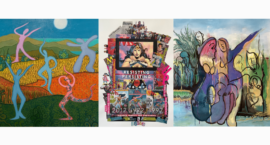
Join Ms. for a vibrant weekend celebrating feminist art, activism and community at Carole Richard Kaufmann’s New York City studio—315 W 39th Street, Studio 600, New York City, on Saturday, May 31, and Sunday, June 1, from noon to 5 p.m. each day.

As politicians praise mothers with platitudes, the U.S. continues to underfund childcare, undervalue care work and ignore the real economic needs of women.
It’s time to turn Mother’s Day into a rallying cry for women’s economic justice and real investment in care.
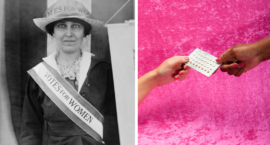
As reproductive rights continue to be under siege, we remember Katharine Dexter McCormick, a key figure in expanding access to birth control pills in the U.S.
At one point in the late 1940s or early ’50s, McCormick had been one of the richest women in America, but what made her truly remarkable was what she did with that wealth: Defying countless contemporary social norms, mores and medical taboos, she provided almost all of the funding necessary to make oral contraception a reality. McCormick’s fortune, fearlessness and feminism mean that she can lay claim to being the mother of the modern pill. Her name is barely known.

Mainstream media, conservatives and politicians want people to believe that the poor will always be with us. But it’s a lie.
In You Only Get What You’re Organized to Take: Lessons from the Movement to End Poverty, Presbyterian minister and long-time anti-poverty organizer Liz Theoharis and writer-organizer Noam Sandweiss-Back deconstruct this fallacy and present dozens of examples of organizing by poor people to win affordable housing, accessible healthcare, high-quality public education, a living wage, nutritious food and most importantly, dignity.