Who Controls Mifepristone? The Politics Blocking a New Era of Contraception

Mifepristone “works against endometriosis. It works against myoma [fibroids]. We are now involved in a study group that looks at whether it can prevent breast cancer,” says pioneering reproductive-health advocate Dr. Rebecca Gomperts. “It has so many potential uses, and it hasn’t been [developed].

“If we as women don’t make sure that it becomes available to meet our needs … then it won’t happen.”

This is the final installment of a new series, “The Moral Property of Women: How Antiabortion Politics Are Withholding Medical Care,” a serialized version of the Winter 2026 print feature article.

Keeping Score: Renee Good Fatally Shot by ICE; Women Work Longer and Are Paid Less Worldwide; N.Y. Fights Back Against Federal Childcare Freeze

In every issue of Ms., we track research on our progress in the fight for equality, catalogue can’t-miss quotes from feminist voices and keep tabs on the feminist movement’s many milestones. We’re Keeping Score online, too—in this biweekly roundup.

This week:
—”We had whistles. They had guns,” said Becca Good, wife of Renee Good, who was killed in Minneapolis by ICE agent Jonathan Ross.
—In central Texas, five months after the Sandy Creek flooding, “many are still homeless, and only 36 percent of FEMA claims in our area have been approved,” said survivor Brandy Gerstner. “FEMA must be independent, fully funded and strengthened—because when it fails to function, real families pay the price.”
—Anti-Muslim and anti-South Asian hate increased around the election of NYC Mayor Zohran Mamdani.
—The Department of Veterans Affairs announced new abortion bans.
—Meta has removed the social media accounts of dozens of reproductive health and LGBTQ groups.
—Women worldwide earn just a third of what men do when unpaid domestic labor is taken into account.

… and more.

There Is Nothing Patriotic About Denying Veterans Abortion Care

Claiming that abortion care is not an essential medical service, in August the Trump administration proposed a new rule to “reinstate the full exclusion on abortions and abortion counseling from the medical benefits package” for veterans and their dependents.” The proposed rule change drew fierce public opposition from a wide range of groups during the requisite 30-day comment period.

Then, under the cover of the holidays, the full exclusion on abortion and abortion counseling for veterans and their dependents took effect, by way of a legal directive issued in a Dec. 18 DOJ memo.

“You can’t thank a veteran for putting her body on the line for her country, then turn around and take away her right to control it. There is nothing patriotic about denying our nation’s heroes the care they deserve and the ability to determine their own futures.”

Oscar-Shortlisted Film ‘Belén’ Exposes the Injustice That Helped Transform Argentina’s Abortion Laws

Belén didn’t know she was pregnant until she miscarried in a hospital. She’d gone to the emergency room suffering excruciating abdominal pain. Instead of receiving care, she awoke from surgery handcuffed to her hospital bed and accused of having an illegal abortion.

This is the true story behind Belén, a powerful new Argentine film directed by, written by and starring Dolores Fonzi. It is based on the ordeal of a young woman from northern Argentina, chronicled in Ana Correa’s nonfiction book What Happened to Belén: The Unjust Imprisonment That Sparked a Women’s Rights Movement, the prologue of which was written by Margaret Atwood.

Despite a lack of evidence, Belén was charged with aggravated homicide and sentenced to eight years in prison.

After two years, Belén was freed, thanks to the legal work of activist and lawyer Soledad Deza and the sustained support of women’s organizations and women’s rights activists and movements, such as “Ni Una Menos” (Not One Less). Her case became a rallying cry for reproductive rights, with thousands taking to the streets under the banner #LibertadParaBelen (“Freedom for Belén”), paving the way for Argentina’s historic legalization of abortion in 2020.

Junk In, Junk Out: The Senate HELP Hearing Confirmed What We Already Knew About the War on Medication Abortion

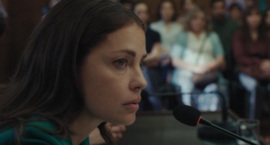
On Jan. 14, the Senate Health, Education, Labor & Pensions (HELP) Committee held a hearing deceptively titled “Protecting Women: Exposing the Dangers of Chemical Abortion Drugs.”

Rather than offering new evidence or legitimate oversight, the hearing played out exactly as reproductive health experts warned: a partisan exercise in recycling debunked claims, elevating junk science and laying the groundwork for further restrictions on the most commonly used abortion medication in the United States.

Sen. Patty Murray (D-Wash.), a senior member and former chair of the HELP Committee, dismantled the premise of the hearing, calling out Republicans for using the committee to advance a political agenda rather than public health. “We all know this hearing is not about safety—it’s about banning abortion nationwide.”

Seven Ways the Trump Administration Has Made Pregnancy More Dangerous

Trump has been in office for less than a year. The Supreme Court killed Roe v. Wade less than three years ago. And today, if you are a woman in the United States, your rights change when you cross state lines—men’s rights do not. 

It’s easy to lose sight of just how debilitating this administration has been for reproductive rights, because they are doing so much else so loudly. (Apologies to Greenland.) But this administration has quietly attacked abortion rights from just about every angle. A new report from the Center for Reproductive Rights makes clear just how aggressive they’ve been. 

Here are seven quiet moves from the Trump administration that are costing women and girls their lives.

I’m a Texan. But I Don’t Know if I Can Be a Texas OB-GYN.

Mary (not her real name) tells her story to Bonnie Fuller:

“Texans don’t give up easily, and I’m a Texan. I’m in my second year of medical school in Texas, and I’m studying to be an OB-GYN.

“I grew up in Texas, and I’m open-minded about staying in the state to practice obstetrics and gynecology after I graduate, despite the laws that ban most abortions from conception. A lot of the people that I love are in Texas, and there’s this big draw to stay here because it’s my community. I really want to care for other women.

“But what worries me most about practicing here is that I won’t be able to provide certain types of care because of the laws. I worry about the moral distress I’ll feel if I’m unable to act in particular cases—especially in emergency situations when a woman might need a termination and the law says that you can’t do one.”

Abortion Continues to Increase in 2025 as Telehealth Expands, Especially in States with Bans and Restrictions

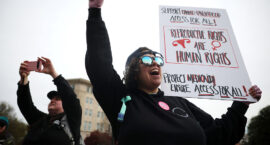
Despite many states imposing sweeping abortion bans after Dobbs, more Americans are having abortions, not fewer, according to the Society of Family Planning’s latest #WeCount report.

“Abortion bans don’t stop people from needing and pursuing essential abortion care,” said Alison Norris, M.D., Ph.D., professor at The Ohio State University’s College of Public Health and #WeCount co-chair.

Despite these increases, Ushma Upadhyay, professor and fellow #WeCount co-chair, warned that unwarranted attacks on telehealth abortion may restrict access in the future. “This care is under assault by abortion opponents’ relentless attacks on mifepristone and telehealth—even though medication abortion is backed by a 25-year track record of safety and gold-standard science, and research shows that telehealth abortion is just as safe and effective as in-person care.”  

The Supreme Court Case That Could Shield Unregulated Pregnancy Clinics From Oversight

On Dec. 2, the U.S. Supreme Court heard oral arguments in First Choice Women’s Resource Centers v. Platkin, an unregulated pregnancy clinic’s constitutional challenge to the New Jersey attorney general’s subpoena for information about its operations, including donor records. 

Despite being awash in revenue, and serial reports of fraud, waste and illegal use of taxpayer funds, these antiabortion clinics are positioning to realize a long-term goal: to “replace” Planned Parenthood and Title X programs and secure federal taxpayer funds to advance an agenda that promotes childbirth and undermines evidence-based healthcare. 

As right-wing politicians decimate the reproductive health delivery system for low-income and uninsured Americans, the UPC industry is ramping up the narrative that their unregulated pregnancy clinics are the answer to the maternal healthcare deserts their policies have created. 

Most media observers are predicting the Court will rule for the crisis pregnancy center, First Choice. If it does, unregulated pregnancy clinics nationwide will be further emboldened to resist any state oversight, including of their medical services. A bold, innovative, multi-front action by reproductive justice advocates, public health professionals and pro-choice officials is the only way we ensure they can’t succeed.