Resistance, From the Red Carpet to the Courts: Grammy Winners Denounce ICE, Immigrant Families Challenge Trump’s Visa Ban

In every issue of Ms., we track research on our progress in the fight for equality, catalogue can’t-miss quotes from feminist voices and keep tabs on the feminist movement’s many milestones. We’re Keeping Score online, too—in this biweekly roundup.

This week:
—For the first time, more Americans support than oppose abolishing ICE.
—Senate Democrats refused to pass a DHS bill that would fund ICE for this fiscal year. Instead they passed a two-week continuing resolution to give them time to negotiate reforms designed to prevent further brutality from ICE and CBP agents. 
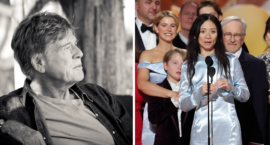
—Artists use Grammy acceptance speeches to denounce Trump and ICE: “Our voices matter,” urged Billie Eilish. “We are humans and we are Americans,” said Bad Bunny.
—Organizations raise alarms about Grok AI spreading nonconsensual intimate images on Twitter.
—Virtual reality may be a tool to change opinions about catcalling.
—Access to IVF has led to more unmarried women in their 40s choosing to have babies.

… and more.

Oscar-Shortlisted Film ‘Belén’ Exposes the Injustice That Helped Transform Argentina’s Abortion Laws

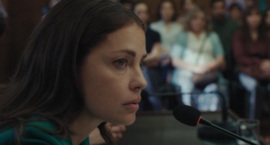
Belén didn’t know she was pregnant until she miscarried in a hospital. She’d gone to the emergency room suffering excruciating abdominal pain. Instead of receiving care, she awoke from surgery handcuffed to her hospital bed and accused of having an illegal abortion.

This is the true story behind Belén, a powerful new Argentine film directed by, written by and starring Dolores Fonzi. It is based on the ordeal of a young woman from northern Argentina, chronicled in Ana Correa’s nonfiction book What Happened to Belén: The Unjust Imprisonment That Sparked a Women’s Rights Movement, the prologue of which was written by Margaret Atwood.

Despite a lack of evidence, Belén was charged with aggravated homicide and sentenced to eight years in prison.

After two years, Belén was freed, thanks to the legal work of activist and lawyer Soledad Deza and the sustained support of women’s organizations and women’s rights activists and movements, such as “Ni Una Menos” (Not One Less). Her case became a rallying cry for reproductive rights, with thousands taking to the streets under the banner #LibertadParaBelen (“Freedom for Belén”), paving the way for Argentina’s historic legalization of abortion in 2020.

Sabrina Carpenter Gets to the Point of Sexual Expression: Fun and Enjoyment

Sabrina Carpenter’s “sexual revolution” is not unprecedented; in fact, it has been paved for her. Yet, there is still something refreshing—and controversial—about her sexual expression that uniquely contributes to the constant effort of normalizing and embracing female sexuality through art. And perhaps it boils down to a simple truth: Carpenter is making it explicitly clear she enjoys sex, and she’s having fun with it.

‘Anora’ Took Hollywood by Storm. Here’s What It Says About Power, Class and Sex.

Sean Baker’s Anora invites our capacities for feelings, not judgment, to accompany one young, female sex worker through a few roller-coaster, genre-defying weeks in her life. Like all of Sean Baker’s films, it refuses an ending that tells us what to think. It doesn’t tie things up and lead us to a morally unambiguous conclusion but to the perfect, emotionally right one. And the magic of it is that it does it without much being said.

While the comic parts of the movie, like classic screwball comedies, are full of characters whose talk bumps into each other, jostling for our attention and laughter, the last movement has hardly any dialogue at all. And it will stay with you for a long time.

And the Oscar for Best Documentary Should Go to … ‘Black Box Diaries’

Black Box Diaries is a powerful, Oscar-nominated documentary that follows journalist and survivor Shiori Ito’s fight for justice after being raped by a powerful media figure in Japan. Using cinéma vérité techniques, surreptitious audio recordings and intimate self-documentation, Ito exposes the systemic failures that silenced her while capturing the emotional toll of her struggle.

The film highlights the global reach of the #MeToo movement and the stark realities of patriarchal impunity, culminating in a historic victory: the 2023 inclusion of consent in Japan’s rape law.

An American Requiem: Beyoncé’s Country Statement at the Grammys

With all the upheaval, just two weeks in, that has accompanied the second term of the current presidential administration, the 67th annual Grammy Awards show came and went Sunday night like a welcome distraction. Even calling the event a “distraction” misses the serious work of art and its purpose in troubled times: to mobilize the masses, reaffirm our values and spread joy and light amid the darkness.

The big night, however, went to pop star Beyoncé, who not only made history as the first Black woman to win Best Country Album, but finally earned Album of the Year for her politically salient album Cowboy Carter, after previously losing in the category. The album, which opened with a “requiem” for America and closed on a prayer that “we’ll be the ones to purify our fathers’ sins,” calls on all of us to witness this nation’s history and its present, to reckon with its “sins” of exclusion and discrimination and demand that we purify it toward the democratic promise it has always held out for all of us and not just a select few determined to set us back on a backward course.

Hip-Hop Icon Roxanne Shanté Gets Her Long-Overdue Grammy Moment

Roxanne Shanté made history once as the first solo female MC in hip-hop, and now she has made history again. On Feb. 1, 2025, the Recording Academy honored her with the Grammy Lifetime Achievement Award, making her the first solo female rapper to receive this recognition. She received the award at the Special Merit Awards Ceremony in Los Angeles, just one day before the official Grammy Awards.

As she reflected on receiving one of the most prestigious honors in music, Shanté opened up about her career, her impact and her ongoing mission to support at-risk youth in this exclusive interview.

One More Award Due to ‘Baby Reindeer’: Best Filming of a Rape Scene

Much ink has been spilled on the extraordinary series Baby Reindeer, especially its refusal to be reductive in depicting complex and charged sexually subjects and the groundbreaking nature of its portrayal of male-on-male sexual assault and its consequences. What gets overlooked: Baby Reindeer is a vivid, visceral lesson in how to film a rape scene.

The filming of episode four—the construction, the point of view, the relentless focus, the utter absence of sensationalism and exploitation—can serve as a valuable lesson in how to film a rape scene: steering difficult scenes away from the abuser’s point of view, placing them in a space that allows the audience to understand, defend and respect the survivor.