We Must Hold the Line

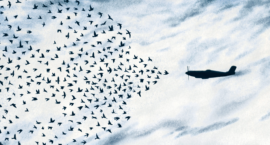
There’s a moment in every struggle when retreat seems like the only rational option. When dictators grow bolder and democracies grow weaker; when the funding dries up and the threats are mounting.

For even the staunchest of human rights defenders, this is often the moment when the temptation to step back, to compromise, to “wait for better times” becomes almost irresistible. But it’s also the moment when it’s most crucial that we hold the line.

Holding the line doesn’t mean mindless stubbornness, or a refusal to adapt. Instead, it means refusing to compromise on core principles, regardless of the circumstances—a collective effort that requires each of us.

To human rights defenders everywhere: When funding disappears, innovate. When governments threaten you, document everything. When allies waiver, remind them what’s at stake.

War in the Middle East Is Devastating the Global Aid System, and Women and Girls Are Paying the Price

In the weeks since the U.S. and Israel launched an attack on Iran, the conflict has not only generated massive humanitarian need—it has fractured the global aid system itself.

The renewed U.S. blockade of Iranian ports in the Strait of Hormuz marks a shift from fragile reopening to active restriction, choking already limited shipping routes and delaying the delivery of food, medicine and fuel.

Even before the blockade, many vessels avoided the strait amid fears of mines and retaliation; now, with access further constrained, the consequences are immediate and far-reaching.

As these disruptions compound, it is women and girls who continue to bear the heaviest burden when humanitarian systems break down.

The closure and continued instability of the Strait of Hormuz have sent shockwaves through global supply chains, driving up oil prices, inflating food costs and straining already underfunded aid operations. These economic shocks reverberate far beyond the region, deepening poverty and food insecurity in places where women already face structural disadvantage.

From rising fertilizer costs that threaten crop yields to surging prices for staple goods, the impacts land hardest on women—who are more likely to live in poverty, eat last in times of scarcity, and rely on fragile aid systems for survival.

As the war’s effects ripple outward, they do not simply linger; they intensify. Environmental damage, displacement and collapsing infrastructure are compounding crises that further erode access to clean water, healthcare and safety. For women and girls, these overlapping shocks mean increased exposure to violence, exploitation and long-term instability.

Without urgent efforts to secure humanitarian access and center the needs of women in response strategies, the consequences of this conflict will continue to deepen inequalities and entrench suffering well beyond the battlefield.


Olympic Sex Testing Returns, Reigniting Debate Over Who Qualifies as a Woman in Sports

The International Olympic Committee recently announced it will again require genetic sex screening for women athletes and bar many transgender and intersex competitors from women’s events beginning with the 2028 Los Angeles Games—reviving a policy widely criticized for its scientific flaws and human cost, and underscoring the continued relevance of this Ms. article from the October 1988 issue: “Chromosome Count.”

“I am an athlete, and I am a woman—or at least I believe I am. Yet for women competing on the world stage, that identity has long been treated as suspect, subject to invasive ‘verification’ by chromosome testing that claims to define femininity through a lab result rather than lived reality.

“Since 1968, female athletes have been required to submit to these screenings, where something as complex as sex is reduced to XX or XY—despite the many natural variations that defy such rigid categories.

“But these tests have never been as objective or fair as they claim. Women with no competitive advantage have been singled out, humiliated and even disqualified, their identities questioned and their careers erased.

“The story of athletes like Ewa Kłobukowska reveals the human cost of this policy—one built not on sound science, but on fear, misconception and a narrow, deeply flawed definition of what it means to be a woman.”

The Latest Cache of Epstein Files Haven’t (and Won’t) Spark Wall Street’s #MeToo Moment

In 2010, a 28-year-old woman working at the London branch of a Wall Street bank was leaving the office around 10 p.m. when a colleague pushed her against a wall and tried to forcibly kiss her. “A cab driver saw what was happening and physically pulled him off me,” the woman, who asked not to be named for fear of repercussions, told me. She reported the incident the next day to her manager, who told her she “should dress for the job I want” and not “like a stripper.” The women quit a month later. “I just wanted out,” she said. “I was mortified.”

What is notable about this story is how common it is. Even now, she said, you can speak to almost any woman who has spent time working in finance and she will know someone who has been harassed or assaulted. Often she has her own story.

That culture, and Wall Street’s willingness to perpetuate it, is back in the spotlight after the latest release of emails linked to Jeffrey Epstein, which are reviving scrutiny of his extensive connections across the industry.

Claiming the Revolution: Gender, Sexuality and the Radical Promise of 1776

The American Revolution can feel like a legacy that belongs to a select few. It has often been told as the story of wealthy white men—many of them enslavers, many of them beneficiaries of Indigenous dispossession—who rebelled in the name of liberty while denying it to most of the people around them. From this perspective, those who are most marginalized—including women, LGBTQ people and communities of color—may feel as if they are reinforcing political amnesia, or worse, complicity, in patriotic celebrations of 1776.   

(This essay is part of the FEMINIST 250: Founding Feminists series, marking the 250th anniversary of America by reclaiming the revolution through the women and gender-expansive people whose ideas, labor and resistance shaped U.S. democracy.)

‘This Is Our Country Too!’: The Enduring Legacy of Spanish-Speaking Women in Early America

Centuries before the American Revolution, Spanish-speaking women crossed oceans and deserts to build communities whose legacies still shape the United States.

As anti-Latino sentiment coincides with the 250th anniversary of the United States, we must remember that long before the American Revolution, Spanish-speaking women inhabited territory that would become the United States. 

Like their English Protestant counterparts in New England, Spanish-speaking women were founding mothers of our nation. Their legacies live on through their descendants and the many other Latinas who immigrated to the U.S. over the past 250 years. Faced with the widespread detention of Spanish-speaking women, it is crucial to remember that it has long been their country too.  

(This essay is part of the FEMINIST 250: Founding Feminists series, marking the 250th anniversary of America by reclaiming the revolution through the women and gender-expansive people whose ideas, labor and resistance shaped U.S. democracy.)

Women’s History Month: Looking Back on How Far We’ve Come and the Hill That Lies Ahead

Weekend Reading on Women’s Representation is a compilation of stories about women’s representation in politics, on boards, in sports and entertainment, in judicial offices and in the private sector in the U.S. and around the world—with a little gardening and goodwill mixed in for refreshment!

This week:
—Primary season marks few advances for women.
—Donald Trump’s endorsements were overwhelmingly male, and they mattered.
—LA Charter Commission recommends ranked-choice voting.
—German women oppose online hate speech.

… and more.

Sundance 2026: In Documentary ‘One in a Million,’ a Syrian Girl’s Life in Exile Reveals the Long Road After War

Winner of Sundance’s Audience Award in the World Cinema Documentary category, as well as the Directing Award for filmmakers Itab Azzam and Jack MacInnes, One in a Million lives up to its title. It homes in with a laser focus on the experiences of Israa, a Syrian girl whose family undertakes the perilous migration to Germany after the start of the Syrian civil war.

When the filmmakers first meet Israa in 2015, she is an inquisitive 11-year-old selling cigarettes on the street in Turkey while her family waits for the chance to cross the Mediterranean. The journey that follows—overcrowded rafts, long treks across multiple borders and nights spent sleeping on the street—contains harrowing moments, but it ultimately occupies only a sliver of the film’s larger story.

Once the family arrives in Germany, where the filmmakers check in with them over the next nine years, One in a Million reveals a far more complicated and intimate portrait of migration and acculturation.

As Israa grows from child to teenager to young adult, she navigates questions of identity, freedom and belonging, while her mother Nisreen becomes increasingly confident and independent in a country that offers opportunities she was denied in Syria. The result is a quietly riveting portrait of family life in transition, showing how the experience of displacement continues to reshape relationships, expectations and the possibilities of who each person might become.

(This is one in a series of film reviews from the 2026 Sundance Film Festival, focused on films by women, trans or nonbinary directors that tell compelling stories about the lives of women and girls.)

Ms. Global: Iranian Girls’ School Hit in U.S.-Israeli Strikes, Taliban Legalize Domestic Violence, The Netherlands’ First Gay Prime Minister, and More

The U.S. ranks as the 19th most dangerous country for women, 11th in maternal mortality, 30th in closing the gender pay gap, 75th in women’s political representation, and painfully lacks paid family leave and equal access to healthcare. But Ms. has always understood: Feminist movements around the world hold answers to some of the U.S.’s most intractable problems. Ms. Global is taking note of feminists worldwide.

This week: stories from Iran, Afghanistan, the Netherlands and more.

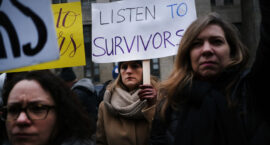
‘My Heart Breaks for the Survivors’: Hillary Clinton Defends Anti-Trafficking Record, Demands Transparency in Epstein Probe

The following statement was delivered by former Secretary of State and U.S. Sen. Hillary Rodham Clinton at the start of a closed-door deposition before the House Oversight Committee, as part of its ongoing inquiry into the federal government’s handling of Jeffrey Epstein’s crimes.

In the statement, Clinton tells lawmakers she had no knowledge of Epstein’s or Ghislaine Maxwell’s criminal activities and does not recall ever meeting or speaking with Epstein, flying on his planes or visiting any of his properties. She says she has no new information to provide to the committee.

Her testimony is both a denial of involvement and a broader political and policy argument—one that defends her record on combating human trafficking, criticizes the committee’s approach and calls for wider accountability in Epstein-related investigations and anti-trafficking efforts. Clinton characterizes the subpoena as part of a partisan investigation designed to create “political theater” and distract from what she describes as more relevant lines of inquiry, particularly those involving former President Donald Trump and others named in Epstein-related materials.