Calling Foul: Breaking Down WNBA Pay and Why It Matters

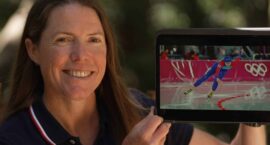
There’s a long history of women in sport fighting for equal pay, and what’s happening with the WNBA today is less of a mirror of the current gender pay gap and more of a throwback to a time when women’s efforts were even more deeply devalued. The WNBA is a visible legacy of Title IX, and an indication of how far there is left to go. 

These are women at a pinnacle of professional achievement, who are still beholden to structural barriers. This is not a sports issue. It is a feminist issue.

This FDA Decision Could Transform Menopause Care

On Monday, Nov. 10, the U.S. Department of Health and Human Services announced that the Food and Drug Administration would eliminate the “boxed labeling” requirement for estrogen products.

The “black box warning,” as it’s commonly called, is part of the fallout from a press conference that occurred more than 20 years ago, announcing the findings of the Women’s Health Initiative (WHI). It’s also been the subject of a half-century-long push and pull with the federal government.

Make no mistake, this has been a longstanding demand—it’s neither new nor MAHA-driven. Doctors and scientists have made the case for its removal since the start to no avail, arguing the data from the WHI—the largest, most expensive, and only randomized placebo-controlled study of post-menopausal women—never supported putting it there in the first place.

The FDA’s reversal of the labeling requirement is a major win for evidence-based medicine. Now it’s up to us to responsibly inform women of their choices.

FDA Rewrites the Story on Estrogen: A Win for Women

Estrogen, the hormone long cast as a public health threat, has been unfairly maligned.

The FDA has finally announced it will remove the incorrect “boxed warning” from vaginal estrogen products and issue corrected labeling for other estrogen therapies—a much needed course correction for one of modern medicine’s most damaging missteps.

The Witch Was Never the Villain. She Was the Beginning of Women’s Power.

Weekend Reading for Women’s Representation is a compilation of stories about women’s representation in politics, sports and entertainment, judicial offices and the private sector—with a little gardening mixed in!

This week:
—Long before Halloween became a night of costumes and candy, it was Samhain: a Celtic festival marking the end of harvest and the beginning of winter’s half-dark. Communities gathered to honor what had ended, prepare for what was to come, and find renewal in letting go. At the heart of those gatherings were women. When patriarchal religions spread across Europe, that spiritual authority became a threat.
—When my children were young, during the Halloween season, I remember thinking how natural it is for young children, especially young girls, to believe they can transform … to step boldly into whoever they want to be.
—As we approach another Election Week, women once again stand at the threshold between what is and what could be: Women could sweep governor elections in New Jersey and Virginia. And Women are posed for gains in city elections across the country.
—New York Attorney General Tish Janes is targeted by the DOJ.
—Ireland elects Independent Catherine Connolly as its third woman president.

… and more.

From Iceland’s ‘Women’s Day Off’ to No Kings, Progress Begins When Women Stand Together

Weekend Reading for Women’s Representation is a compilation of stories about women’s representation in politics, sports and entertainment, judicial offices and the private sector—with a little gardening mixed in!

This week:
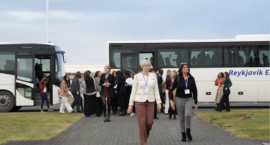
—Fifty years ago, the women of Iceland changed the course of their nation … not through an election or a revolution, but through one simple, collective act: They stopped. On Oct. 24, 1975, 90 percent of Icelandic women refused to work, cook or care for children for a single day. That strike, known as the Women’s Day Off, became a watershed moment for equality, but it didn’t emerge overnight.
—Women hold the majority in the Bolivia legislature.
—Japan confirms Sanae Takaichi as its first woman prime minister.

… and more.

Russia Was Once a Revolutionary Feminist Motherland

Russia’s hostility to feminism today stems not from its foreignness, but from memory. A century ago, it was Russian women who lit the first sparks of revolution. On International Women’s Day in 1917, factory workers filled the streets of Petrograd demanding bread, peace and equality—an uprising that toppled the Romanovs and pulled the world into modernity. Under the Bolsheviks, women won the right to vote, divorce became accessible and abortion was legalized. For a brief, radical moment, the Soviet experiment made women’s liberation a pillar of the state.

Julia Ioffe’s book, Motherland: A Feminist History of Modern Russia, from Revolution to Autocracy, reminds us that today’s Russia rejects feminism precisely because it once knew what it could do: ignite revolutions, upend hierarchies and reimagine power itself.

As Trump Targets Portland, a New Report Shows How the City Became a Model for Women’s Representation

Weekend Reading for Women’s Representation is a compilation of stories about women’s representation in politics, sports and entertainment, judicial offices and the private sector—with a little gardening mixed in!

This week:
—How did Portland, Ore., achieve one of the mosdt representative city councils in the country? Through structural reform and community-driven organizing.
—A woman will be Ireland’s next president.
—Japan is posed to make a historic shift in women’s leadership.
—For the first time, a woman will lead one of Christianity’s oldest institutions.
—We celebrate the life of Jane Goodall.
—We mark what would be Eleanor Roosevelt’s birthday. She helped craft the Universal Declaration of Human Rights—insisting that freedom must include not only political rights, but also the right to food, housing and dignity: “You cannot talk civil rights to people who are hungry.” In the midst of Cold War tension, Roosevelt’s words were a quiet but radical act—a reminder that peace often begins not in policy or power, but in empathy and connection.

… and more.

From Berlin to Beijing to U.S. Congress, Women’s Courage to Convene Propels Us Forward

Weekend Reading for Women’s Representation is a compilation of stories about women’s representation in politics, sports and entertainment, judicial offices and the private sector—with a little gardening mixed in!

This week:
—We mark 60 years since former President Lyndon Johnson advanced equal opportunity in employment.
—When women come together, share our strength, and lift one another up, the impossible becomes possible. 
—In a landslide victory, Adelita Grigalva becomes Arizona’s first Latina to Congress.
—Of the four Republican House members signing the petition about the actions and allies of sexual predator Jeffrey Epstein, three are women.
—A record number of U.S. legislators won’t run for reelection next year.
—Hillary Clinton “sees a dangerous moment for women’s rights and democracy.”
—Akshi Chawla, who writes the #WomenLead Substack and is a valuable resource on international women’s representation, on the great question: “How do I get started?”
—The Marshall Islands, a rapidly vanishing Oceania nation, is led by the region’s first-ever woman president, Hilda Heine.
—Who was the first American woman to have an airport named in her honor?

… and more.

The Health of a Democracy Is Measured by Its Leaders: Celebrating Women’s Political Leadership in Mexico, Iraq, Nepal and More

Weekend Reading for Women’s Representation is a compilation of stories about women’s representation in politics, sports and entertainment, judicial offices and the private sector—with a little gardening mixed in!

This week:
—Suhikla Karki is the new prime minister of Nepal, following demonstrations that toppled the previous government and negotiations between Gen Z demonstrators and the military.
—On Oct. 24, an open-seat contest for Ireland’s next president is taking shape for a seven-year term, with two of the three candidates already on the ballot being women; the field will be finalized later this month.
—Mexican President Claudia Sheinbaum has one of the highest approval ratings of national leaders a year after her trailblazing elections.
—As the United Nations prepares to open its General Debate for the 80th session in New York next week, I’ve been carrying Jacinda Ardern’s words with me: “I really rebel against this idea that politics has to be a place full of ego and where you’re constantly focused on scoring hits against one another. Yes, we need a robust democracy, but you can be strong, and you can be kind.”
—Iraq will hold its next parliamentary elections in November. Women hold 28.9 percent of seats in its Parliament, just about the same as the 28.7 percent held by women in the U.S. House of Representatives. 

… and more.

Women as Teachers, Governors and Civil Service: The Fight for Women’s Leadership Everywhere

Weekend Reading for Women’s Representation is a compilation of stories about women’s representation in politics, sports and entertainment, judicial offices and the private sector—with a little gardening mixed in!

This week:
—Teachers have always been the cornerstone of thriving communities and a healthy democracy. It’s no accident that so many powerful women leaders began their journeys in classrooms. And yet, while women dominate the teaching profession, they remain underrepresented in our political institutions.
—President Trump’s recent federal workforce reductions have disproportionately harmed Black women, who are long overrepresented in civil service relative to the private sector.
—A growing number of women are entering the race for governor in 2025 and 2026.
—Debra Shigley, an attorney, small business owner and mom of five, has secured a top spot in a Georgia runoff election for a state Senate seat. Her election on Tuesday, Sept. 23, will be one to watch as women’s leadership in Georgia, and across the country, continues to grow. Georgia already uses ranked-choice voting, sometimes called “instant runoffs,” for military and overseas voters. Expanding this system statewide would guarantee majority winners in a single election.
—U.K. women are calling out dangerous narratives that weaponize sexual violence against women to scapegoat asylum seekers.
—Italian women fight digital violence and demand consent online.

… and more.