Ms. Global: Energy Crisis in Cuba, Feminist Activist Assassinated in Iraq, Gay Asylum-Seeker Deported and More

The U.S. ranks as the 19th most dangerous country for women, 11th in maternal mortality, 30th in closing the gender pay gap, 75th in women’s political representation, and painfully lacks paid family leave and equal access to healthcare. But Ms. has always understood: Feminist movements around the world hold answers to some of the U.S.’s most intractable problems. Ms. Global is taking note of feminists worldwide.

This month:
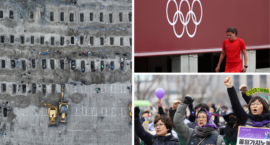
—Seoul holds the 41st Women’s Strike in South Korea for International Women’s Day.
—Hospital patients suffer during Cuba’s three major blackouts.
—The U.S. is at fault for the missile strike that hit the Shajareh Tayyebeh Girls’ School in Minab, Iran, on Feb. 28, killing 175 people.
—Yanar Mohammed, a leading Iraqi feminist and human rights defender, was killed in an armed attack in Baghdad.
—IOC restricts transgender participation in Olympics.
—Amid widespread displacement, poverty and institutional collapse during the ongoing war in Gaza, families are increasingly turning to child marriage for their daughters.

… and more.

Dissecting Trump’s (Short) Women’s History Month Statement, Line by Line

When the White House issued a presidential message to kick off Women’s History Month, my first reaction was genuine surprise. Honestly, I did not think WHM was still recognized by the federal government.

President Donald Trump’s brief (four paragraphs) public statement doubled down on the administration’s regressive societal vision, casting women primarily as caretakers and pillars of the “American family,” while pointing to a slate of policies he claims empower them.

But a closer look at the statement reveals a familiar mix of culture-war signaling, selective policy claims, and omissions that obscure the real impacts of the administration’s agenda on women and families.

I think often about the role of the media at this moment—an obligation intrinsically greater than reporting the verbiage that comes out of the White House. It is on all of us to explicitly counter double-speak and lies and to leave a paper trail of truth for posterity. This week’s column does just that: It dissects Trump’s WHM proclamation line by line and tests each claimed reform against the record.

The Pathetic Price of Entry to Epstein’s World

The latest batch of Epstein files—over 3 million documents, only around half of what the Department of Justice reports to have amassed—has unleashed a new cast of characters, a list that includes tech titans, health influencers, litigation rainmakers, university leaders, sports executives, Hollywood moguls and international royalty. None of the those named in the latest tranche of Epstein files strike me as people I ever assumed possessed particularly stellar moral character, and their collective fall from grace doesn’t shock me.

But what does turn my stomach is how pathetically small the price of entry into Epstein’s world appears to have been.

The expressions of regret now surfacing—I am ashamed, this is not who I am!—read less like moral reckonings and more like the lament of those who simply got caught.

The emails reveal a tawdry economy of access: absurd favors, crude jokes, dating advice, shared handwringing about #MeToo, and giddy acceptance of gifts—Apple Watches, Prada bags, monogrammed sweatshirts—that these already powerful figures could easily have bought themselves.

Whether any individual named in the files participated in or witnessed Epstein’s crimes is only part of the story. Just as telling is the desperate desire to remain in his orbit—often long after his 2008 guilty plea for soliciting prostitution from girls.

That eagerness to maintain proximity, for so little in return, speaks volumes about how power protects itself—and what too many were willing to overlook to stay connected to it.

‘She Rubbed Me the Wrong Way’: Why Trump Punished a Woman Head of State for Saying No

Under the Jan. 21 headline “‘She Just Rubbed Me the Wrong Way’: Trump Suggests Swiss Tariffs Were Personal,’” The New York Times quotes Trump quoted as saying, she was “’so aggressive.”

Seeking to make sense of the existential anomie that flooded me after reading the article, it quickly became apparent that that much more was at play here than a clash of personalities, as suggested by Times’ headline. Accordingly, as I began envisioning the article I would write, my initial aim was to locate Trump’s remarks within the broader context of his administration’s attacks on women and the LGBTQ+ community. 

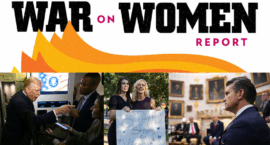
War on Women Report: Antiabortion Extremist Charged in S.C. Shooting; Army OB-GYN Accused of Abusing Over 85 Women Patients

MAGA Republicans are back in the White House, and Project 2025 is their guide—the right-wing plan to turn back the clock on women’s rights, remove abortion access, and force women into roles as wives and mothers in the “ideal, natural family structure.” We know an empowered female electorate is essential to democracy. That’s why day after day, we stay vigilant in our goals to dismantle patriarchy at every turn. We are watching, and we refuse to go back. This is the War on Women Report.

Since our last report:
—North Dakota’s Supreme Court reinstated a total abortion ban, making it the 13th state with a near-total ban on abortion.
—Trump ordered Catherine Lucey, a woman reporter for Bloomberg, to be “quiet, piggy.”
—The U.S. moved to categorize countries with state-sponsored abortion and DEI policies as violators of human rights.
—Florida Attorney General James Uthmeier has sued Planned Parenthood over allegedly “misrepresenting the safety” of abortion pills.
—On Thursday, Dec. 4, an unprecedented law banning doctors from shipping abortion pills takes effect in Texas.
—”The country’s most respected newspaper hosted a conversation about whether women’s equality and freedom was a mistake.”
—Doctor Maj. Blaine McGraw, an OB-GYN at Fort Hood military base in Texas, the third-largest base in the country, is under investigation for sexual abuse against patients. As of Monday, 85 victims have come forward.
—With Jeffrey Epstein survivors watching from the gallery above, the House agreed in a near-unanimous vote to force the release of all files related to the investigation of the convicted sex offender.

… and more.

When the Headline Gets It Wrong: Feminism Isn’t the Problem—Patriarchy Is

When I saw the headline “Did Women Ruin the Workplace? And if So, Can Conservative Feminism Fix It?” in The New York Times Opinion section, my heart sank. It felt like a headline torn from another era—a provocation that had no place in 2025.

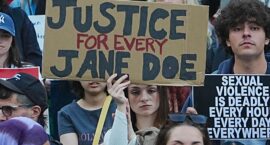
False accusations remain extremely rare—estimated at between 2 percent and 8 percent of reports—while roughly two-thirds of sexual assaults are never reported at all. The crisis is sexual violence, not accountability.

Yet, for centuries, women have been labeled “emotional” or “petty” to justify their exclusion from leadership and public life. Hearing these stereotypes revived in 2025—in The New York Times, no less—is disheartening. At a time when reproductive rights are being stripped away and women’s autonomy is under attack, we don’t need pseudo-intellectual nostalgia for patriarchy disguised as debate. We need truth, solidarity and progress.

The message from the writers is clear: Women should know their place. But women already do—it’s everywhere decisions are made, everywhere power is exercised, everywhere the future is being built. We’re not staying in our lane. We made the road. And we’re not going anywhere.

The Witch Was Never the Villain. She Was the Beginning of Women’s Power.

Weekend Reading for Women’s Representation is a compilation of stories about women’s representation in politics, sports and entertainment, judicial offices and the private sector—with a little gardening mixed in!

This week:
—Long before Halloween became a night of costumes and candy, it was Samhain: a Celtic festival marking the end of harvest and the beginning of winter’s half-dark. Communities gathered to honor what had ended, prepare for what was to come, and find renewal in letting go. At the heart of those gatherings were women. When patriarchal religions spread across Europe, that spiritual authority became a threat.
—When my children were young, during the Halloween season, I remember thinking how natural it is for young children, especially young girls, to believe they can transform … to step boldly into whoever they want to be.
—As we approach another Election Week, women once again stand at the threshold between what is and what could be: Women could sweep governor elections in New Jersey and Virginia. And Women are posed for gains in city elections across the country.
—New York Attorney General Tish Janes is targeted by the DOJ.
—Ireland elects Independent Catherine Connolly as its third woman president.

… and more.

The New York Times’ Recent ‘Abortion Pollution’ Story Serves the Antiabortion Agenda

For the last three years, Students for Life of America (SFLA) has sought to use environmental concerns to attack abortion rights, claiming—without scientific evidence—that the medication mifepristone contaminates U.S. water supplies and threatens wildlife, the environment and potentially human health.

A recent New York Times article amplified this antiabortion effort, presenting these claims without substantial context. The article does not include interviews with anyone informed about the politics behind the campaign or the science of mifepristone in wastewater. Only a brief mention—seven paragraphs in—notes that environmental experts have dismissed SFLA’s claims, before returning to treating the claims as a legitimate concern. 

“There is absolutely no evidence that this is an environmental issue,” said Nathan Donley, the environmental health science director for the Center for Biological Diversity. “Pharmaceutical waste can be a big issue when we’re talking about widely used drugs, but to somehow point to mifepristone as a bad actor here is completely disingenuous.”

Jack Vanden Heuvel, a molecular toxicologist at Pennsylvania State University, agreed: “Most wastewater treatment plants are very effective at getting rid of any mifepristone that is there.” He described SFLA’s position as “a pretty weakly supported argument.”

America Is an Increasingly Dangerous Place for Women and Girls 

In America’s hyper-macho, gun-drenched culture, growing up female has never been safe. But under the Trump administration, America is becoming a much more dangerous place for women and girls.

America is dangerous for women and girls because our leaders choose to make it so. The Trump administration has already begun blocking access to abortion and Medicaid coverage for reproductive health, as well as targeting the rights of pregnant people within the 2023 Pregnant Workers Fairness Act.

Already, the macho culture of the U.S. has steadily made women’s safety in the nation decline. Around 41 percent of women in the U.S. have experienced sexual violence, while a third of women reported severe assault by a husband or boyfriend. The normalization of gun violence and violent pornography have also run rampant across the country, making America more dangerous day by day.

Republicans Are Holding Women’s Health Hostage

As the government shutdown drags into another week, women and their families have the most to lose. The Republican budget that triggered this fight guts Medicaid and rolls back ACA tax credits that make health insurance affordable for millions—what experts are calling a “quiet repeal” of the Affordable Care Act. Nearly 50 years after Rosie Jiménez died because she was denied Medicaid coverage for abortion, we’re watching the same systems endanger women’s lives all over again.

And yet, there’s reason for hope: The FDA just approved a new generic version of mifepristone, expanding access to medication abortion at a moment when it’s most under attack.