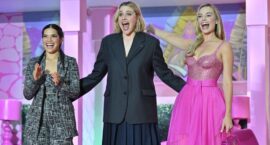
In Barbie, Greta Gerwig creates a world where femininity is celebrated in the mainstream.


More Than A Magazine, A Movement

In Barbie, Greta Gerwig creates a world where femininity is celebrated in the mainstream.

What does Barbie mean to a Black woman who was once “the Black girl”?
She reminds me that representation does not always come in the form of a person; sometimes, it’s a doll that allows you to embrace your creativity, dreams and imagination far beyond what society believes you are capable of … all in pink stiletto heels.
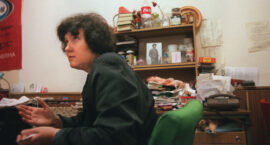
Ms. spoke with Russian journalist and activist Nadezhda Azhgikhina about the global demise of journalism and women’s roles in peace negotiations between Russia and the U.S.
“I believe it’s possible for women in Russia and in Ukraine to find a common language and help each other. It’s women’s potential which expedites and eases a common language of peace so that we can all overcome the consequences of the tragedy we collectively face today.”
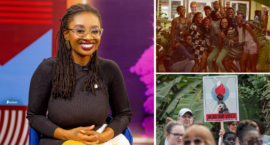
Nana Akosua Hanson, feminist activist, journalist and founder of Let’s Talk Consent, discusses her vision for a feminist future, the importance of art and media, and activism.
“I’m an African feminist who believes deeply in the power of art and artistic expression in changing the world.”
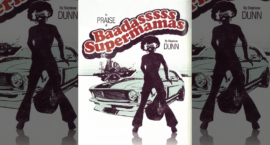
From the Summer 2008 issue of Ms. magazine:
The summer of 1973 was the season of the supermama: kickass Black women such as Pam Grier and Tamara Dobson, who starred in big-screen “Blaxploitation” action films.
The cultural nostalgia for Blaxploitation has never really died. And at the movies in recent years, Black women continue to be underrepresented among the latest kick-butt heroes. Yet my hope for new supermamas survives. The screen and action cinema not only have room for Black women—but need them.
(For more iconic, ground-breaking stories like this, pre-order
50 YEARS OF Ms.: THE BEST OF THE PATHFINDING MAGAZINE THAT IGNITED A REVOLUTION (Alfred A. Knopf)—a collection of the most audacious, norm-breaking coverage Ms. has published.)
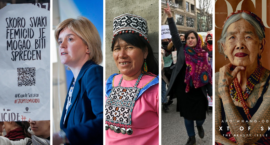
The U.S. ranks as the 19th most dangerous country for women, 11th in maternal mortality, 30th in closing the gender pay gap, 75th in women’s political representation, and painfully lacks paid family leave and equal access to health care. But Ms. has always understood: Feminist movements around the world hold answers to some of the U.S.’s most intractable problems. Ms. Global is taking note of feminists worldwide.
This week: News from Somalia, Afghanistan, Burundi, Egypt, Germany, and more.

In every issue of Ms., we track research on our progress in the fight for equality, catalogue can’t-miss quotes from feminist voices and keep tabs on the feminist movement’s many milestones. We’re Keeping Score online, too—in this biweekly roundup.
This week: Biden’s new budget excludes Hyde Amendment but protects other abortion coverage bans; Michelle Yeoh becomes first Asian woman to win the Oscar for best actress; Weill Cornell Medicine rolls out research on non-hormonal male birth control alternatives; Jennifer McClellan is the first Black woman elected to represent Virginia in Congress; South Carolina approves an all-male state supreme court; fathers’ salaries benefit from parenthood, while mothers are penalized; Gen Z women have lower salary expectations than men; and more.
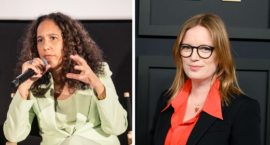
This weekend’s Oscar awards have generated headlines about the lack of diversity among nominees—notably, this year, no women were nominated for Best Director. In fact, in the Academy’s 94-year history, it’s nominated just seven women in the category.
Whether the stories told are fiction or nonfiction, there continue to be considerable obstacles for women and nonbinary filmmakers when attempting to break the glass ceiling of storytelling on the big screen. This weekend’s awards ceremony only highlights how much further we still have to go.

A new documentary film entitled Oh, Sister! features the stories of six Ukrainian women who are facing the challenges of the ongoing Russian invasion, and fighting for peace, justice and freedom in their country.
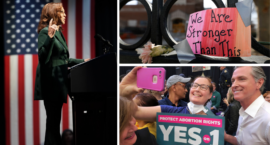
In every issue of Ms., we track research on our progress in the fight for equality, catalogue can’t-miss quotes from feminist voices and keep tabs on the feminist movement’s many milestones. We’re Keeping Score online, too—in this biweekly roundup.
This week: Vice President Kamala Harris speaks in Florida on the 50th anniversary of Roe v. Wade; MSU devastated by mass shooting; New York Times contributors stand up to poor coverage of trans youth; Sen. Dianne Feinstein announces retirement after 30 years; anti-abortion ads target low-income women; police responsible for 5 percent of U.S. homicides; and more.